Crypto Staking vs Lending Explained: Risks Beginners Must Understand
Risk disclaimer: Cryptocurrencies are volatile and risky. Staking and lending add extra layers of risk on top of price volatility, and you can lose some or all of the money you put in. This article is educational only and is not financial advice. Never commit funds you cannot afford to lose, and do your own research before using any staking or lending service.
Search for ways to “earn” on your crypto and you will quickly meet two words: staking and lending. Both promise returns — sometimes eye-catching ones — for putting your assets to work instead of letting them sit in a wallet. Both also carry risks that are easy to overlook when the advertised percentage looks attractive. This guide explains what each one actually is, how they differ, and where beginners most often get hurt.
What Staking Actually Is
Staking is tied to how certain blockchains secure themselves. Networks that use proof of stake — such as Ethereum, Cardano and Solana — do not use miners. Instead, participants called validators lock up (stake) the network’s token and are chosen to verify transactions and add new blocks. In return, they earn rewards, usually paid in the same token.
Most holders do not run a validator themselves, because it requires technical setup and, on some networks, a large minimum stake. Instead, they delegate their tokens to a validator or join a staking pool, earning a share of the rewards. The annual return varies by network and by market conditions, but it is typically in the low single digits to low teens in percentage terms — far below the triple-digit figures sometimes advertised by aggressive platforms, which usually involve extra risk or inflationary token rewards.
The key point is that staking is part of the network’s own security model. Your tokens help secure the blockchain, and the rewards come from the network’s issuance and transaction fees. That does not make it safe — the token’s price can still fall sharply, and your stake can be locked for a period — but the mechanism is transparent and built into the protocol.
What Lending Actually Is
Lending is simpler to describe and harder to evaluate. You hand your crypto to a platform — a centralised company or a decentralised protocol — which lends it to borrowers, and you receive interest in return. Borrowers might be traders using leverage, market makers needing liquidity, or other users borrowing against their own collateral.
On a decentralised lending protocol, the process is governed by smart contracts and usually over-collateralised: borrowers must lock up more value than they borrow, and their collateral is automatically sold if its value falls too far. On a centralised platform, you are trusting a company: it takes your deposit, lends it out, manages the risk, and promises to return your funds plus interest when you ask. The difference between those two models is enormous, and it is the single most important distinction in this whole topic.
Lending returns can look higher than staking returns, especially on centralised platforms competing for deposits. But a higher advertised rate usually means higher risk, not a better deal. Always ask where the yield comes from, and be suspicious of any platform that cannot explain it clearly.
The Risks of Staking
Staking is often described as low-risk, which is misleading. The first risk is price risk: if you stake a token and its price falls 50%, your staking rewards will not compensate you. The second is lock-up risk. Many networks require your stake to be locked for days or weeks, and during that period you cannot sell, even if the market crashes. Some liquid staking services offer tradeable tokens representing your stake, but these add their own smart contract and price risks.
The third risk is slashing. On some networks, validators that misbehave or go offline can be penalised, and a portion of their stake — including delegators’ funds — can be destroyed. Reputable validators rarely get slashed, but the risk exists and is often buried in the fine print. The fourth risk is validator risk: if the validator you delegate to performs poorly or acts dishonestly, your rewards suffer, and in the worst case your funds are affected.
Finally, there is smart contract risk when staking through a third-party service rather than directly on the network. If that service’s contracts have a bug or are exploited, your funds can be lost even though the underlying blockchain is fine.
The Risks of Lending
Lending risks are generally larger and less obvious. On centralised platforms, the dominant risk is counterparty risk: the company holding your funds could mismanage them, become insolvent, or freeze withdrawals. Several high-profile platforms collapsed in 2022, and users who had deposited crypto discovered they were unsecured creditors, with little hope of recovering their funds. When you deposit on a centralised platform, you are usually giving up ownership of your assets in exchange for a promise — read the terms carefully, because that promise may be weaker than you assume.
On decentralised protocols, the risks are different. Smart contract bugs can be exploited, draining the protocol. Liquidation mechanisms can behave unexpectedly during extreme volatility. The token you receive as a receipt for your deposit can lose its peg to the underlying asset. And because DeFi protocols interact with each other, a failure in one protocol can cascade into others — a risk that is genuinely hard for a beginner to assess.
Both models share a further risk: the interest you earn is usually paid in crypto, so its real value fluctuates with the market. A 10% annual return means little if the asset itself falls 40%.
Staking vs Lending: A Direct Comparison
Staking generally offers lower but more transparent returns, tied to the network’s own economics. The risks are mostly price risk, lock-up periods and validator performance. It suits someone who already holds a proof-of-stake token long-term and wants a modest return for helping secure the network.
Lending can offer higher returns, but the risks are broader and harder to evaluate, especially on centralised platforms where you trust a company’s management. It suits someone who understands counterparty risk and is comfortable with the possibility of losing deposited funds entirely — which is a much stronger statement than most beginners realise they are agreeing to.
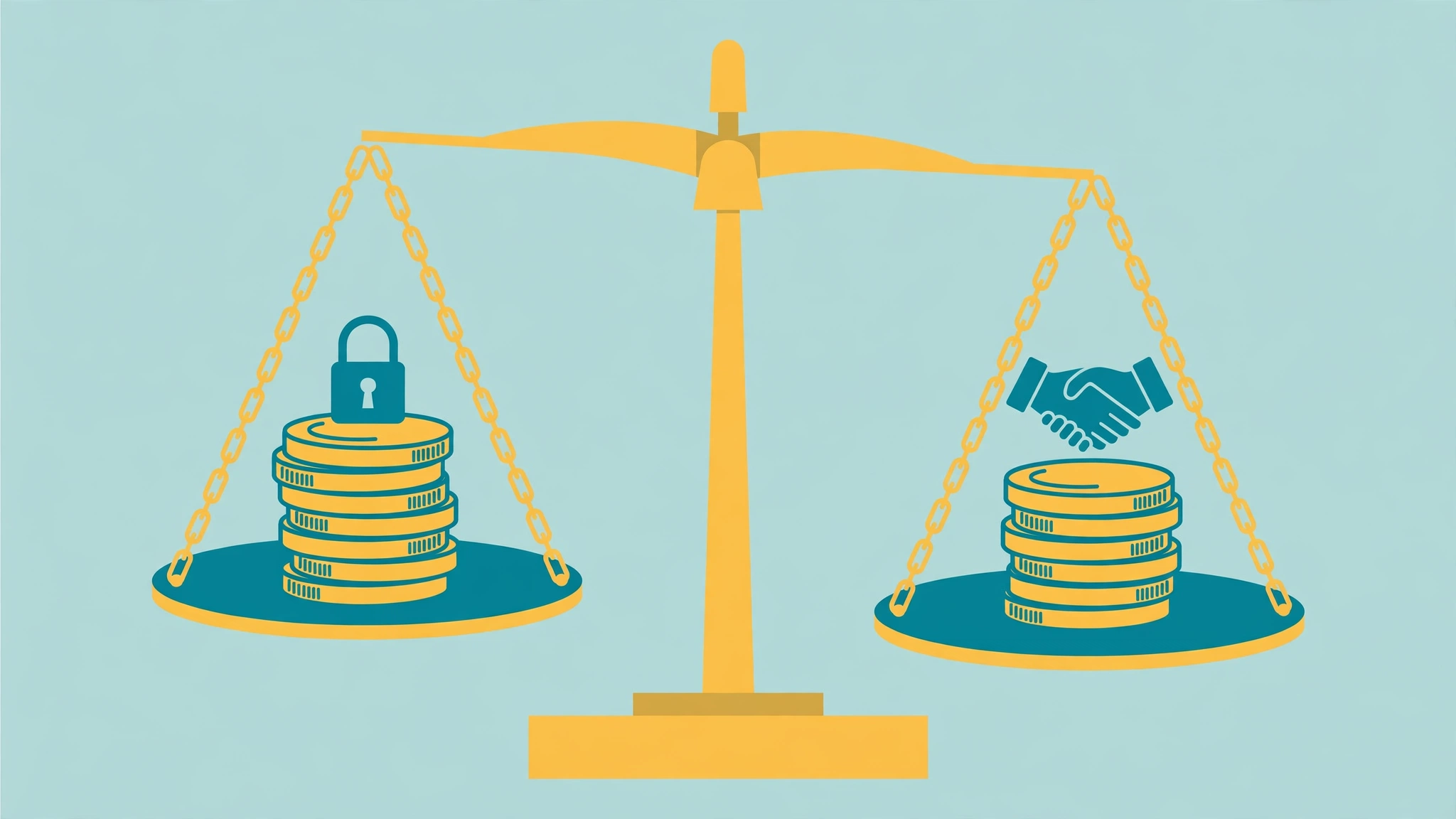
A useful way to think about it: staking is closer to participating in a network, while lending is closer to being an unsecured creditor. Both can be legitimate, but they are not the same kind of activity, and they should not be compared on advertised percentage alone.
If you are new to crypto generally, start with the basics before chasing yield. Our guide to how to buy crypto safely covers wallets, exchanges and security habits, and our explainer on what Avalanche is shows how a proof-of-stake network works in practice.
Red Flags Every Beginner Should Know
Be extremely cautious of any platform promising guaranteed returns, especially double-digit “guaranteed” yields with no explanation of where they come from. Real yield comes from somewhere — network issuance, borrower interest, or trading fees — and if a platform cannot explain its source, it may be paying old users with new users’ deposits, which is unsustainable by definition.
Other red flags include pressure to deposit quickly, bonuses for recruiting others, opaque company ownership, and terms that let the platform rehypothecate (re-lend) your assets without clear limits. If a platform’s terms of service say your deposit becomes their property, believe them — that is what it means.
Also be wary of yields quoted in a platform’s own token. A 50% return paid in a token that falls 80% is a loss, not a gain. Always convert advertised returns into the value of an asset you actually want to hold.
A Sensible Approach for Beginners
If you want to try staking, start on a major network, stake a small amount directly or through a reputable, well-established service, and understand the lock-up period before you commit. Treat the rewards as a bonus, not as income you depend on, and remember that price risk dwarfs staking returns in most market conditions.
If you want to try lending, prefer established decentralised protocols with audited contracts and a long track record over new centralised platforms offering the highest rates. Never lend funds you cannot afford to lose, never put all your holdings in one platform, and keep the majority of your crypto in a wallet you control. The phrase “not your keys, not your coins” exists for a reason: assets on a platform are assets at risk.
Above all, resist the urge to chase yield. The crypto market rewards patience and punishes greed with remarkable consistency. A modest, understood return beats a spectacular, unexplained one every time.
Frequently Asked Questions
Is staking safer than lending?
Generally, yes — especially staking directly on a major network, where the mechanism is transparent and you retain more control. But staking is not risk-free: price falls and lock-ups can still hurt you.
Can I lose money staking?
Yes. If the token’s price falls, your staked value falls with it. Slashing and validator problems can also reduce your stake on some networks, though this is uncommon with reputable validators.
What happened to crypto lending platforms in 2022?
Several large centralised lenders collapsed after mismanaging customer deposits, and users lost billions collectively. It remains the clearest warning about counterparty risk in crypto.
Are DeFi lending protocols safe?
They remove the company risk but add smart contract risk, and they are not insured the way bank deposits are in many countries. Established protocols with audits are safer than new ones, but none is risk-free.
Should beginners stake or lend at all?
There is no obligation to do either. Holding crypto in your own wallet, without chasing yield, is a perfectly reasonable choice — and for many beginners, it is the wisest one until they understand the risks properly.
Conclusion
Staking and lending both offer a way to earn returns on crypto, but they are fundamentally different activities with different risks. Staking supports a network’s security and pays modest, transparent rewards, with price risk and lock-ups as the main dangers. Lending hands your assets to borrowers through a platform or protocol, with returns that can look higher and risks — especially counterparty risk — that can be far more severe.
The advertised percentage is the least informative number on the page. What matters is where the yield comes from, who holds your assets, what happens if things go wrong, and whether you can afford the worst case. Answer those questions honestly before committing a single coin, and remember the rule that governs all of crypto: if you cannot afford to lose it completely, do not put it at risk.