How to Spot Crypto Scams and Rug Pulls: A Beginner’s Guide
How to Spot Crypto Scams and Rug Pulls: A Beginner’s Guide
Risk disclaimer: Cryptocurrencies are volatile. Prices can rise and fall sharply, and you can lose everything you put in. This article is educational only and is not financial advice. Never invest money you cannot afford to lose, and do your own research before making any decision involving crypto.
Crypto scams work because they look like opportunity. A message arrives from someone who seems successful, a coin seems to be rising fast, or a website promises returns that no bank would ever offer. By the time the victim realises something is wrong, the money is usually gone, and because crypto transactions are generally irreversible, there is often no one to call for a refund. That sounds harsh, but it is the reality beginners need to understand before anything else. The good news is that most scams follow recognisable patterns. Once you learn them, they become much easier to spot, and a few simple habits can protect you from the majority of them.
This guide explains the most common crypto scams, what a rug pull actually is, the warning signs to watch for, and the checks to run before you trust any project, person, or platform with your money.
Why Crypto Attracts Scammers
Scammers go where money moves quickly and where rules are still catching up, and crypto fits both descriptions. Transactions settle fast, they cross borders without a bank in the middle, and many people using crypto are still learning how it works. That combination creates room for fraud. A scammer does not need to break into a bank vault. They only need to convince one person to send coins voluntarily, or to hand over a wallet recovery phrase, and the transfer does the rest.
Newcomers are especially vulnerable for a simple reason: everything in crypto feels unfamiliar at first. Wallets, seed phrases, gas fees, decentralised exchanges, smart contracts — the vocabulary alone is confusing. Scammers exploit that confusion by offering to “help” you set things up, by posing as support staff, or by inventing urgency so you act before you think. Understanding that this is the game being played is the first layer of protection. If someone is rushing you, flattering you, or making you feel stupid for asking questions, that is not customer service. That is pressure, and pressure is a tactic.
The Most Common Crypto Scams
Fake Giveaways and Impersonation
One of the oldest crypto scams is the giveaway scam. A social media account impersonating a famous founder, celebrity, or exchange announces a giveaway: send a small amount of crypto and receive double back. Sometimes it appears as a fake livestream, sometimes as a hacked verified account, and sometimes as a reply to your own comment. The promise is always the same, and it is always false. No legitimate project asks you to send crypto in order to receive more crypto. If you see a giveaway like this, assume it is a scam, no matter how convincing the account looks. Verified ticks can be bought or stolen, follower counts can be faked, and livestreams can be looped footage.
Impersonation goes further than giveaways. Scammers create near-identical usernames, copy profile pictures, and reply to people asking for help on official posts. They may claim to be support staff and ask you to “verify” your wallet by sharing your recovery phrase or by connecting to a malicious website. Real support staff will never ask for your recovery phrase, your private key, or your password. Anyone who does is a scammer, without exception.
Phishing Websites and Fake Apps
Phishing in crypto works the same way it works in banking: you are tricked into visiting a fake website or downloading a fake app that looks like the real thing. A search result, an advert, or a link in a message may take you to a copy of a well-known exchange or wallet site, with a web address that differs by one letter. If you type in your login details or connect your wallet there, the scammer captures them.
Protect yourself by typing addresses yourself or using bookmarks you created, rather than clicking links from messages, adverts, or search results when money is involved. Check the address carefully before you log in, and be suspicious of any site that asks you to enter your recovery phrase. Legitimate wallets ask for your recovery phrase only when you are restoring a wallet you already own, on a device you control, in the official app — never on a website that contacted you first.
Fake apps are a similar danger. Only download wallet and exchange apps from the official app store listing linked from the project’s own website, and check the developer name, reviews, and download history. A fake app with a copied logo can drain a wallet the moment you import your phrase into it.
Investment and Romance Scams
Some of the most damaging crypto scams do not look like scams at all at first. They look like friendship, or like mentorship. A stranger strikes up a conversation online, builds trust over days or weeks, and eventually mentions a profitable crypto opportunity — a new platform, a trading group, or a “guaranteed” strategy. This is often called a pig-butchering scam, because the victim is fattened up with attention and small early wins before the big loss.
The pattern is remarkably consistent. You are shown a platform where your balance appears to grow. You may even be allowed to withdraw a small amount at first, which builds confidence. Then you are encouraged to invest more, sometimes with borrowed money, and when you try to withdraw a larger sum, new fees, taxes, or account problems appear. Each problem requires another payment to unlock your funds, until you stop paying and the contact disappears along with the platform.
The defence here is emotional as much as technical. Be deeply suspicious of investment advice from someone you met online who has a financial interest in your decision. Real investment opportunities do not arrive through romantic messages or random friend requests, and no honest trader can guarantee returns. Guaranteed profits in a volatile market are a contradiction, not a selling point.
Pump and Dump Groups
Pump and dump groups promise to coordinate buying of a small coin so its price rises, letting members sell at a profit. In practice, the organisers buy early, announce the coin to the group, and sell into the buying wave the announcement creates. Late joiners are left holding a coin whose price collapses. These groups are often marketed as exclusive communities with paid entry, which adds another layer of loss: you pay to join, then lose on the trade as well.
If a group tells you a coin is about to explode and you must buy now, ask yourself who benefits from your purchase. If the answer is the people who told you about it, you are the exit liquidity, not a partner.
What Is a Rug Pull?
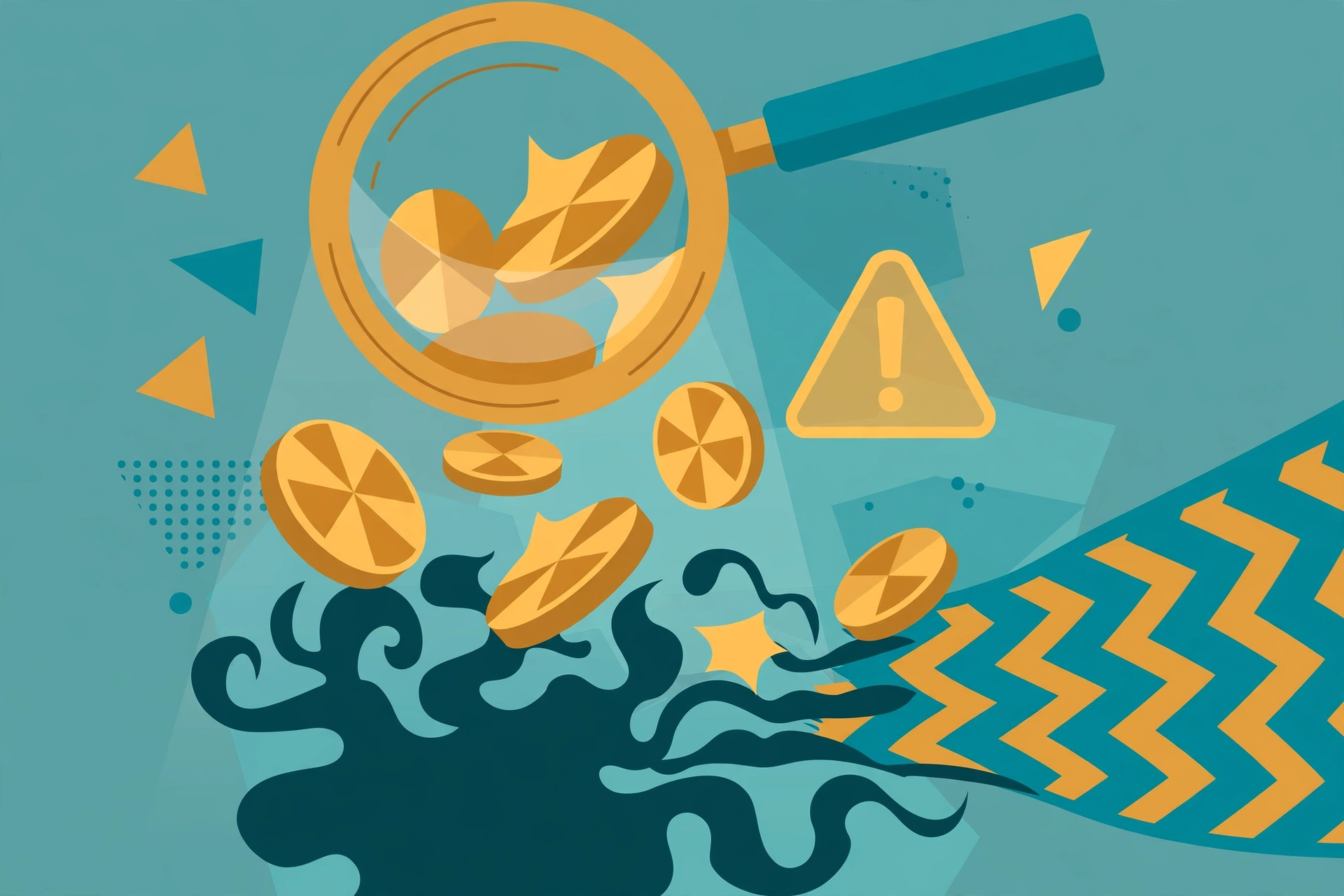
A rug pull is a specific kind of scam where the creators of a crypto project abandon it after taking investors’ money, or manipulate it so investors cannot sell. The name comes from the image of a rug being pulled from under someone’s feet: everything looked stable until the support vanished.
Rug pulls usually happen with new tokens, especially on decentralised exchanges where anyone can create a token and a trading pool with little oversight. A typical version works like this. Developers launch a token with an exciting story — a meme, a game, a new financial product — and add liquidity so people can buy it. Early buyers see the price rise and more people pile in. Then the developers remove the liquidity, or sell their large holdings all at once, and the price crashes to near zero. In a harsher variant, the token’s code prevents ordinary holders from selling at all, while the developers can. This is sometimes called a honeypot.
Some rug pulls are “soft” rather than sudden: the team simply stops developing, stops communicating, and quietly sells off holdings over time. The project fades rather than explodes, but the result for holders is the same.
Rug Pull Red Flags
No single red flag proves a project is a scam, but several together should stop you cold.
First, look at the team. Anonymous teams are common in crypto and are not automatically dishonest, but a project with no named team, no track record, and no way to contact anyone accountable carries extra risk. Be especially wary when a project’s claimed team members cannot be verified anywhere, or when their photos turn out to be stock images.
Second, look at who holds the tokens. If a small number of wallets hold a large share of the supply, those holders can crash the price by selling. Public blockchain explorers let anyone check token distribution, and while reading them takes practice, a quick search for a project’s token on a reputable explorer is a habit worth building. Similarly, check whether liquidity is locked. Locked liquidity means the developers cannot simply withdraw the trading pool’s funds; unlocked liquidity means they can, at any moment.
Third, read the project’s materials critically. Vague whitepapers full of buzzwords and promises but no technical detail, a website that looks thrown together, copied text from other projects, and a roadmap that promises everything at once are all warning signs. So are aggressive marketing tactics: paid influencers hyping a coin without disclosing payment, fake trading volume, and communities where questions are deleted and critics are banned. A healthy project tolerates scepticism. A scam needs to suppress it.
Fourth, watch for pressure and unrealistic returns. Claims of guaranteed daily profits, “risk-free” yields far above anything available elsewhere, or bonuses that shrink if you do not act today are designed to override your judgement. Legitimate projects explain risks. Scams hide them.
Finally, be careful with new tokens you did not seek out. Airdrops of unknown tokens appearing in your wallet, links sent by strangers, and coins promoted in comment sections are rarely gifts. Interacting with a malicious token or connecting your wallet to an unknown site to claim it can put your existing funds at risk. If you did not expect it, do not touch it until you have researched it from independent sources.
Practical Checks Before You Trust Anything
A short checklist, used consistently, prevents most losses. Before sending crypto anywhere or connecting your wallet to a new site, ask these questions: Who is behind this, and can I verify them independently? Is there a reason to trust this beyond its own marketing? Have I found the official website or app through a source I trust, rather than through a link someone sent me? Does the deal require me to act immediately? Would I still do this if the returns were ordinary rather than spectacular?
Beyond those questions, a few habits form the backbone of crypto safety. Never share your recovery phrase or private key with anyone, for any reason. Keep the bulk of your holdings in a wallet you control rather than on platforms you do not need to use, and learn how wallets work before moving large amounts — our guide on choosing a crypto wallet and staying safe (https://stylishnamees.com/crypto-wallets-beginners-2026-choose-stay-safe/) covers the basics. If you are learning how prices move, start with our explainer on reading crypto price charts (https://stylishnamees.com/read-crypto-price-chart-candlesticks-beginners/) and our guide to stablecoins and their risks (https://stylishnamees.com/stablecoins-explained-usdt-usdc-risks-beginners/) before trusting any claim about a coin’s performance. Keep records of what you buy, where, and when, because good records help you spot problems early and are essential for tax purposes — see our crypto taxes basics guide (https://stylishnamees.com/crypto-taxes-basics-beginners-what-to-track/) for what to track.
Use strong, unique passwords and two-factor authentication on every exchange account, and prefer an authenticator app over text-message codes where possible. Keep your devices updated, and be cautious about browser extensions that request wallet access. Most importantly, start small. If you are trying something new, test it with an amount you can afford to lose entirely. A legitimate service works the same with a small amount as with a large one; only a scam pressures you to go big immediately.
If You Think You Have Been Scammed
Act quickly, but calmly. If your wallet may be compromised — for example, if you shared your recovery phrase or connected to a malicious site — move any remaining funds to a brand-new wallet with a fresh recovery phrase, using a clean device if possible. Revoke token approvals you no longer trust, and change passwords on any affected accounts. Report the scam to the platform where it happened, to your local law enforcement or consumer protection authority, and to the relevant exchange if funds passed through one. Keep screenshots, transaction records, wallet addresses, and message histories, because they are the evidence investigators need.
Be honest with yourself about recovery: because crypto transfers are usually irreversible, getting funds back is difficult, and anyone who contacts you promising to recover stolen crypto for an upfront fee is very likely running a second scam on top of the first. Legitimate recovery services do not cold-message victims and demand payment in advance.
Frequently Asked Questions
Can a scam coin look legitimate?
Yes, and that is the point. Scam projects copy professional websites, hire influencers, pay for adverts, and create active-looking social channels. Appearances are cheap. Verify the team, the token distribution, the liquidity lock, and the code or audit claims through independent sources, and be wary of any project that cannot withstand that scrutiny.
Are all new or anonymous crypto projects scams?
No. Crypto has a long tradition of pseudonymous developers, and many legitimate projects started small. Anonymity is a risk factor, not proof of fraud. The question is whether the project’s design protects users anyway — for example, through locked liquidity, renounced control, or independent audits — and whether its claims hold up under examination.
Is it safe to click a link a friend sends about crypto?
Not automatically. Your friend’s account may have been hacked, or your friend may have been fooled themselves. Verify the link independently before connecting a wallet or entering credentials, and never let a message — even from someone you know — rush you past your normal checks.
What should I do about an unknown token in my wallet?
Leave it alone. Do not try to sell it or claim it through an unfamiliar site until you have researched it from trustworthy sources. Scam tokens are sometimes sent to many wallets at once precisely to lure holders into interacting with them.
Does regulation protect me?
Only partly, and it depends on where you live. Some crypto activity is regulated and some is not, and many platforms operate across borders. Never assume a regulator can reverse a transaction or refund a loss. Your own caution is still your main protection.
Conclusion
Crypto scams succeed by exploiting hope, urgency, and unfamiliarity — not by outsmarting experts with sophisticated technology. The defence is mostly discipline: slow down, verify independently, never share your recovery phrase, distrust guaranteed returns, and start small with anything new. Learn the patterns described here and they will start to jump out at you: the giveaway that asks you to send first, the stranger with a guaranteed strategy, the new coin whose developers hold all the cards.
If something feels off, it probably is, and walking away costs you nothing. The crypto market will still be there tomorrow. The money you protect by saying no to a scam is money you keep, and in a market this volatile, keeping what you have is a skill in itself. Keep learning with our other beginner guides — from how to survive a crypto bear market (https://stylishnamees.com/crypto-bear-market-survival-guide-beginners/) to our wallet safety basics — and treat every new opportunity as guilty until it proves itself innocent.