Crypto Dollar-Cost Averaging (DCA) Explained: A Beginner’s Guide
Risk disclaimer: Cryptocurrencies are volatile and can lose most or all of their value. Nothing in this article is financial advice. Never invest money you cannot afford to lose, and do your own research before buying any cryptocurrency.
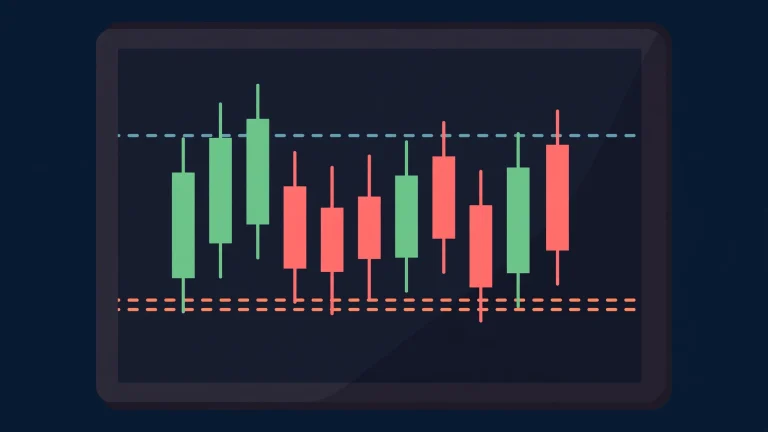
Most people who buy crypto for the first time face the same uncomfortable question: is now a good time to buy? The price of Bitcoin and other cryptocurrencies can swing sharply in a single day, and a coin that looks cheap on Monday can look expensive by Friday — or the other way around. Trying to guess the perfect moment to buy is stressful, and even experienced traders get it wrong most of the time.
Dollar-cost averaging, usually shortened to DCA, is a simple answer to that problem. Instead of trying to time the market, you invest a fixed amount of money at regular intervals, no matter what the price is doing. You buy when prices are high, you buy when prices are low, and over time your average purchase price smooths out. It will not make you rich overnight, and it will not protect you from losses, but it is one of the most beginner-friendly ways to build a crypto position without letting emotion run the show.
This guide explains what crypto dollar-cost averaging is, how it works in practice, what its advantages and disadvantages are, and how to set up a simple DCA plan of your own. It is written for complete beginners, so no prior investing experience is assumed.
What Is Dollar-Cost Averaging?
Dollar-cost averaging is an investment strategy where you put a fixed amount of money into an asset on a regular schedule — for example, $50 every week or $100 every month — regardless of the asset’s price at the time. The idea is old and comes from traditional stock market investing, but it fits crypto especially well because crypto prices move so much.
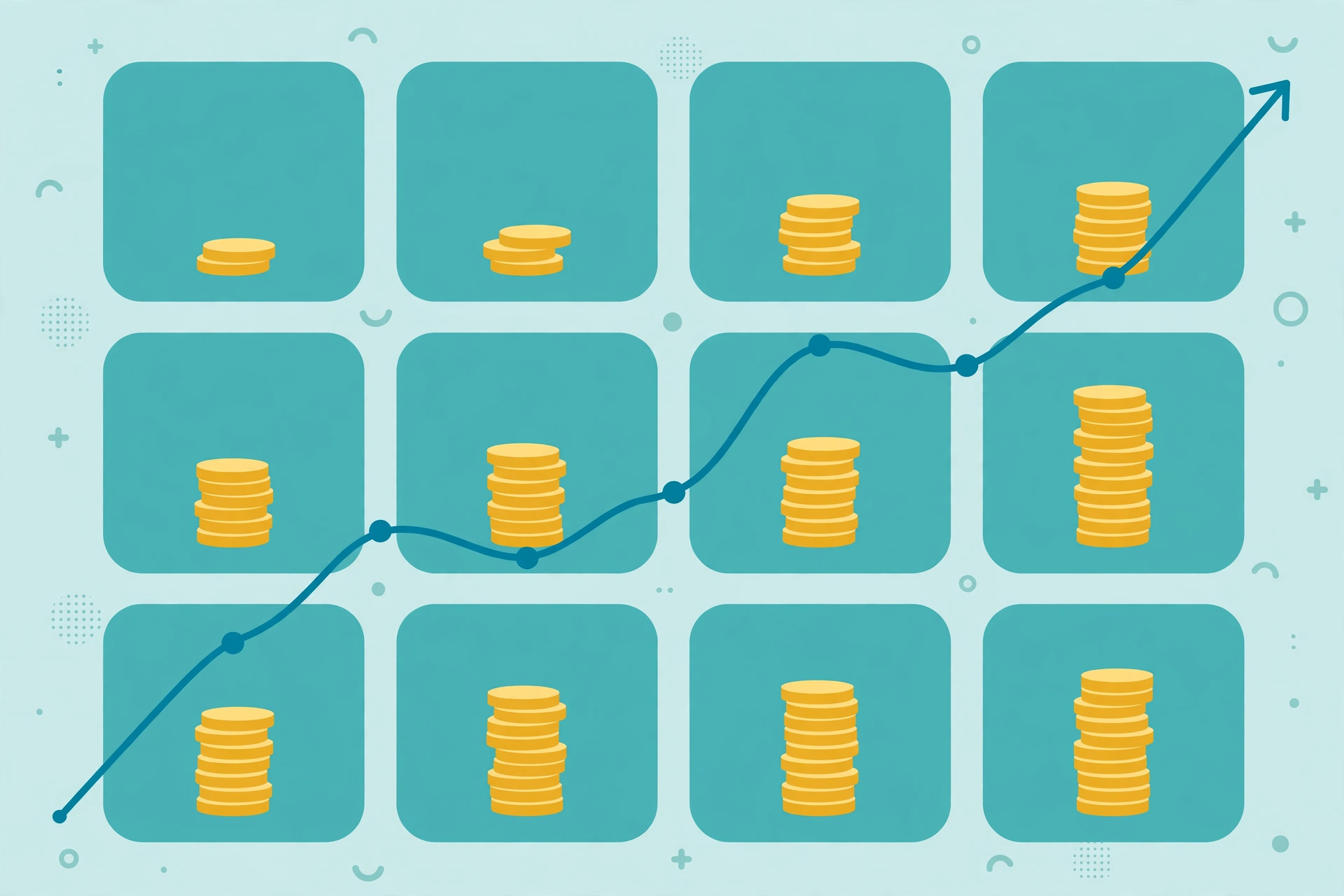
Here is the basic logic. When the price of a coin is high, your fixed amount buys fewer coins. When the price is low, the same amount buys more coins. Over months and years, those purchases average out. You end up with an average cost per coin that sits somewhere in the middle of the price range, rather than the price on one single lucky or unlucky day.
Imagine you decide to buy $100 of Bitcoin every month. In month one, Bitcoin’s price is high, so your $100 buys a small amount. In month two, the price drops sharply, so your $100 buys noticeably more. In month three, the price recovers partway, and your $100 buys a medium amount. After a year of this, your average purchase price reflects the whole range of prices across the year, not just the price on the single day you happened to start.
That is the whole strategy. There is no chart reading, no prediction, and no need to watch prices every day. You pick an amount, pick a schedule, and stick to it.
How DCA Works in Crypto
Crypto markets never close. Unlike stock markets, which shut at night and on weekends, crypto trades twenty-four hours a day, seven days a week. That makes DCA even easier to automate, because most exchanges let you set up a recurring buy that runs on your chosen schedule without you doing anything.
A typical DCA setup looks like this:
- Choose the cryptocurrency you want to buy. Many beginners start with Bitcoin or Ethereum because they are the largest and most established coins, but the strategy itself works with any coin.
- Choose a fixed amount you can afford to invest regularly. It should be money you genuinely do not need for rent, food, bills, or emergencies.
- Choose a frequency: weekly, fortnightly, or monthly. Weekly buys react faster to price changes; monthly buys are simpler and involve fewer transactions.
- Set up a recurring purchase on a reputable exchange, or buy manually on the same day each week or month.
- Move your coins to a secure wallet if you plan to hold them long term, and keep records of every purchase.
Some people also DCA into a small basket of coins rather than a single one — for example, splitting a monthly amount between Bitcoin and Ethereum. That is a personal choice, and it adds a little diversification, but it also adds complexity. If you are brand new, starting with one coin and one simple schedule is usually the smarter move.
A Simple Worked Example
Let us walk through a short example to make the maths concrete. Suppose you invest $50 every week for four weeks into a coin:
- Week 1: the price is high, and your $50 buys 0.001 coins.
- Week 2: the price falls, and your $50 buys 0.0015 coins.
- Week 3: the price falls further, and your $50 buys 0.002 coins.
- Week 4: the price recovers a little, and your $50 buys 0.0012 coins.
After four weeks you have spent $200 and own 0.0057 coins. Your average cost per coin is about $35,000 in this made-up example — lower than the price in week one, because the dips let you buy more coins for the same money. If you had spent the whole $200 in week one, you would own fewer coins.
This example is simplified, and real prices will not behave so neatly. But the principle holds: regular buying turns price falls into an opportunity to accumulate more coins, instead of a reason to panic.
Why Beginners Like DCA
There are several reasons dollar-cost averaging is so often recommended to people who are new to crypto.
It Removes the Timing Problem
Nobody can reliably predict short-term crypto prices. Professional traders, analysts, and algorithms all get it wrong regularly. DCA accepts that fact and stops trying. You do not need to decide whether today is a good day to buy, because you buy on schedule whether it feels good or not.
It Reduces Emotional Decisions
Crypto is an emotional market. Prices rise and people feel excitement and fear of missing out. Prices fall and people feel fear and panic. Many beginners buy at the top because everyone is excited, then sell at the bottom because everyone is scared. DCA replaces that cycle with a boring routine. Boring is a feature here, not a flaw.
It Builds a Habit
Investing a small amount regularly is easier to sustain than saving up for one big purchase. A weekly or monthly habit fits naturally alongside other regular payments, and it keeps you engaged with learning about crypto without demanding constant attention.
It Works With Small Amounts
You do not need a large sum to start. Many exchanges allow purchases of ten dollars or less. DCA is one of the few strategies that works just as well with small amounts as with large ones, which makes it a natural starting point for beginners.
It Smooths Out Volatility
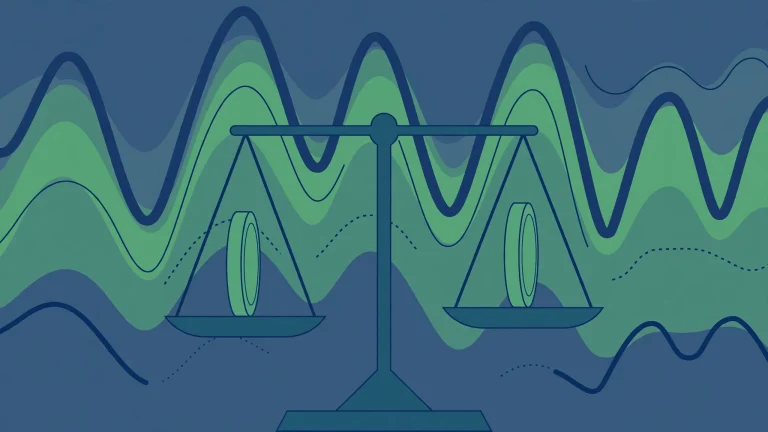
Crypto is far more volatile than most traditional investments. A coin can lose a large part of its value in weeks and then recover. By spreading purchases over time, DCA softens the impact of buying at a single bad moment.
The Downsides and Risks of DCA
DCA is a sensible strategy, but it is not a magic solution, and it is important to understand its limits before you start.
It Does Not Guarantee a Profit
If the price of a coin falls over a long period and never recovers, DCA will not save you. You will simply have bought more of a falling asset at progressively lower prices. Averaging down only helps if the price eventually goes back up. Some coins never recover, and some projects fail entirely. That is why the choice of what to buy matters as much as how you buy it.
It Can Underperform a Lump Sum in a Rising Market
If prices rise steadily, buying everything at the start would have produced a better result than spreading purchases over time, because later purchases happen at higher prices. Studies of traditional markets often find that lump-sum investing beats DCA on average in rising markets. DCA trades some potential return for lower risk and less stress. That trade-off is worth it for many beginners, but you should know it exists.
It Still Requires Discipline
DCA only works if you keep going when prices fall — and that is exactly when most people want to stop. If you pause your purchases every time the market drops, you lose the main benefit of the strategy, which is buying more coins when they are cheap. The schedule has to survive bad weeks.
Fees Can Add Up
Buying in small amounts frequently can mean paying transaction fees many times. Some exchanges charge a flat fee per purchase, which eats a bigger percentage of a small buy than a large one. Check the fee structure of your exchange, and consider a monthly schedule instead of a daily one if fees are high. Over a year, the difference can be meaningful.
It Does Not Remove the Need for Research
DCA is a buying method, not a substitute for understanding what you are buying. A disciplined schedule applied to a weak project is still a bad investment. Before you start, take time to understand the coin you are buying. Our guide to what Bitcoin is and our guide to what Ethereum is are good starting points if you are choosing between the two largest cryptocurrencies.
How to DCA Bitcoin: A Step-by-Step Plan
Bitcoin is the most common choice for a first DCA plan, so here is a concrete walkthrough for how to set one up.
Step 1: Decide Your Amount
Look at your monthly budget and find an amount you can invest every month without affecting your essential spending or your emergency savings. For some people that is $25 a month; for others it is $200. The right number is one you can sustain for a year or more without stress. If the amount makes you nervous, it is too high.
Step 2: Pick Your Frequency
Monthly is the simplest option and keeps fees low. Weekly buys react more quickly to price swings but cost more in fees and require a little more attention. Daily buys are usually overkill for a beginner. Most people starting out choose weekly or monthly.
Step 3: Choose a Reputable Exchange
Use a well-known exchange with a clear fee schedule, strong security, and a good reputation. Be wary of unknown platforms promising unusually low fees or guaranteed returns — those are common warning signs of scams. Our guide on how to spot crypto scams covers the red flags worth knowing before you sign up anywhere.
Step 4: Set Up the Recurring Buy
Most major exchanges offer a recurring purchase feature. You link a payment method, choose the coin, the amount, and the frequency, and the exchange handles the rest. If your exchange does not offer this, set a calendar reminder and buy manually on the same day each cycle.
Step 5: Secure Your Coins
If you plan to hold for the long term, learn about wallets. Leaving large amounts on an exchange carries its own risks, and a hardware wallet or a well-secured software wallet gives you control of your own coins. Read our guide on choosing a crypto wallet and our guide to storing your seed phrase safely before moving significant amounts.
Step 6: Keep Records
Record every purchase: date, amount spent, and coins received. This matters for tracking your average cost and for tax reporting, so keep a simple spreadsheet from day one rather than trying to reconstruct a year’s worth of trades later.
DCA vs Lump Sum: Which Is Better?
This is one of the most common questions beginners ask, and the honest answer is that it depends on the market and on your temperament.
A lump-sum investment means putting all your money in at once. If the market rises after you buy, a lump sum wins. If the market falls right after you buy, a lump sum loses badly and can be psychologically hard to sit through. DCA spreads that risk across many entry points, so no single day’s price matters that much.
Research on traditional stock markets suggests that lump-sum investing produces higher returns about two-thirds of the time, simply because markets tend to rise over long periods. Crypto markets are different from stock markets, though: they are far more volatile, and a single bad entry can mean a much bigger short-term loss. For a beginner who is still learning and who might panic-sell after a sharp drop, the steadier path of DCA is often the better real-world choice, even if the maths slightly favours a lump sum on paper.
A practical middle ground exists too. Some investors put in part of their money as a lump sum and DCA the rest over several months. That gives immediate exposure while still smoothing the entry price. There is no single correct answer — the best approach is the one you can stick with through a market downturn without losing sleep.
Common DCA Mistakes to Avoid
Even a simple strategy can go wrong if you make these common mistakes.
Stopping When Prices Fall
The most damaging mistake is pausing your DCA plan during a downturn. Falling prices are when your fixed amount buys the most coins, so stopping at that moment removes the strategy’s main advantage. If you cannot keep buying during a crash, your amount may be too large, or your time horizon may be too short.
Investing Money You Need Soon
Crypto is a long-term game for most DCA investors. Money you need for rent next month or a bill next quarter should never go into crypto. DCA works best with a time horizon measured in years, not weeks.
Choosing a Coin Based on Hype
Social media is full of coins being promoted as the next big thing. A disciplined buying schedule cannot fix a bad choice of asset. Stick to coins you have actually researched and understand, and be sceptical of anything promoted with promises of guaranteed returns.
Ignoring Fees and Spreads
Small, frequent buys on a high-fee platform can quietly eat a meaningful share of your investment. Compare fee structures before you commit, and check whether your exchange charges extra for recurring buys or for certain payment methods.
Forgetting About Taxes
In many countries, every crypto purchase and sale is a taxable event that needs to be recorded. DCA creates many small transactions, which means many records to keep. Set up a simple tracking system from day one rather than trying to reconstruct a year’s worth of trades later.
How Long Should You DCA?
There is no fixed answer, but most DCA plans are designed to run for at least a year, and often much longer. The strategy’s benefit grows with time: the more purchase points you have, the smoother your average price becomes and the less any single price spike or crash matters.
Some people DCA indefinitely, treating it as a permanent savings habit. Others DCA for a set period — say, twelve or eighteen months — and then stop buying and simply hold what they accumulated. Either approach can work. What matters is deciding your plan in advance, when you are calm, rather than changing it in the middle of a market swing.
It is also worth reviewing your plan once or twice a year. Your income, expenses, and goals change over time, and your DCA amount should change with them. A review is also a good time to check whether the coin you are buying still deserves your confidence, based on real developments rather than price movements alone.
Is DCA Right for You?
Dollar-cost averaging suits beginners who want to invest in crypto without trying to predict prices, who can commit a small amount regularly, and who are comfortable holding for years. It does not suit people who need quick returns, who cannot tolerate seeing their investment fall in value, or who want to trade actively.
Before you start, ask yourself three honest questions. First, can I afford to lose this money completely? Second, can I keep buying on schedule even if prices fall by half? Third, do I understand what I am buying well enough to hold it for years? If the answer to any of these is no, it is better to keep learning and save your money until the answers change.
If you are still learning the basics, our beginner’s checklist for buying crypto safely walks through the practical steps — choosing an exchange, securing your account, and avoiding common traps — before you spend anything.
Frequently Asked Questions
What is crypto dollar-cost averaging in simple terms?
Crypto dollar-cost averaging means investing a fixed amount of money into a cryptocurrency at regular intervals, such as $50 every week, regardless of the price. When prices are high you buy fewer coins, and when prices are low you buy more coins. Over time your average purchase price smooths out, and you avoid the risk of investing everything on one unlucky day.
How much money do I need to start DCA in crypto?
You can start with very little. Many exchanges allow purchases of $10 or less, so a plan of $10 or $25 per week is realistic for most beginners. The important thing is that the amount is money you can afford to lose and can sustain for months or years. Starting small and increasing later is far better than starting too big and being forced to stop.
Is DCA better than buying crypto all at once?
It depends on what happens next in the market, which nobody can predict. In a steadily rising market, buying everything at once usually produces better returns. In a falling or choppy market, DCA usually produces a better average price and is much easier to stick with emotionally. For most beginners, DCA is the safer and more sustainable choice, even if it is not always the mathematically optimal one.
How often should I DCA — daily, weekly, or monthly?
Weekly or monthly are the most popular choices. Weekly buys respond faster to price changes, while monthly buys are simpler and usually cheaper in fees. Daily buying is generally unnecessary for beginners and can rack up fees. Choose the frequency that fits your budget and your patience, and then stay consistent.
Can I DCA into more than one cryptocurrency?
Yes, you can split your regular amount across several coins, for example putting part into Bitcoin and part into Ethereum. This adds a small amount of diversification, but it also adds complexity and more transactions to track. Beginners are usually better off starting with one coin they understand well, and only adding a second once the habit is established.
Does DCA guarantee I will make a profit?
No. DCA reduces the risk of badly timing a single purchase, but it cannot turn a bad investment into a good one. If the coin you buy loses value over the long term and never recovers, you will still lose money. DCA is a risk-management technique, not a guarantee of returns, and no strategy can remove the fundamental risk of crypto investing.
What happens if the crypto market crashes while I am DCAing?
A crash means your fixed amount buys more coins than before, which lowers your average purchase price. That is the strategy working as intended — but only if you keep buying and the price eventually recovers. If the crash makes you stop your plan, you lose the benefit. This is why it is so important to invest only money you can afford to leave alone for years, and to decide your plan in advance.
Should I stop DCA when prices are very high?
Some investors pause or reduce purchases when prices rise sharply, but changing the plan based on price feelings defeats the purpose of DCA, which is to remove timing decisions. If you find yourself wanting to stop at market tops and restart at bottoms, you are timing the market again. A better approach is to set your amount and schedule in advance and review them on a fixed calendar date, not in reaction to price movements.
Conclusion
Crypto dollar-cost averaging is not exciting, and that is exactly why it works for so many beginners. It replaces guesswork with a routine, replaces panic with a plan, and turns market volatility from a threat into something your strategy can absorb. You will not buy at the perfect bottom, and you will not sell at the perfect top — but you will build a position steadily, at an average price, without needing to predict anything.
The strategy is simple, but simple does not mean effortless. It takes discipline to keep buying when prices fall, patience to wait years for results, and honesty about how much you can afford to risk. It also takes research: DCA is a way to buy, not a reason to buy, and the coin you choose matters as much as the schedule you follow.
If you decide DCA is right for you, start small, automate what you can, keep good records, and review your plan on a schedule rather than in reaction to headlines. And remember the golden rule of crypto: never invest money you cannot afford to lose. The best DCA plan in the world is still a plan for a volatile, unpredictable asset — treat it that way, and it can be a sensible first step into crypto.