Stablecoins Explained
Risk Disclaimer — Please Read First: Cryptocurrency is volatile, and “stable” is a design aim, not a promise. Stablecoins have lost their dollar peg before, issuers can freeze funds, and you can lose everything you put in. Nothing here is financial advice.
Stablecoins Explained: USDT, USDC and the Risks Beginners Miss
After watching Bitcoin swing ten percent in a day, most newcomers ask the same question: is there a crypto that just stays at one dollar? Stablecoins are the attempt to build exactly that — tokens designed to hold a steady value, usually one US dollar each. They have become some of the most widely held assets in the entire market, used for trading, saving and sending money across borders.
They are also widely misunderstood. “Designed to stay at a dollar” and “guaranteed to be worth a dollar” are very different statements, and the gap between them is where beginners get hurt. This guide explains how the peg is supposed to work, who stands behind the two biggest names, and the risks that the word “stable” quietly hides. If you are new to the whole topic, our beginner’s guide to Bitcoin is the natural place to start before this one.
What a Stablecoin Actually Is
A stablecoin is a token on a blockchain whose issuer, or design, tries to keep its market price fixed to an outside asset — most often the US dollar, sometimes the euro or gold. The stablecoin overview on Wikipedia traces the category’s history and its notable failures, which are as instructive as its successes.
The two names a beginner will meet everywhere:
USDT (Tether) is the oldest and largest dollar stablecoin, issued by the company Tether. It circulates on many different blockchains, which matters practically — USDT on one network is not automatically usable on another, and sending it to an address on the wrong network can lose it. Our crypto wallets guide explains why network choice is a safety issue, not a detail.
USDC is issued by Circle, a US-based company, and is marketed heavily on transparency, with regular published reports on its reserves. It is common on major exchanges and in newer payment products.
Both are fiat-backed: for each token in circulation, the issuer claims to hold a dollar’s worth of reserves. That claim is the entire foundation — which is why the next section matters.
How the Peg Is Supposed to Hold
The mechanism is arbitrage, and it is simpler than it sounds. If USDT trades at $0.98 on an exchange, a trader can buy it cheaply there and redeem it with the issuer for a full dollar, pocketing the difference. That buying pushes the price back up. If it trades at $1.02, the reverse trade pushes it down. As long as redemption genuinely works, market forces keep the price pinned near $1.00.
Read that condition again: as long as redemption genuinely works. The peg does not rest on the token’s code. It rests on:
- The reserves being real and sufficient — cash and low-risk assets such as short-term US government bonds, held in the promised amounts.
- The issuer staying solvent and operational — a company can be hacked, sued, frozen or shut down.
- Redemption being open in a crisis — direct redemption often has minimum amounts and identity checks, meaning ordinary holders depend on the exchange price, not on the issuer’s window, exactly when panic makes that price wobble.
Issuers publish reserve attestations — snapshots by accounting firms — rather than the full audits critics ask for. That distinction is a permanent debate around USDT in particular. You do not need to settle it; you need to know it exists before treating either token as cash.
Why People Use Stablecoins
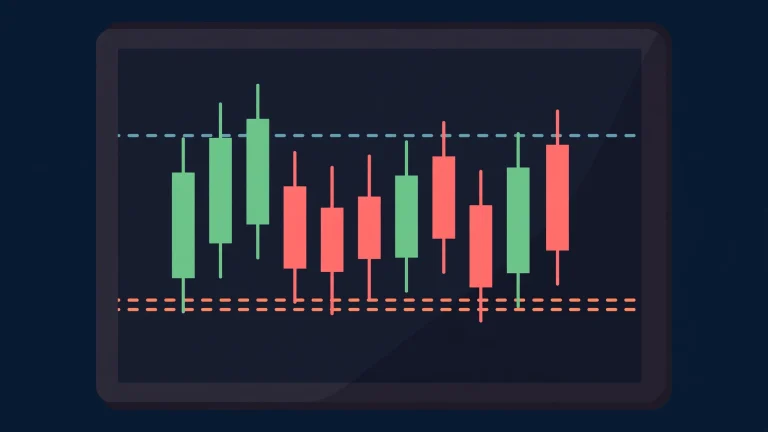
A parking place inside crypto. Traders moving out of a volatile coin can hold dollars without leaving the exchange system — useful, and exactly where the illusion of safety grows. The violent swings in the assets on either side are visible in any crypto price chart; stablecoins feel like stepping off that ride, while staying inside the same park.
Cross-border transfers. Sending USDT or USDC to another country can be faster and cheaper than traditional remittance routes, and recipients can convert locally. This is a genuine, widely used benefit in many regions.
Payments and savings in dollar form. People in countries with unstable local currencies sometimes hold stablecoins as informal dollar savings — understandable, but it swaps local-currency risk for issuer and platform risk, which the next section covers honestly.
The Risks Beginners Miss
Depegging happens. Stablecoins have traded well below a dollar during market panics, and in 2022 a major algorithmic stablecoin — one held up by code and incentives rather than reserves — collapsed to near zero entirely. Fiat-backed coins are a different, sturdier design, but “sturdier” is not “immune”. A token can also wobble for hours during a crisis, which matters if your rent money is sitting in it.
The issuer can freeze your coins. Centralised issuers keep the technical ability to blacklist addresses, and they use it at the request of law enforcement and courts. That may be legitimate policing — but it proves your stablecoin is not censorship-proof cash. A company stands between you and your balance.
Where you hold it is a separate risk. Stablecoins on a failed exchange are stuck in that failure regardless of the issuer’s health — 2022’s exchange collapses trapped plenty of supposedly “safe” dollar tokens. Self-custody removes the exchange layer and adds the key-management responsibility instead.
Interest offers are the classic trap. Platforms promising high, fixed yields on stablecoins are lending your money out or taking risks you cannot see. A string of such platforms failed in recent years, taking depositors’ “stable” balances with them. A dollar token earning bank-beating interest with no explained source is not a savings account; it is an unsecured loan to that platform.
Rules are tightening and vary. Stablecoins are increasingly regulated — reserve and licensing rules now exist or are arriving in major markets, including the United States and the European Union. Rules differ by country, can change what an issuer must hold, and decide whether a token is even legally offered where you live. Check the current position for your country before relying on any of them.
Sensible Beginner Habits
Hold stablecoins for a purpose — a transfer in progress, funds between trades — rather than as a forever parking place. Prefer the largest, longest-running issuers over obscure high-yield alternatives. Split meaningful amounts instead of trusting one issuer, one exchange and one wallet all at once. And keep the mindset straight: a stablecoin is a useful tool with a company and a banking system behind it, not digital cash under your mattress.
Frequently Asked Questions
Are USDT and USDC the same thing?
They aim at the same one-dollar target and work similarly, but they are issued by different companies with different reserves, policies and transparency practices. They are competitors, not two names for one product, and in a crisis they may not behave identically.
Can a stablecoin go to zero?
A fully reserved, well-run fiat-backed coin collapsing to zero would require its issuer and reserves to fail together — unlikely, but not impossible in a true crisis. Algorithmic stablecoins have already gone to near zero in practice. “Unlikely” is the honest word; “impossible” is marketing.
Is holding stablecoins safer than holding Bitcoin?
Safer against price swings, yes — that is their purpose. But they add issuer, reserve and freeze risks that Bitcoin does not have. You are trading market risk for counterparty risk, not deleting risk altogether.
Why does USDT exist on so many networks?
Because demand does. Issuers mint the token on multiple blockchains so users can pick speed and cost. The practical catch stands: always match the network on both sides of a transfer, exactly as the sending screen warns.
Should I keep my savings in stablecoins to earn interest?
This article gives no financial advice, but it will point at the fact pattern: high stablecoin interest has repeatedly come from platforms that later failed, and deposits there are not insured like bank deposits in many countries. Understand precisely where any yield comes from before chasing it — and if the answer is vague, that is your answer.
Conclusion
Stablecoins are dollar claims wearing crypto clothing: genuinely useful for transfers, trading and temporary parking, held at a dollar by reserves, redemption and arbitrage rather than by magic. USDT and USDC dominate because they have scaled and survived — so far. Keep the risks in view: pegs can break, issuers can freeze, platforms can fail, and yield always comes from somewhere. Used with that understanding, they are a tool. Mistaken for guaranteed cash, they are a trap. More beginner explainers wait in the Crypto section on Stylish Namees.