Proof of Work vs Proof of Stake Explained for Beginners
Risk disclaimer: Cryptocurrencies are volatile and can lose most or all of their value. Nothing in this article is financial advice. Never invest money you cannot afford to lose, and do your own research before buying any cryptocurrency.
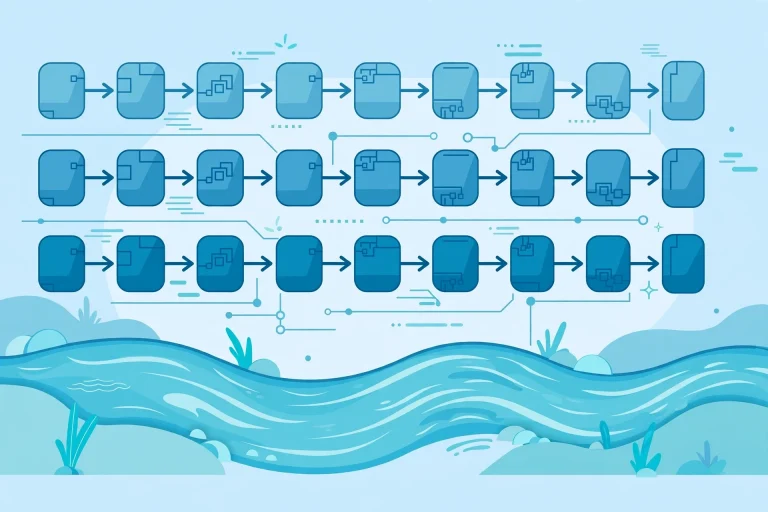
Every blockchain faces the same basic problem: how do thousands of computers that do not trust each other agree on which transactions are real? There is no central office, no manager, and no referee. The network has to reach agreement on its own, and it has to do it in a way that cheaters cannot exploit. The solution to this problem is called a consensus mechanism, and the two most important ones are proof of work and proof of stake.
Bitcoin uses proof of work. Ethereum used to use proof of work and now uses proof of stake. Most other major blockchains use one or the other, or a variation of them. If you want to understand why Bitcoin uses so much electricity, why Ethereum changed its system, or what it means to stake your coins, you need to understand these two ideas.
This guide explains both mechanisms in plain language, compares them honestly, and answers the questions beginners ask most often.
What Is a Consensus Mechanism?
A blockchain is a shared record book. Every transaction is written into it, and every participant keeps a copy. For the system to work, everyone has to agree on what is in the book. If two people disagree about whether a payment happened, the network needs a fair way to decide who is right.
A consensus mechanism is the set of rules the network uses to reach that agreement. It decides who gets to add the next page of transactions to the book, how the rest of the network checks that page, and what happens to anyone who tries to cheat. Without a consensus mechanism, a blockchain would be nothing more than a spreadsheet that anyone could rewrite.
Consensus mechanisms also protect the network against a classic problem called double-spending: using the same coins twice. In traditional banking, the bank prevents this. In crypto, the consensus mechanism does the job instead.
Proof of Work Explained
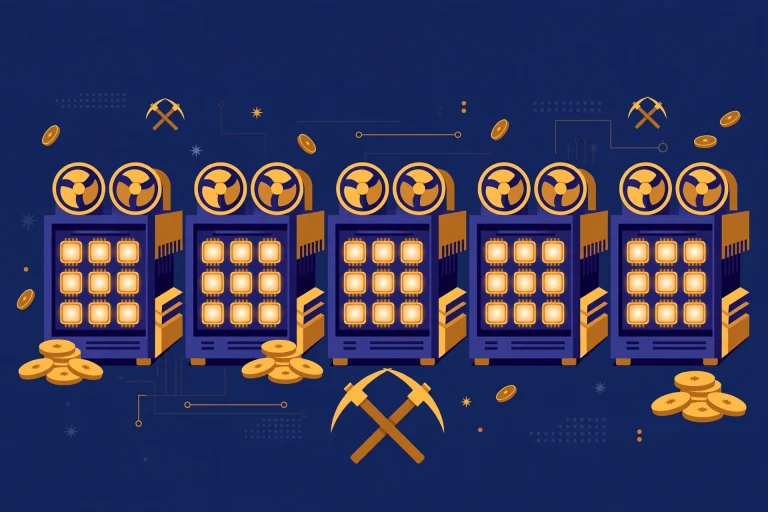
Proof of work is the older of the two systems, and it is the one Bitcoin invented. It works through a competition. Computers on the network, called miners, race to solve a difficult mathematical puzzle. The first miner to solve it gets to add the next block of transactions to the blockchain and earns a reward in new coins plus transaction fees.
The puzzle is deliberately hard to solve but easy to check. It is like a combination lock with millions of possible combinations: finding the right one takes a lot of trying, but once someone finds it, everyone else can verify it instantly. Miners make trillions of guesses per second, using specialised hardware that consumes a great deal of electricity.
Why design a system this way? Because the work itself is the security. To attack the network — for example, to rewrite past transactions — an attacker would need to control more computing power than the rest of the network combined. That would require an enormous amount of hardware and electricity, which makes an attack extremely expensive and, in practice, very difficult on a large network like Bitcoin.
How Mining Works Step by Step
Here is the process in simplified form. Transactions are broadcast to the network and collected into a pool of unconfirmed transactions. Miners pick transactions from that pool, usually prioritising the ones with higher fees, and bundle them into a candidate block. Then they start guessing solutions to the puzzle. The miner who finds a valid solution first broadcasts the block to the rest of the network. Other computers check the block, and if it is valid, they add it to their copy of the blockchain and start working on the next one.
The network automatically adjusts the difficulty of the puzzle so that a new block is found roughly every ten minutes on Bitcoin, no matter how many miners join or leave. If more miners join, the puzzle gets harder; if miners leave, it gets easier.
Miners are paid in two ways: newly created coins, called the block reward, and the fees attached to the transactions in the block. On Bitcoin, the block reward halves roughly every four years in an event called the halving, which means fees will matter more over time.
The Strengths of Proof of Work
Proof of work has been running on Bitcoin since 2009, which is a long track record in crypto. Its security model is simple to understand and has been tested against real attacks for well over a decade. Because attacking the network requires physical hardware and electricity, an attacker cannot simply buy their way in with money alone — they need infrastructure, power contracts, and time.
Proof of work is also fair in one specific sense: anyone with a computer can, in principle, join the network and start mining. In practice, mining is now dominated by large operations with specialised equipment, but the system itself has no gatekeeper and no permission process.
The Problems With Proof of Work
The most famous problem is energy use. Bitcoin mining consumes a very large amount of electricity — comparable to the consumption of some medium-sized countries. Supporters argue that much of this energy comes from renewable or otherwise unused sources, and that the security is worth the cost. Critics argue that the environmental cost is too high for what the system delivers. This is a genuine debate, and honest writing about proof of work has to acknowledge it.
Mining also tends to centralise over time. The specialised hardware is expensive, and the cheapest electricity is available only in certain places, so mining power concentrates in the hands of a relatively small number of large operations and mining pools. That concentration worries people who care about decentralisation.
Finally, proof of work is slow by modern standards. Bitcoin processes a small number of transactions per second, and blocks take around ten minutes. That is fine for a store of value, but less suitable for everyday payments — which is one reason layer 2 scaling solutions like the Lightning Network were developed for Bitcoin.
Proof of Stake Explained
Proof of stake takes a completely different approach to the same problem. Instead of miners competing with computing power, the network chooses validators based on how many coins they have locked up — staked — as a guarantee of good behaviour. Validators are chosen to propose and check new blocks, and they earn rewards for doing the job honestly. If they cheat or go offline, part of their staked coins can be taken away in a penalty called slashing.
The core idea is simple: people who have a lot of money at stake in the network are less likely to attack it, because an attack would destroy the value of their own holdings. Instead of proving work with electricity, you prove commitment with your own coins.
How Staking Works Step by Step
To become a validator on a proof of stake network, you lock up a required amount of the network’s coins in a special deposit. On Ethereum, for example, running your own validator requires a substantial deposit. The network then selects validators at random to propose new blocks and to check the work of other validators. Selection is partly random and partly weighted by how much is staked, so larger stakers are chosen more often but no single validator controls the process.
Validators who do their job correctly earn rewards, paid in the network’s coins. Validators who misbehave — for example, by approving a fraudulent transaction — can lose part of their stake. That financial penalty is what replaces the energy cost of proof of work as the security mechanism.
Most ordinary users do not run their own validator. Instead, they stake through a pool or an exchange, which combines many small stakes into a large one and shares the rewards, minus a fee. This is much easier, but it means trusting the pool operator, and that trust is worth thinking about before you hand over your coins.
The Strengths of Proof of Stake
The biggest advantage is energy efficiency. Proof of stake networks use a tiny fraction of the electricity of a proof of work network, because there is no puzzle-solving race. When Ethereum switched from proof of work to proof of stake in 2022, its energy use fell dramatically, and that change removed one of the most common criticisms of the network.
Proof of stake is also easier for ordinary people to take part in. You do not need expensive hardware or cheap electricity; you need coins and a willingness to lock them up. That lowers the barrier to entry, at least in theory.
Finally, proof of stake can process transactions faster and can be upgraded more flexibly, because changing the rules does not require convincing miners to replace their hardware. This flexibility is one reason many newer blockchains chose proof of stake from the start.
The Problems With Proof of Stake
The most common criticism is that proof of stake favours the rich. People who already hold many coins earn more rewards, which lets them buy more coins, which earns them more rewards. Over time, this could concentrate control in the hands of early and wealthy holders. Supporters reply that proof of work has the same problem — wealthy miners buy more hardware — but the concern is real and widely discussed.
Another criticism is about security. Proof of work’s security has been tested for many years, while proof of stake at Ethereum’s scale is newer. There are also subtle attack scenarios that researchers are still studying, such as the so-called “nothing at stake” problem, where validators might have little reason not to support multiple competing versions of the blockchain. Modern proof of stake systems include penalties designed to prevent this, but the system is more complex than proof of work, and complexity itself is a risk.
Staking also involves locking up your coins. On some networks, unstaking takes days or weeks, which means you cannot sell quickly if the price falls. And staking through a third party introduces counterparty risk: if the pool or exchange fails or is hacked, your coins may be at risk.
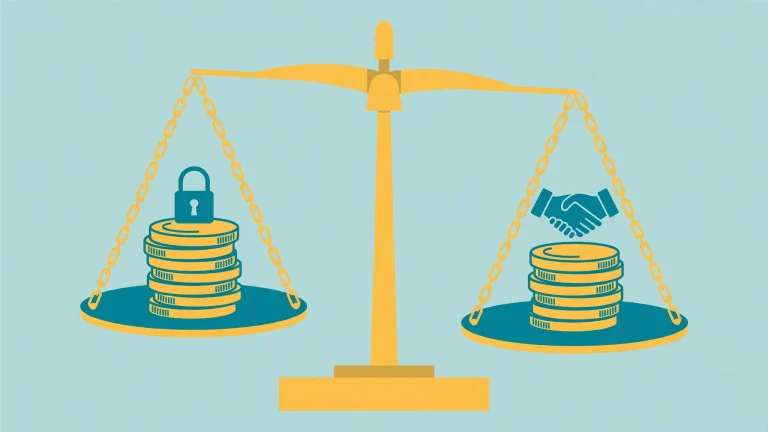
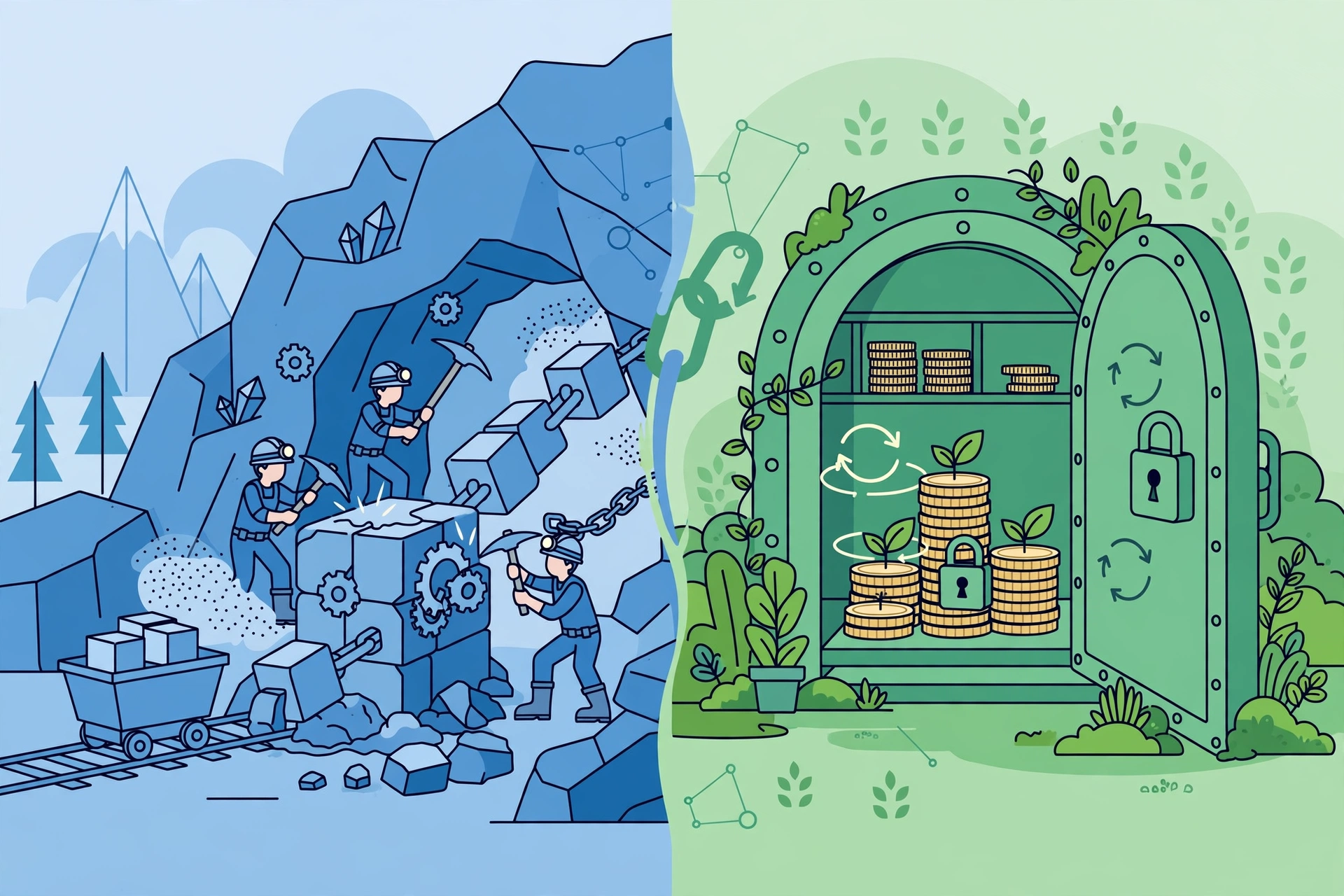
Proof of Work vs Proof of Stake: A Direct Comparison
Here is the comparison that matters most for beginners.
Energy use is the biggest difference. Proof of work uses enormous amounts of electricity; proof of stake uses very little. This is the main reason Ethereum switched, and the main reason most new blockchains choose proof of stake.
Security works differently. Proof of work secures the network with the cost of hardware and electricity. Proof of stake secures it with the financial risk of losing staked coins. Both approaches can be secure at scale, but proof of work has a longer track record, while proof of stake is still proving itself on the largest networks.
Speed and cost differ too. Proof of work networks like Bitcoin are relatively slow and can be expensive when busy. Proof of stake networks are generally faster and cheaper to use, though the difference varies a lot between specific blockchains.
Participation is different as well. Mining requires specialised equipment and cheap power. Staking requires coins, and often a minimum amount, but no special hardware. Both have barriers; they are just different barriers.
Decentralisation is the hardest point to judge. Proof of work tends to concentrate in mining pools and regions with cheap power. Proof of stake tends to concentrate in large holders and staking services. Neither system has solved decentralisation perfectly, and anyone who tells you one is clearly more decentralised than the other is simplifying.
Which Coins Use Which System?
Bitcoin is the most important proof of work coin, and it is very unlikely to change. Litecoin and Dogecoin also use proof of work, as do several other older cryptocurrencies.
Ethereum is the most important proof of stake coin, after its switch in 2022. Solana, Cardano, and Polygon also use proof of stake or variations of it. Many newer blockchains choose proof of stake from the beginning because of its energy efficiency and speed.
It is worth knowing that some projects use hybrid or modified systems, and that the labels can be blurry. But for a beginner, the Bitcoin-versus-Ethereum split is the most useful example: the two largest cryptocurrencies, running on the two different systems.
What Staking Means for Beginners
If you are new to crypto, staking is probably the part of proof of stake you will actually encounter. Many exchanges and wallets offer staking with a few clicks: you lock up some coins, and you earn rewards over time. It sounds like earning interest, and in some ways it is similar, but there are important differences.
First, staking rewards are not guaranteed, and they are paid in the same volatile cryptocurrency you staked. If the coin’s price falls by half, your rewards will not make up for that loss. Second, staked coins are often locked for a period, so you cannot sell them quickly. Third, staking through an exchange means the exchange holds your coins, which adds a risk that does not exist when you hold them yourself. Read our guide on crypto staking and on choosing a crypto wallet before you stake anything significant.
Staking can be a reasonable way to earn a return on coins you plan to hold for a long time. It is not a safe savings account, and it should never be treated as one.
Which System Is Better?
There is no settled answer, and the crypto world argues about this constantly. Supporters of proof of work point to Bitcoin’s unmatched track record, its simple security model, and its resistance to the concentration of wealth. Supporters of proof of stake point to energy efficiency, accessibility, and the ability to build faster and more flexible networks.
What is fair to say is this: proof of work has proved itself over the longest period and under the most hostile conditions. Proof of stake has proved itself at large scale more recently, most notably on Ethereum, and it solves the energy problem that was proof of work’s biggest weakness. The two systems may simply suit different purposes — proof of work for a digital store of value that prioritises security above all else, and proof of stake for general-purpose platforms that need speed and flexibility.
For a beginner, the debate matters less than understanding what you are buying. If you are considering Bitcoin, you should know it runs on proof of work and why that matters for energy use and security. If you are considering Ethereum, you should know it runs on proof of stake and what staking means. The consensus mechanism is part of what a coin is, not a technical detail you can ignore.
Frequently Asked Questions
What is proof of work in simple terms?
Proof of work is a system where computers called miners compete to solve a difficult puzzle. The first to solve it adds the next block of transactions to the blockchain and earns a reward. The puzzle-solving takes a lot of electricity, and that cost is what makes it expensive and difficult for anyone to attack the network. Bitcoin uses proof of work.
What is proof of stake in simple terms?
Proof of stake is a system where the network chooses validators based on how many coins they have locked up, or staked, as a guarantee of good behaviour. Validators earn rewards for checking transactions honestly, and they can lose part of their stake if they cheat. It uses very little electricity compared to proof of work. Ethereum uses proof of stake.
How does proof of stake work?
In proof of stake, users lock up coins to become validators or to delegate their coins to a validator. The network randomly selects validators to propose and verify new blocks. Honest validators earn rewards in the network’s coins, while dishonest ones can be penalised by losing part of their stake. Most users stake through a pool or an exchange rather than running their own validator.
Is proof of stake better than proof of work?
It depends on what you value most. Proof of stake is far more energy-efficient and generally faster, which is why most new blockchains use it. Proof of work has a longer track record and a simpler security model, which is why Bitcoin still uses it. Neither system is clearly better in every way, and the crypto community continues to debate the trade-offs.
Why did Ethereum switch from proof of work to proof of stake?
Ethereum switched mainly to reduce its energy consumption and to make the network more scalable. The change, completed in 2022, cut Ethereum’s energy use dramatically and laid the groundwork for future upgrades. It also changed how new ETH is issued and how users can earn rewards by staking.
Can I earn money by staking crypto?
Yes, staking can earn rewards, usually paid in the same cryptocurrency you staked. But staking is not risk-free: the coin’s price can fall, your coins may be locked for a period, and staking through a third party adds counterparty risk. Treat staking as a feature of holding a coin long term, not as a guaranteed income.
Is proof of work bad for the environment?
Bitcoin mining uses a large amount of electricity, and that is a legitimate concern. How serious it is depends on where the energy comes from — a significant share of mining uses renewable or surplus energy, but a significant share does not. Proof of stake avoids this problem almost entirely, which is one of its strongest advantages. This is a real and ongoing debate in the crypto world.
What is a 51% attack?
A 51% attack is when a single party gains control of more than half of a network’s mining power in proof of work, or more than half of the staked coins in proof of stake, and uses that control to manipulate the blockchain — for example, by reversing transactions. On large networks like Bitcoin and Ethereum, this is extremely expensive and has never succeeded. Smaller networks with less mining power or less staked value are more vulnerable.
Conclusion
Proof of work and proof of stake are two different answers to the same question: how can strangers agree on a shared record without trusting a central authority? Proof of work answers with competition and electricity. Miners race to solve puzzles, and the cost of that race secures the network. Proof of stake answers with commitment and financial risk. Validators lock up their own coins, and the threat of losing them keeps them honest.
Bitcoin proves that proof of work can secure a network for well over a decade. Ethereum proves that proof of stake can work at enormous scale while using a fraction of the energy. Both systems have real strengths and real weaknesses, and neither has won the argument outright.
For beginners, the important thing is not to pick a side in the debate. It is to understand that the consensus mechanism shapes everything about a cryptocurrency — its energy use, its speed, its security, and how you can earn rewards from it. The next time someone tells you a coin is better because it uses one system or the other, you will know enough to ask what trade-offs they are not mentioning.