Teen Patti Guide for Beginners: Rules, Hands and Common Mistakes
Teen Patti is one of the most social card games in South Asia. The name means “three cards,” and that tells you almost everything about how the game works: each player is dealt three cards, face down, and the winner is the player holding the strongest three-card hand — or the last player still in the game after everyone else has folded. It is fast, it is easy to learn in a single sitting, and it is played at family gatherings, festivals, and on countless apps and online tables. That simplicity is also what trips beginners up. Because a hand takes only a few minutes, it is tempting to play loosely, bet without thinking, and treat every round as a fresh chance to win it all back. This guide explains the rules properly, ranks every hand from strongest to weakest, walks through a typical round step by step, and finishes with the mistakes that cost new players the most.
If you are new to card games in general, Teen Patti is a friendly place to start, because you only have to judge three cards instead of five or seven. But “easy to learn” is not the same as “easy to win.” Like every casino card game, Teen Patti is built so that no strategy can guarantee a profit over time, and the house or the platform always takes its cut in one form or another. Treat this article as education: learn the game, enjoy understanding it, and keep your expectations honest.
Legal Status in Thailand — Read This First
Gambling is largely prohibited in Thailand. Under the Gambling Act B.E. 2478 (1935), most forms of gambling are illegal, and the only well-known legal exceptions are the government lottery and licensed horse racing at approved racecourses. Online casinos are not licensed in Thailand, and websites offering real-money casino games — Teen Patti included — to people in Thailand operate outside Thai law.
That has practical consequences: an unlicensed site offers no Thai consumer protection if it refuses to pay out, freezes an account or disappears, and Thai authorities periodically block gambling websites and payment channels. Money sent to an offshore platform can simply be lost with no realistic way to recover it.
This article is educational and informational only — it explains how Teen Patti works because readers ask about it, not to encourage anyone to break local law. Casino games are for adults only (18+), there are no guaranteed winnings in any game, and over time the maths and the fees charged by operators favour the house. Never chase losses, never gamble with borrowed money or money needed for living costs, and if gambling stops being fun, free and confidential help is available from BeGambleAware and Gamblers Anonymous.
How Teen Patti Is Played
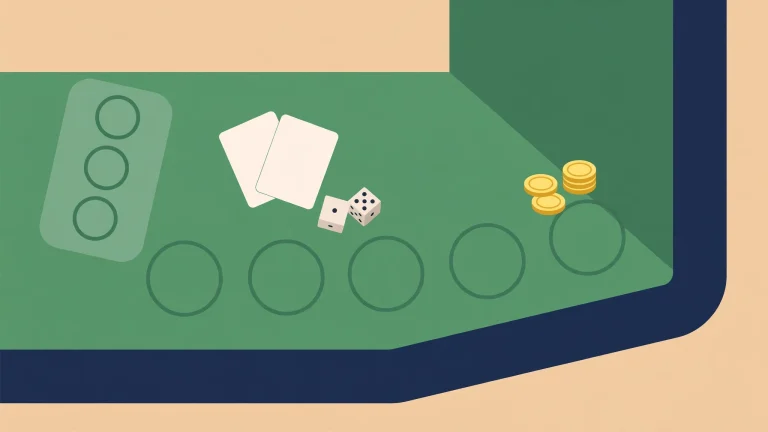
Teen Patti is normally played with a standard 52-card deck and between three and six players, although some tables allow more. Before any cards are dealt, every player puts an agreed amount into the pot. This starting contribution is called the boot amount, and it is what everyone is playing for. Once the boot is in, the dealer deals three cards face down to each player, one at a time, so nobody can see anyone else’s hand.
After the deal, betting moves around the table in turns. On your turn you have a few basic choices. You can fold, which means giving up your cards and leaving the round. You can call, which means matching the current bet so you stay in. You can raise, which means increasing the bet that the next players must match if they want to continue. Or, in some versions, you can ask for a show, which means comparing your hand directly with another player’s hand; the weaker hand folds and the stronger one stays. The round ends when only one player remains — everyone else has folded — or when a showdown compares the last two hands and one is declared the winner.
One feature that confuses beginners is the difference between playing “blind” and playing “seen.” A blind player bets without looking at their own cards. A seen player has looked at their cards before betting. Seen players usually have to bet a higher amount than blind players, because they have the advantage of information. Playing blind is not a clever trick on its own; it is a trade-off. You pay less per bet, but you are betting on cards you have not seen, which means you are guessing. Many casual games are full of blind players raising each other for several rounds before anyone looks, and that can make the pot grow surprisingly quickly. If you do not understand why the pot is suddenly large, that is usually why.
Teen Patti Hand Rankings, Strongest to Weakest
With only three cards, the rankings are shorter than in poker, but you must know them cold. A moment of confusion about whether your hand beats someone else’s can cost you a pot you had already won, or keep you in a hand you should have left long ago. From strongest to weakest:
1. Trail (also called a Set or Trio)
Three cards of the same rank, such as three aces or three fives. This is the best possible hand in Teen Patti. Three aces beat three kings, which beat three queens, and so on down to three twos. Trails are rare, which is exactly why they are so strong. If you are dealt one, you have a hand that almost never loses, but even then, do not assume the round is already yours until it is over — a careless raise can still scare everyone away before the pot grows, which is a different kind of loss.
2. Pure Sequence (Straight Flush)
Three cards in a row, all in the same suit, such as 5-6-7 of hearts. The highest pure sequence is ace-king-queen of one suit, and the lowest is ace-2-3 of one suit, where the ace counts low. A pure sequence beats any ordinary sequence, so the suit matching matters here even though suits do not matter elsewhere in the game.
3. Sequence (Straight)
Three cards in a row in mixed suits, such as 9-10-jack of different suits. As with a pure sequence, ace-king-queen is the highest and ace-2-3 is the lowest. If two players both hold sequences, the one with the higher top card wins.
4. Colour (Flush)
Three cards of the same suit that are not in a row, such as king-7-3 of spades. When two players both hold a colour, compare the highest card first, then the next, then the lowest. An ace-high colour beats a king-high colour, and so on.
5. Pair
Two cards of the same rank plus one unrelated card, such as two queens and a four. A pair of aces beats a pair of kings, and if two players hold the same pair, the third card — the kicker — decides the winner. A pair is the hand most beginners overvalue, because it feels strong when you first see it. It is a middling hand. It beats only a high card, and it loses to everything above it.
6. High Card
No pair, no sequence, no matching suit — just three unrelated cards. Your highest card decides, then the second, then the third. Ace-high is the best high-card hand, but it is still the weakest type of hand in the game. If you are holding nothing better than high card and the betting is getting serious, that is usually your signal to fold.
Notice what is missing compared with poker: there is no two-pair and no full house, because you only have three cards. That changes the odds completely. Hands that would be ordinary in poker are powerful here, and the gap between a pair and a sequence is the gap between winning and losing most rounds.
A Typical Round, Step by Step
Imagine a four-player table. Everyone puts the boot amount into the pot. The dealer deals three cards face down to each player. The first player to act can fold, call, or raise. Suppose the first two players call blind, without looking. The third player looks at their cards — they have a pair of jacks — and calls as a seen player, paying the higher seen amount. The fourth player folds. Betting goes around again. The blind players must decide whether to keep paying without information or to look and pay more. Eventually one blind player looks, sees a high-card hand with a king, and folds rather than pay more to chase a weak hand. The remaining players continue until one asks for a show, the hands are compared, and the pair of jacks wins the pot.
That simple story contains most of what matters: position around the table, the blind-versus-seen decision, the discipline to fold a weak hand, and the showdown that settles it. None of it requires advanced maths. It requires patience, and that is where beginners struggle most.
Common Mistakes Beginners Make
The first mistake is playing too many hands. Because Teen Patti is fast and social, it feels rude or boring to keep folding. So beginners stay in with high-card hands, hoping the next round of betting will somehow improve cards that cannot improve — your three cards are fixed the moment they are dealt, unlike games where more cards arrive later. If your hand is weak after the deal, it stays weak. Folding early is not losing; it is refusing to pay for a hand you are unlikely to win.
The second mistake is confusing confidence with information. Playing blind feels bold, and winning a pot while blind feels brilliant. But blind play is guessing, and guessing repeatedly is a reliable way to hand money to players who actually looked at their cards. Use blind play sparingly, in small amounts, and only when you understand that you are paying for entertainment, not gaining an edge.
The third mistake is chasing losses. This is the most expensive mistake in any casino game, and Teen Patti’s speed makes it especially dangerous. A bad run can tempt you to raise the stakes, play hands you would normally fold, and tell yourself that one big pot will fix everything. It rarely does. The cards do not remember that you lost the last five hands, and they owe you nothing. Set a limit before you play, stop when you reach it, and never borrow money to keep playing.
The fourth mistake is ignoring the pot size. Beginners often focus only on their own cards and forget to ask how much it costs to stay in compared with what they can win. If the pot is small and the bet to stay in is large, even a decent hand may not be worth it. If the pot is large and the bet is small, a marginal hand may be worth one more call. This habit — comparing cost against reward — is the single most useful skill a casual player can build.
The fifth mistake is trusting patterns that do not exist. After three low cards in a row, it feels as though a strong hand must be “due.” It is not. Each deal is a fresh shuffle, and the deck has no memory. The same goes for lucky seats, lucky days, and rituals. They may be fun, but they do not change the cards.
Teen Patti Versus Poker: A Quick Comparison
Beginners often ask whether Teen Patti is just “Indian poker.” The games share a family resemblance — hidden cards, betting rounds, folding and bluffing — but they play very differently. Poker hands use five cards, which creates far more hand types and far more room for strategy about which cards to keep and which to discard. Teen Patti’s three cards make the game faster and simpler, but also more luck-driven: with fewer cards, there is less information to work with and less room for skill to overcome a bad deal. Poker also has community cards and multiple betting streets, while Teen Patti is usually one continuous betting round. If you enjoy the social, quick-fire feel of a three-card game, Teen Patti fits. If you want a game where study and patience pay off more over time, poker offers more depth — and still no guarantee of winning.
Frequently Asked Questions
Is Teen Patti a game of skill or luck?
Both, but luck dominates in the short term. You are dealt three random cards, and no decision can turn a high-card hand into a trail. Skill shows up in folding discipline, bet sizing, reading opponents, and knowing when a pot is not worth chasing. Over hundreds of hands, disciplined players lose more slowly than reckless ones — but that is not the same as winning reliably.
How many players can play Teen Patti?
Three to six is the usual range, and the game works best in that window. With too few players, the betting feels thin. With too many, the pot grows fast and the chance that someone holds a very strong hand rises, which makes marginal hands even weaker than usual.
What does “seen” and “blind” mean?
A blind player bets without looking at their cards; a seen player has looked. Seen bets are normally higher because the seen player has information. Playing blind costs less per bet but means betting on unknown cards.
Can you win at Teen Patti consistently?
No honest guide can promise that. In casual play among friends with no house cut, a disciplined player may do better than a careless one over time. In any version where a platform takes a fee or a rake, that fee works against every player. Treat any site or video that promises a winning Teen Patti system with deep suspicion.
Is Teen Patti legal in Thailand?
Gambling is largely prohibited in Thailand under the Gambling Act B.E. 2478 (1935), with only the government lottery and licensed horse racing as the well-known exceptions. Online casinos are not licensed in Thailand. This article is educational only.
Conclusion
Teen Patti earns its popularity honestly: it is quick, social, and genuinely easy to learn. Three cards, a simple ranking ladder, and one pot to fight over — that is the whole game. The skill lies not in memorising tricks but in the quiet disciplines: folding weak hands without embarrassment, refusing to chase losses, watching the pot size before you pay to stay in, and remembering that each deal starts fresh. Learn the hand rankings until you never have to think about them, play within limits you set before the first card is dealt, and enjoy the game for what it is — a fast, social card game, not a way to make money. If you want to understand other card games next, our guides to poker, casino etiquette, and live dealer games on Stylish Namees are a natural next step, and our beginner explainers on Bitcoin and crypto wallets will help if you are curious about the digital side of online gaming.
Further reading on this site: explore the Casino Games and Crypto sections at Stylish Namees for beginner-friendly guides written in the same plain style.