Roulette Strategies Explained for Thai Beginners: Martingale, Fibonacci and the Risks
Roulette Strategies Explained for Thai Beginners: Martingale, Fibonacci and the Risks
Roulette is one of the easiest casino games to understand and one of the hardest to walk away from with a profit. You place a chip, the wheel spins, and a small ball decides whether you win or lose. That simplicity is exactly why betting systems have flourished around it for centuries. Every few years, someone repackages an old idea, gives it a new name, and sells it as the secret to beating the wheel.
This guide looks at the most famous roulette strategies honestly: how each one works, what it feels like to use, where it breaks down, and what the maths actually says. If you are new to the game, the short version is this — systems can change how your wins and losses are distributed, but none of them change the odds of the wheel itself.
How Roulette Works, in Brief
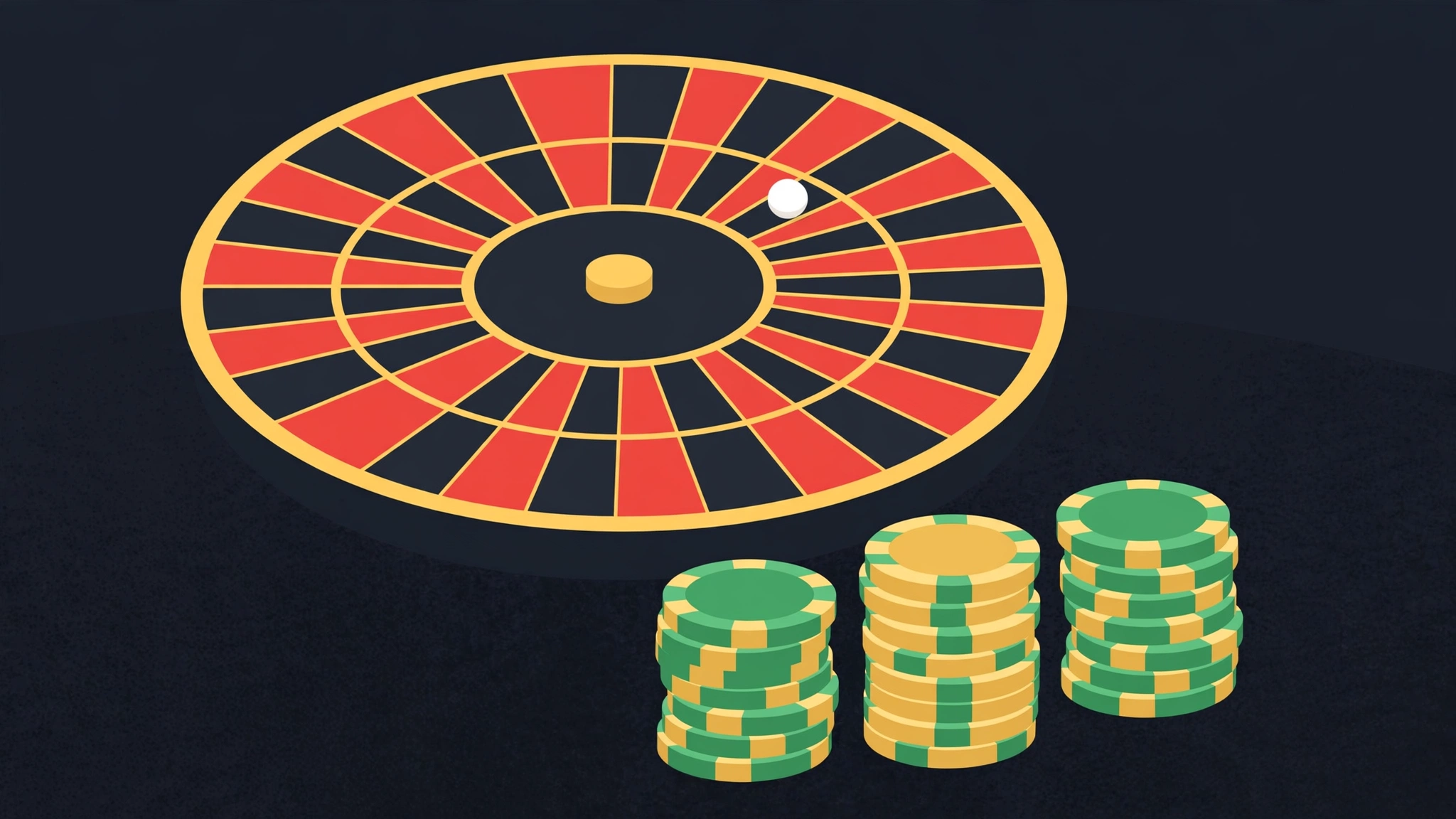
A roulette wheel has numbered pockets. On a European wheel, the numbers run from 0 to 36. On an American wheel, there is an extra 00 pocket. That single extra pocket matters more than any betting system ever will, because it is where the house edge comes from.
When you bet on red, for example, you are not betting on a true coin flip. On a European wheel, 18 pockets are red, 18 are black, and one is green (the zero). So your chance of hitting red is 18 out of 37, not 18 out of 36. The payout, however, is even money — double your stake. That gap between the true odds and the payout is the house edge, roughly 2.7% on a European wheel and roughly 5.26% on an American wheel. Every bet on the table carries that same built-in disadvantage, whether you bet on a single number, a colour, or a column.
If you want a fuller picture of the wheel itself before diving into systems, our guide to how slot machines work (https://stylishnamees.com/slot-machines-explained-rtp-volatility-paylines/) covers RTP and volatility in plain language, and the same ideas — house edge, randomness, and why short-term luck misleads — apply to roulette too.
Legal Status in Thailand — Read This First
Gambling is largely prohibited in Thailand. Under the Gambling Act B.E. 2478 (1935), most forms of gambling are illegal, and the only well-known legal exceptions are the government lottery and licensed horse racing at approved racecourses. Online casinos are not licensed in Thailand, and websites offering real-money casino games to people in Thailand operate outside Thai law.
That has practical consequences: an unlicensed site offers no Thai consumer protection if it refuses to pay out, freezes an account or disappears, and Thai authorities periodically block gambling websites and payment channels. Money sent to an offshore platform can simply be lost with no realistic way to recover it.
This article is educational and informational only — it explains how betting systems work because readers ask about them, not to encourage anyone to break local law. Casino games are for adults only (18+), there are no guaranteed winnings in any game, and over time the maths and the fees charged by operators favour the house. Never chase losses, never gamble with borrowed money or money needed for living costs, and if gambling stops being fun, free and confidential help is available from BeGambleAware (https://www.begambleaware.org/) and Gamblers Anonymous (https://www.gamblersanonymous.org/ga/).
The Martingale System: Double After Every Loss
The Martingale is the most famous betting system in the world, and the simplest. You bet on an even-money outcome — red or black, odd or even, high or low. If you win, you collect your profit and start again with your base stake. If you lose, you double your bet. The idea is that when you eventually win, you recover all your previous losses plus one unit of profit.
Here is how it looks with a base stake of one unit. You bet 1 and lose. You bet 2 and lose. You bet 4 and lose. You bet 8 and win. You have now staked 15 units in total and won 16, leaving you one unit ahead. Then you start over at 1. In theory, the system cannot lose, because sooner or later your colour must come up.
In practice, three things break it. The first is table limits. Every roulette table has a maximum bet. After a run of losses, your required next bet may exceed that maximum, and the system collapses. A run of eight losses in a row is not rare over a long session, and by that point a one-unit starting bet has grown to a 256-unit bet just to recover. The second is your bankroll. Most players cannot absorb the exponential growth of the stake, and the money at risk grows far faster than the one unit of profit the system aims to win. The third is the green zero. Even-money bets lose when zero lands, so the sequence of losses can include zeros as well as the opposite colour.
Martingale feels powerful because it produces many small wins. You will often walk away from a short session slightly ahead. But the losses, when they come, are large enough to wipe out many sessions’ worth of small wins in one bad run. That is the system’s real character: frequent small gains, rare catastrophic losses.
The Fibonacci System: A Gentler Climb
The Fibonacci system is based on the famous number sequence where each number is the sum of the two before it: 1, 1, 2, 3, 5, 8, 13, 21, and so on. In roulette, you move one step forward in the sequence after a loss and two steps back after a win. Like Martingale, it is usually applied to even-money bets.
The appeal is that stakes grow more slowly than in Martingale. After five consecutive losses, a Martingale player is betting 32 units; a Fibonacci player is betting 8. The recovery is slower too — a single win does not clear all previous losses, so you need a run of wins to climb back to the start of the sequence.
Fibonacci has the same fundamental problem as every progression system. It assumes that wins and losses will balance out in a convenient order, but the wheel has no memory. A long losing streak still pushes your stakes high, table limits still exist, and the house edge still applies to every single spin. Fibonacci is less brutal than Martingale, but “less brutal” is not the same as “profitable.”
D’Alembert and Other Flat Progressions
The D’Alembert system is milder still. You increase your bet by one unit after a loss and decrease it by one unit after a win. The theory is that wins and losses roughly even out over time, so a gentle progression should keep you near break-even with a small profit.
The flaw in the theory is the word “roughly.” Over thousands of spins, red and black do come up close to equally often, but the house edge means you still lose a small percentage of everything you stake. D’Alembert does not change that. It also leaves you exposed during long losing streaks, when your stake creeps upward while your bankroll shrinks. It is a low-drama system, which makes it popular with casual players, but low drama is not the same as an advantage.
Other systems you may hear about include the Labouchere, where you write down a sequence of numbers and cross them off as you win, and the James Bond strategy, which spreads a fixed stake across several bets to cover most of the wheel. Labouchere behaves like a disguised Martingale — stakes can escalate sharply. The James Bond approach covers a large portion of the wheel, so you win often, but the occasional uncovered number wipes out several rounds of small wins. The pattern is always the same: the system changes the shape of your results, not the average.
Why No System Beats the Wheel
Every roulette spin is independent. The wheel does not remember that red has come up five times in a row, and it owes you nothing. This is the gambler’s fallacy — the belief that a run of one outcome makes the opposite outcome “due.” It does not. The odds on the next spin are exactly the same as they were on the last one.
Mathematically, a betting system is just a way of deciding how much to stake on each spin. Your expected loss over time is your total amount staked multiplied by the house edge. A system that makes you stake more after losses increases your total amount staked, which increases your expected loss, not decreases it. No rearrangement of bet sizes can turn a negative-expectation game into a positive one.
There is one genuine exception in casino history: biased wheels. In the past, a physically imperfect wheel could favour certain numbers, and observant players could exploit it. Modern wheels are engineered, balanced, and regularly checked, and online roulette uses random number generators. For a beginner, biased wheels are a historical curiosity, not a strategy.
If You Still Want to Play Roulette
The honest advice is to treat roulette as entertainment with a known cost, not as an income strategy. Choose a European wheel over an American one when you have the choice, because the single zero halves the house edge. Decide your session budget before you start, and treat it as the price of the evening — money you can afford to lose completely. Flat betting, where you stake the same amount every spin, keeps your losses predictable and your session longer than any progression system will.
Set a win goal and a loss limit in advance, and honour both. Walking away after a good run is just as important as walking away after a bad one, because the longer you play, the closer your results get to the mathematical expectation — which is a slow loss. Never increase your stakes to recover losses, and never borrow money to keep playing. The moment the game stops being fun, the session is over.
If you enjoy the strategy side of casino games, our poker guide for Thai beginners (https://stylishnamees.com/poker-guide-thai-beginners-hand-rankings-strategy/) covers a game where skill genuinely matters, because you play against other people rather than a fixed house edge. And our Sic Bo guide (https://stylishnamees.com/sic-bo-guide-thai-beginners-dice-bets-house-edge/) explains another dice game where understanding the house edge of each bet helps you avoid the worst wagers on the table.
Frequently Asked Questions
Has anyone ever beaten roulette long-term with a system?
No credible evidence exists of a betting system beating roulette long-term. Stories of big wins are real, but they are short-term results, and the same players’ long-term results are rarely published. Systems are sold because they are easy to explain and feel logical, not because they work.
Is Martingale illegal?
No, betting systems are not illegal, and casinos are happy to let you use them — which tells you something about how much they fear them. Casinos set table limits partly to cap progression systems, but mostly the maths already favours them.
Does watching for patterns help?
No. “Hot” and “cold” numbers displayed on electronic boards are just records of past spins. Past spins do not influence future spins on a fair wheel. Pattern-watching can make the game more fun, but it does not improve your odds.
Which roulette bet is the “best”?
On a European wheel, all bets carry roughly the same house edge, so there is no mathematically superior bet. Even-money bets give you the longest playing time with the smallest swings, which is why most casual players prefer them.
Should I practise roulette for free first?
Yes. Free-play versions let you learn the layout, the pace, and how a system feels in practice without risking money. Watch how quickly a progression system escalates during a losing streak — it is a lesson best learned with play money.
Conclusion
Roulette strategies are fascinating because they feel like they should work. Doubling after losses, following a mathematical sequence, nudging your stake up and down — all of it sounds rational. But the wheel does not care about your system. Every spin carries the same house edge, every spin is independent, and no arrangement of bet sizes can reverse that.
That does not mean roulette cannot be enjoyable. Played with a fixed budget, a European wheel, and flat stakes, it is a simple, social game with a clear cost. What it cannot be is a reliable way to make money, and anyone selling you a system that claims otherwise is selling you the dream, not the maths. Understand the strategies, enjoy the game for what it is, and keep your bankroll — and your expectations — under control.