How Progressive Slot Jackpots Work — and Why They Are Hard to Win
Every so often a news story appears about an ordinary player winning a life-changing sum from a single slot spin — millions from a machine they had played for a few minutes. Those stories are real, but they are also extremely rare, and they are the reason progressive jackpots are so fascinating and so misunderstood. A progressive jackpot is a prize that grows every time someone plays and does not win it, until one lucky spin triggers it and the whole pool pays out. Understanding how that pool builds, what actually triggers a win, and how small the odds really are will help you see these games clearly — as entertainment with a very long shot attached, not as a plan.
This guide explains progressive jackpots from first principles: where the money comes from, the different types of progressive, how a jackpot is triggered, and why the maths makes them so hard to win. It also covers the responsible-gambling side, because jackpot games are designed to be exciting, and excitement is exactly what makes disciplined limits important.
Legal Status in Thailand — Read This First
Gambling is largely prohibited in Thailand. Under the Gambling Act B.E. 2478 (1935), most forms of gambling are illegal, and the only well-known legal exceptions are the government lottery and licensed horse racing at approved racecourses. Online casinos are not licensed in Thailand, and websites offering real-money casino games — progressive jackpot slots included — to people in Thailand operate outside Thai law.
That has practical consequences: an unlicensed site offers no Thai consumer protection if it refuses to pay out, freezes an account or disappears, and Thai authorities periodically block gambling websites and payment channels. Money sent to an offshore platform can simply be lost with no realistic way to recover it.
This article is educational and informational only — it explains how progressive jackpots work because readers ask about it, not to encourage anyone to break local law. Casino games are for adults only (18+), there are no guaranteed winnings in any game, and over time the maths and the fees charged by operators favour the house. Never chase losses, never gamble with borrowed money or money needed for living costs, and if gambling stops being fun, free and confidential help is available from BeGambleAware and Gamblers Anonymous.
Where Does the Jackpot Money Come From?
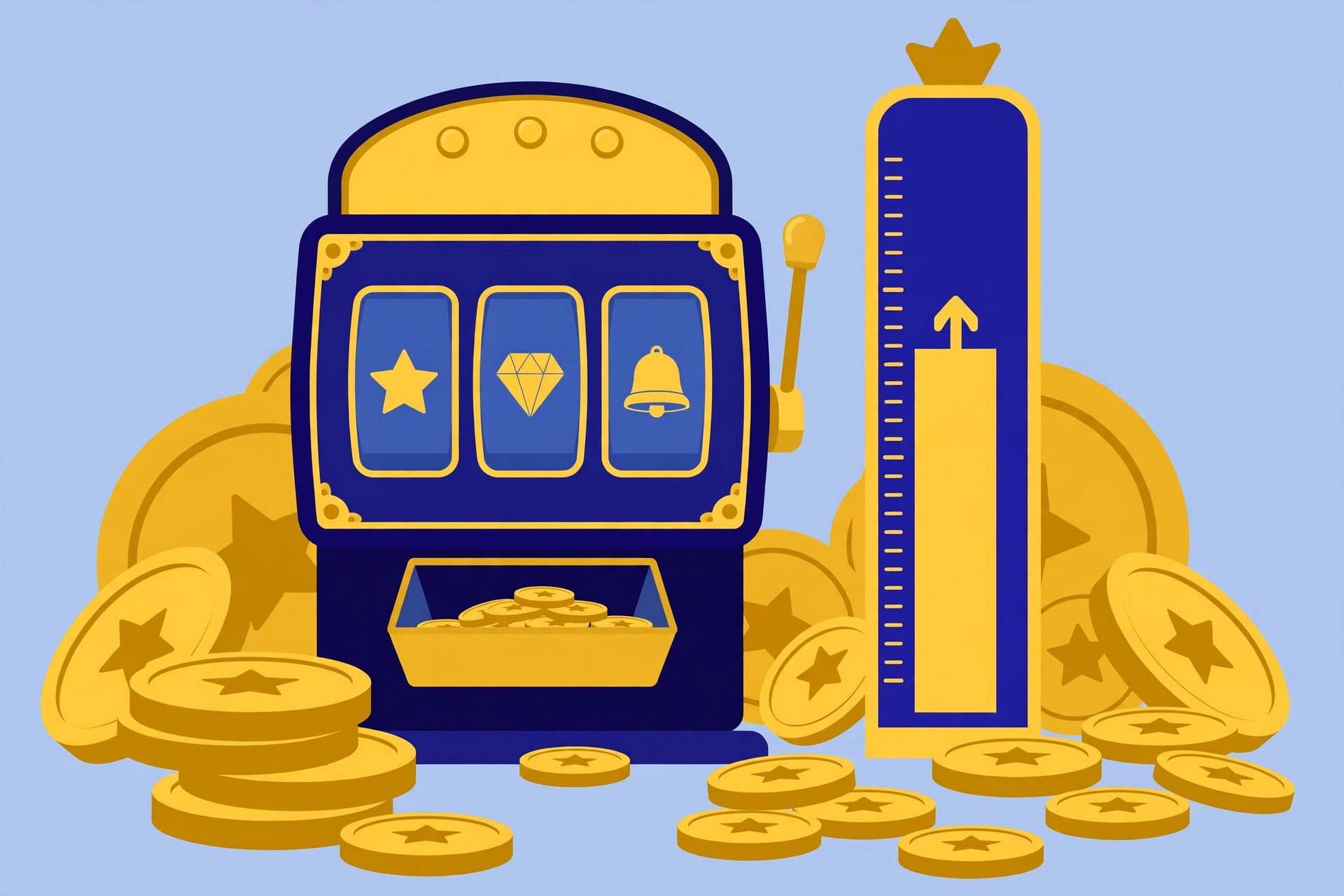
The simplest way to think about a progressive jackpot is as a shared savings pot that every player contributes to, whether they know it or not. On a progressive slot, a small percentage of every bet is diverted into the jackpot pool. The rest of the bet funds the game’s ordinary payouts — the small and medium wins that keep the game going — and the operator’s margin.
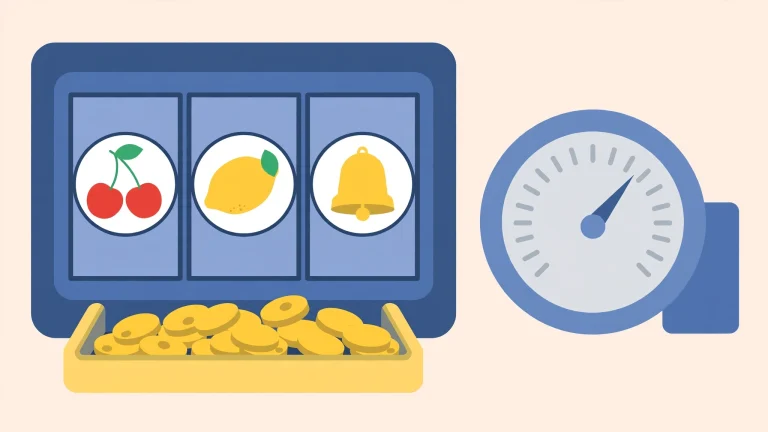
Imagine a game where two percent of each bet goes to the jackpot. If a thousand players each bet a small amount, those two-percent slices add up quickly. The jackpot meter on screen climbs in real time as bets are placed, which is part of the appeal: you can watch the prize grow while you play. When someone finally hits the winning combination, they take the accumulated pool, and the jackpot resets to a starting value called the seed. The seed is funded by the operator, so the next jackpot never starts at zero — it starts at a guaranteed base amount and begins growing again from there.
This structure explains two things at once. First, the jackpot can reach enormous sums, because it collects tiny slices from a huge number of spins. Second, the jackpot is not free money created by the casino. It is funded by the players themselves, over time, through the portion of every bet that goes into the pool instead of back to players as ordinary wins. That is why progressive games often pay slightly less on ordinary spins than comparable non-progressive games: a slice of the return is being held back for the big prize.
Three Types of Progressive Jackpot
Not all progressives work the same way, and the type determines how fast the prize grows and how many people are contributing to it.
A standalone progressive belongs to a single machine or a single game instance. Only bets on that machine feed its jackpot, so it grows slowly and usually reaches modest amounts. You might find standalone progressives in a small casino or on a single online game that is not connected to others. The advantage is that you are competing with fewer players for that particular prize, but the prize itself is correspondingly smaller.
A local or in-house progressive links several machines or games within one casino or one online platform. Every bet on any linked game in that group feeds the same pool, so the jackpot grows faster and larger than a standalone. Many land-based casinos link a bank of machines together this way, with a shared meter displayed above them. Online, a platform may link the same game across all its players.
A wide-area or network progressive links games across many casinos or many platforms, sometimes across countries. This is the type behind the famous multi-million wins. Tens of thousands of players, all playing the same game on different sites, contribute tiny slices to one enormous pool. The prize can climb into the millions, but the number of spins competing for it is also enormous, which is why the odds of any single spin winning are so small. When a network jackpot is won, it resets everywhere at once, and the long climb begins again.
How Is a Jackpot Actually Triggered?
There are three common trigger mechanisms, and the game rules will tell you which one applies — always check before you play, because the trigger changes what you need to do.
The most traditional trigger is a specific symbol combination: for example, five jackpot symbols on a payline. In this version, the jackpot is simply the top prize on the paytable, and it pays out when the reels land that way. Some games require you to bet the maximum, or to play all paylines, to be eligible for the full jackpot; betting less may pay only a fraction, or may exclude you entirely. This is a crucial detail that catches beginners out. If you play a progressive without meeting the eligibility condition, you can land the winning combination and still not win the jackpot — a deeply frustrating outcome that the rules, read carefully, would have warned you about.
The second trigger is a randomly awarded bonus round. In this version, any spin can trigger a jackpot wheel or a pick-a-prize bonus, regardless of the symbols on the reels. The bonus then decides which tier of jackpot you win, if any. Random triggers feel exciting because every spin carries a chance, but the chance on each spin is still tiny, and it does not increase because you have played many spins without triggering one.
The third trigger is a must-drop or timed jackpot, where the prize is guaranteed to pay out before it reaches a certain amount or before a certain time. These jackpots create urgency — the meter shows the prize approaching its limit — but the trigger is still random within that window. A must-drop jackpot that is close to its limit is not “due” in any meaningful sense for your next spin; it simply has a deadline by which someone, somewhere, will win it.
Why Progressive Jackpots Are So Hard to Win
The honest answer is arithmetic. A modern video slot has millions of possible reel combinations, and only a tiny handful of those combinations trigger the jackpot. The odds of hitting the top prize on a single spin are often in the range of one in tens of millions — comparable to, or worse than, winning a major lottery. Playing more spins does increase your total number of chances, but each spin is independent, and the odds per spin never improve. A machine that has not paid its jackpot in months is not more likely to pay on your next spin than it was yesterday.
It also helps to understand the trade-off built into the game. Because a slice of every bet funds the jackpot, the game’s overall return to players on ordinary spins is lower than it would be without the progressive. In other words, you are paying for the dream of the big prize through slightly worse odds on every small win along the way. Over a long session, that trade-off usually costs more than the excitement returns, even before the jackpot is considered.
Then there is the psychological side. A climbing jackpot meter is a powerful visual: the number ticks upward, other players’ wins are announced, and the prize feels tantalisingly close. Casinos and game designers know this. The meter is designed to hold your attention and encourage “just a few more spins.” Recognising that design for what it is — a marketing display, not a signal that a win is near — is one of the most useful defences a player can have.
Common Myths About Progressive Jackpots
One myth is that a jackpot is “due” after a long dry spell. It is not. Random number generators have no memory, and the game does not track how long it has been since the last jackpot when deciding the next spin. A jackpot that has grown for a year has exactly the same chance of paying on the next spin as it did when it was freshly seeded, all else being equal.
Another myth is that playing at a certain time of day, or on a certain machine, improves your chances. It does not. The random number generator runs constantly, and the moment you press spin determines the outcome from a vast set of possibilities. No time, seat, or ritual changes that set.
A third myth is that betting more increases your chance of triggering the jackpot proportionally. In some games, a larger bet does increase eligibility or the chance of entering a jackpot bonus, but the rules must say so explicitly. In other games, bet size changes only the size of ordinary wins, not jackpot eligibility. Never assume — read the game’s rules and paytable first.
A fourth myth is that jackpot winners are somehow chosen or favoured. They are not. Winners are simply the players whose spin happened to land on the rare winning combination or trigger. The stories that make the news are the extreme tail of a distribution with millions of losing spins behind it, and the losers do not get news stories.
Playing Progressive Slots Sensibly
If you enjoy progressive slots as entertainment in a place where they are legal, a few habits keep the experience honest. First, decide your budget before you start and treat it as the price of entertainment, like a cinema ticket — money you expect to spend, not money you expect to get back. Second, check the jackpot eligibility rules before your first spin, so you know whether maximum bets or all paylines are required. Third, do not increase your bets to chase a growing jackpot; the jackpot does not care how much you have already spent. Fourth, take breaks and keep track of time, because jackpot games are designed to be absorbing. Finally, if you ever feel that you are playing to recover losses, or hiding your play from people close to you, stop and seek the free, confidential help linked in the legal section above. That is not a failure; it is the sensible response to a game designed to be hard to walk away from.
Frequently Asked Questions
Do I have to bet the maximum to win a progressive jackpot?
Sometimes yes, sometimes no — it depends on the game. Some progressives require a maximum bet or all paylines active for full jackpot eligibility. Others award the jackpot regardless of bet size. Always read the paytable and rules before playing, because this detail decides whether a winning spin actually pays the jackpot.
Can a progressive jackpot be won more than once?
Yes. After a jackpot is won, it resets to its seed value and starts growing again from player contributions. Network jackpots reset across all linked games at once.
Is a bigger jackpot better value?
Not necessarily. A larger jackpot means more players have contributed to it, and the odds of winning it have not improved. A huge jackpot is more exciting, but from a pure maths perspective, the expected value of a spin changes very little unless the jackpot has grown far beyond its usual range — and even then, the odds remain extremely long.
Are online progressive jackpots real?
On licensed, regulated platforms in jurisdictions where online gambling is legal, yes — network progressives are pooled across platforms and audited, and major wins are publicly reported. On unlicensed sites, there is no reliable oversight, which is one more reason the legal section of this article matters. Online casinos are not licensed in Thailand.
What happens if two players hit the jackpot at the same time?
Network systems process wins in order and use precise timestamps. In practice, genuine simultaneous wins are extraordinarily rare, and the platform’s rules govern how any dispute is resolved. This is another area where licensed, audited operators differ sharply from unlicensed ones.
Conclusion
Progressive jackpots are a brilliant piece of game design: a tiny slice of every bet, pooled across thousands of players, creating a prize that can change a life. That brilliance is also the trap. The prize is funded by the players, the odds of winning it on any single spin are extremely long, and the climbing meter is designed to keep you playing long after a sensible budget would have stopped. Enjoy the excitement for what it is, understand the trade-off you are making on every spin, check the eligibility rules before you play, and never treat a jackpot as a financial plan. If you want to understand the games around jackpots better, our guides to slot machines and RTP, live dealer games, and casino etiquette on Stylish Namees explain the mechanics and the manners in plain language, and our crypto explainers cover a very different kind of long shot — digital assets — with the same honest approach.
More beginner guides: explore the Casino Games and Crypto sections at Stylish Namees.