Casino Side Bets Explained for Beginners in Thailand
Side bets are the small, tempting wagers that sit beside the main game at a casino table. They promise big payouts for rare events: a perfect pair in blackjack, a suited pair in baccarat, a specific combination on the roulette wheel. The payouts look generous — 25 to 1, 100 to 1, sometimes more — and that is exactly the point. Side bets are designed to catch your eye, and most beginners have no idea how expensive they really are.
This guide explains what side bets are, how they work in the most popular games, and why the maths behind them is usually far worse than the main game. If you enjoy a flutter, that is fine — but you should know what it costs.
What Is a Side Bet?
A side bet is an optional wager on an event that is separate from the main outcome of the game. In blackjack, the main bet is whether your hand beats the dealer’s. A side bet might pay if your first two cards form a pair. In baccarat, the main bet is Player, Banker or Tie. A side bet might pay if the first two cards of either hand form a pair. In roulette, side bets might cover a specific pattern of numbers, and in craps, a huge menu of proposition bets sits in the middle of the table.
Side bets are resolved independently of the main game. You can win your side bet and lose your main bet, or the other way round. They are usually placed in a separate marked area of the table, and the stake is typically small — which is part of their appeal, and part of the trap. A small stake repeated many times adds up, especially when the house edge is high.
Casinos love side bets because they are profitable. They add excitement and variety to a table without changing the main game, and most players never check the house edge on them. That is the single most important thing to know: side bets are entertainment products with a price, and the price is usually steep.
Legal Status in Thailand — Read This First
Gambling is largely prohibited in Thailand. Under the Gambling Act B.E. 2478 (1935), most forms of gambling are illegal, and the only well-known legal exceptions are the government lottery and licensed horse racing at approved racecourses. Online casinos are not licensed in Thailand, and websites offering real-money casino games to people in Thailand operate outside Thai law.
That has practical consequences: an unlicensed site offers no Thai consumer protection if it refuses to pay out, freezes an account or disappears, and Thai authorities periodically block gambling websites and payment channels. Money sent to an offshore platform can simply be lost with no realistic way to recover it.
This article is educational and informational only — it explains how side bets work because readers ask about them, not to encourage anyone to break local law. Casino games are for adults only (18+), there are no guaranteed winnings in any game, and over time the maths and the fees charged by operators favour the house. Never chase losses, never gamble with borrowed money or money needed for living costs, and if gambling stops being fun, free and confidential help is available from BeGambleAware and Gamblers Anonymous.
Blackjack Side Bets: Perfect Pairs and 21+3
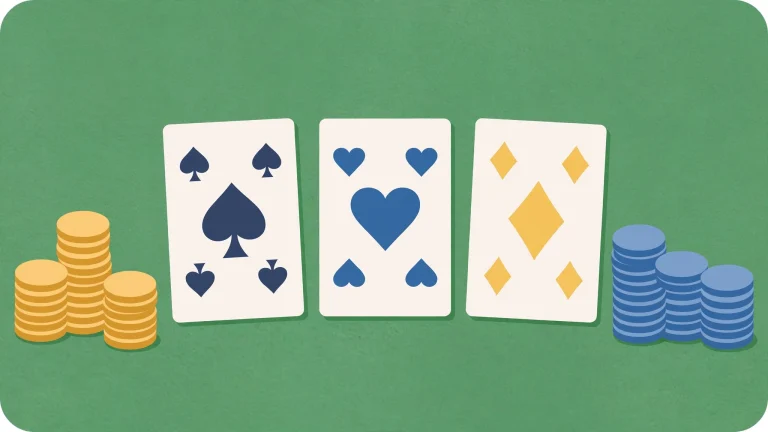
The most common blackjack side bet is Perfect Pairs. It pays if your first two cards are a pair. A mixed pair (same rank, different colours) typically pays 6 to 1, a coloured pair (same rank and colour) pays 12 to 1, and a perfect pair (same rank and suit) pays 25 to 1. Those payouts sound exciting, but the house edge on Perfect Pairs is usually around 4% to 6% depending on the number of decks — several times higher than the main blackjack game played with basic strategy.
21+3 is another popular one. It combines your first two cards with the dealer’s upcard to make a three-card poker hand. A flush pays 5 to 1, a straight pays 10 to 1, three of a kind pays 30 to 1, a straight flush pays 40 to 1, and a suited three of a kind pays 100 to 1. The house edge is roughly 3% to 4%. Again, that is far worse than the main game, and the big payouts are rare enough that most players will never see them.
Insurance is sometimes mistaken for a side bet, and in a sense it is: it is a separate wager that the dealer has blackjack. Unless you are counting cards, insurance is a bad bet with a house edge of around 7%, and basic strategy says to decline it every time.
Baccarat Side Bets: Pairs, Big and Small
Baccarat’s side bets are simple and easy to fall into. The Player Pair and Banker Pair bets pay if the first two cards of the respective hand form a pair, usually at 11 to 1. The house edge is around 10% — roughly ten times the edge of the Banker bet itself. That is a staggering difference for a bet that sits right next to it on the table.
Some tables offer Big and Small bets, which pay based on the total number of cards dealt in the round (Big wins if five or six cards are dealt, Small if four are dealt). These carry edges in the region of 5% to 15% depending on the exact rules and payouts. Others offer a “Perfect Pair” style bet paying up to 200 to 1 for a suited pair in a specific hand, with an edge that can exceed 15%.
The pattern is consistent: baccarat’s main bets are among the cheapest in the casino, and its side bets are among the most expensive. A player who bets Banker every hand and never touches a side bet loses money far more slowly than a player who adds a pair bet to every round.
Roulette and Craps Side Bets
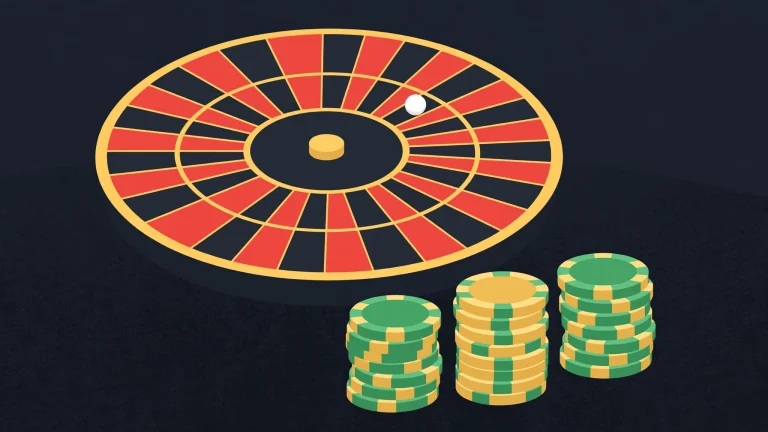
Roulette’s main bets already carry a house edge of 2.7% (European) or 5.26% (American), so side bets in roulette are usually variations like neighbour bets, finals, or racetrack wagers that cover groups of numbers. These do not usually change the edge much, because they are just combinations of standard bets — but some electronic and online versions add bonus bets, such as a payout for hitting the same number repeatedly, with much worse odds. Always check the payout table before placing an unfamiliar roulette wager.
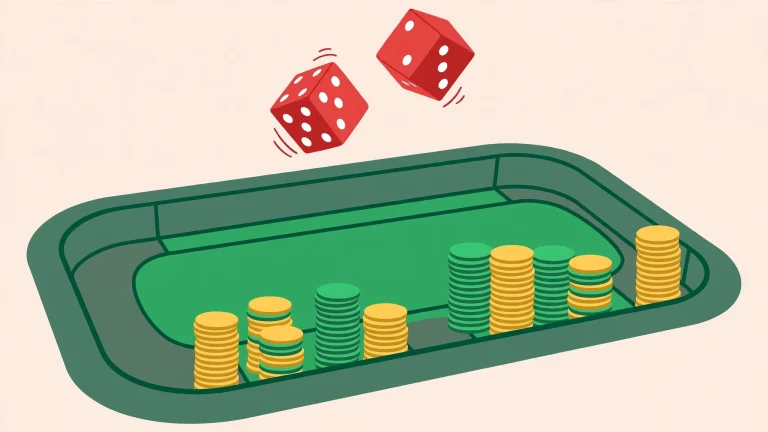
Craps is where side bets get truly dangerous. The main Pass Line bet has an edge of about 1.41%, which is excellent. But the middle of the craps table is covered in proposition bets — Any 7, Hardways, Horn bets, Any Craps — with edges ranging from 9% to over 16%. These bets are designed to be shouted out in the excitement of a hot roll, and they drain bankrolls quickly. Experienced craps players treat the middle of the table as decoration.
If you want the full picture of why the main bets are so much cheaper, our guide to how casino house edge works explains the maths in plain language.
Why Side Bets Feel Cheaper Than They Are
Side bets exploit a few quirks of human psychology. First, the stakes are small, so each individual loss feels trivial — but a small loss repeated every hand for an hour adds up to a significant amount. Second, the payouts are large, so the occasional win feels memorable and exciting, even if your total losses far exceed your wins. This is the same psychology behind lottery tickets: rare big wins are vivid, while steady small losses are forgettable.
Third, side bets add variety to a game that can feel repetitive. Betting Banker fifty times in a row in baccarat is dull; adding a pair bet gives each hand a second thing to hope for. Casinos understand this and design side bets to be colourful, easy to place and socially fun — other players at the table often join in, which normalises the habit.
None of this makes side bets evil. They are a legitimate entertainment product. But an informed player treats them like a fairground game: fun, overpriced, and not a way to make money. If you enjoy them, budget for them separately from your main game, and keep the stakes small.
A Sensible Approach to Side Bets
If you like side bets, here are some ground rules that keep them harmless. First, decide in advance how much of your session budget goes to side bets, and keep it small — many experienced players cap it at 5% to 10% of their total budget. Second, never increase your side bet stake to chase a win; the big payout you are hoping for is rare by design, and chasing it is the fastest way to burn through your budget.
Third, learn the house edge of any side bet before you play it regularly. If you cannot find the edge published anywhere, that is itself a warning sign — reputable games publish their payout tables, and the edge can be calculated from them. Fourth, never let a side bet distract you from the main game. In blackjack, for example, players focused on their side bet often make basic strategy mistakes on the main hand, which costs far more than the side bet itself.
Finally, remember that side bets are optional. There is no rule that says you must place one, and no table will think less of you for skipping them. The cheapest session is the one where you play only the main game, with a clear budget and a clear stopping point. Our casino bankroll management guide covers session budgeting in more detail.
Frequently Asked Questions
Are side bets ever worth it?
Mathematically, no — they almost always carry a higher house edge than the main game. If you enjoy them as entertainment and budget for them separately, they can be fun, but they are not a winning strategy.
Which side bet has the worst house edge?
Craps proposition bets and some baccarat pair bets are among the worst, with edges above 10% and sometimes above 15%. Always check the payout table before playing an unfamiliar side bet.
Do side bets affect my main bet?
No, they are resolved independently. But they can distract you, and in skill games like blackjack, distraction leads to mistakes on the main hand that cost real money.
Why do casinos offer side bets if they are bad for players?
Because they are profitable and popular. Side bets add excitement and variety, and many players enjoy them. Casinos are businesses, and side bets are a high-margin product.
Can I win big on a side bet?
Yes, occasionally — that is their appeal. A 100 to 1 or 200 to 1 payout does happen sometimes. But over time, the high house edge means the average player loses far more on side bets than on the main game.
Conclusion
Side bets are the casino’s version of dessert: tempting, colourful, and much more expensive than the main course. They are not scams — the payouts are real, and the occasional big win is genuinely exciting — but the maths is clear. Almost every side bet carries a significantly higher house edge than the game it sits beside, and a player who bets them every hand will lose money noticeably faster.
That does not mean you must never place one. It means you should place them with open eyes: small stakes, a separate budget, and no illusion that a big payout is around the corner. Play the main game well, treat side bets as the occasional treat they are, and keep your session budget — and your expectations — under control.