What Is Litecoin? A Beginner’s Guide to LTC, Mining and Risks
What Is Litecoin? A Beginner’s Guide to LTC, Mining and Risks
Risk disclaimer first: cryptocurrency is highly volatile, and you can lose some or all of the money you put in. Nothing in this article is financial advice, and it is not a recommendation to buy, sell or hold any coin. Read it to understand Litecoin — not to decide what to do with your money.
If Bitcoin is the name everyone has heard of, Litecoin is often the second name people come across — and the one they understand least. It looks similar, it works in a broadly similar way, and it is frequently described as “silver to Bitcoin’s gold.” That nickname is catchy, but it hides a lot of useful detail. This guide explains what Litecoin actually is, where it came from, how it differs from Bitcoin, how new coins are created, what people use it for, and where the risks sit.
Where Litecoin Came From
Litecoin was created in 2011 by Charlie Lee, a computer scientist who had previously worked at Google and later at a cryptocurrency exchange. Lee’s idea was not to reinvent digital money from scratch. He took Bitcoin’s open-source code — which anyone is free to copy and adapt — and changed a handful of settings to make a lighter, faster-moving version.
The name gives away the intent: “lite” coin. Lee wanted a network that could handle everyday-style transactions more quickly than Bitcoin, with lower fees and a larger eventual supply of coins. Litecoin launched while Bitcoin was still very young, and it has kept running ever since, which in itself is notable. Many coins launched in that early era have disappeared entirely. Litecoin has not, and it remains one of the longest-running cryptocurrencies in existence.
That longevity is worth understanding properly. It does not mean Litecoin is safe, successful as an investment, or guaranteed a future. It simply means the network has operated continuously for well over a decade, through several market cycles, without stopping. For a beginner, that history is useful context — and nothing more than context.
How Litecoin Works, in Plain English
Like Bitcoin, Litecoin runs on a blockchain: a public, shared record of transactions maintained by computers all over the world rather than by a single company or bank. When someone sends Litecoin to someone else, that transaction is broadcast to the network, checked, grouped together with other transactions into a block, and added to the chain. Once added, it is very hard to change, which is what gives the system its record-keeping strength.
Litecoin uses a system called proof of work, the same broad approach as Bitcoin. Specialised computers, known as miners, compete to solve a computational puzzle. The first to solve it gets to add the next block and receives newly created Litecoin plus transaction fees as a reward. This is how new coins enter circulation, and it is also how the network stays secure: attacking it would require controlling an enormous amount of computing power.
One important difference sits in the puzzle itself. Bitcoin’s mining puzzle uses an algorithm called SHA-256, while Litecoin uses a different one called Scrypt. When Litecoin launched, Scrypt was chosen partly because it was more memory-intensive, which its creator hoped would keep mining accessible to ordinary computers for longer. In practice, specialised mining hardware was eventually built for Scrypt too, so that early hope did not last. Today, Litecoin mining is dominated by specialised machines, just like Bitcoin mining, and it is not something a beginner should expect to profit from using a home computer.
How Litecoin Differs From Bitcoin
The differences between Litecoin and Bitcoin are mostly matters of degree rather than kind, but they matter for understanding what each network is trying to do.
First, block time. Bitcoin adds a new block roughly every ten minutes. Litecoin aims for a new block roughly every two and a half minutes. In practice, that means Litecoin transactions can be confirmed more quickly, because more blocks are produced in the same period. For someone sending coins to another person, confirmation usually feels faster on Litecoin, although neither network is instant in the way a card payment feels instant.
Second, total supply. Bitcoin has a hard cap of 21 million coins. Litecoin’s cap is four times larger, at 84 million coins. That larger number does not make Litecoin cheaper or more valuable in any meaningful sense — a coin’s price and its supply are separate things, and splitting a pie into more slices does not make the pie bigger. The supply cap does mean, however, that Litecoin shares Bitcoin’s scarcity idea: there is a fixed maximum, and no central authority can print more beyond it.
Third, transaction fees. Litecoin transactions have typically cost less than Bitcoin transactions, particularly at times when the Bitcoin network is busy. Fees on both networks rise and fall with demand, so this is a tendency rather than a promise. If you want a fuller explanation of how network fees work in general, our guide to Ethereum gas fees explains the same supply-and-demand idea in a different network’s terms.
Fourth, purpose and positioning. Bitcoin is most often described as a store of value — digital gold that people hold. Litecoin has more often been positioned as a medium of exchange — digital silver meant to be spent and moved. In reality, most holders of both coins treat them as speculative assets rather than everyday spending money, so the distinction is more about original intent than about how people actually behave today.
Underneath all of this, the two networks are cousins, not strangers. They share the same basic design, the same proof-of-work security model, and many of the same strengths and weaknesses. If you understand Bitcoin, you already understand most of Litecoin.
Litecoin Halving: What It Means
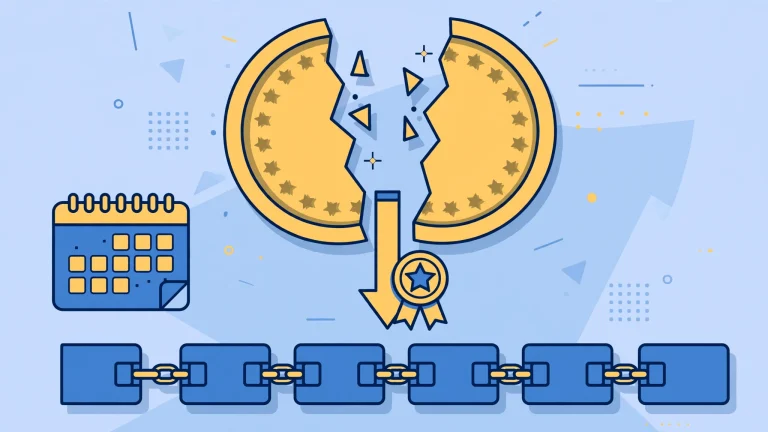
Like Bitcoin, Litecoin has a halving built into its code. Roughly every four years, the reward miners receive for adding a new block is cut in half. This slows the rate at which new coins enter circulation over time, until the supply cap is eventually reached.
Beginners often misunderstand halvings. A halving does not automatically change a coin’s price, and it is not a signal to buy or sell. It is simply a scheduled supply event that everyone can see coming years in advance. Markets may react to it, or they may not, and past reactions say nothing reliable about future ones. What a halving does tell you is that Litecoin’s issuance schedule is predictable and written into code rather than decided by a committee. If you want to understand the same mechanism on Bitcoin, read our guide to the Bitcoin halving.
What People Actually Use Litecoin For
Litecoin’s most straightforward use is moving value from one person to another without a bank in the middle. Someone can send LTC to a wallet address anywhere in the world, at any hour, and the transaction settles on the network without asking permission from a payment company. For cross-border transfers, this can be faster and cheaper than some traditional routes, although it comes with volatility risk: the value of the coins can move sharply between sending and receiving.
A second use is as a trading pair on exchanges. Because Litecoin is widely listed and has deep trading history, it is commonly used as a stepping stone between other cryptocurrencies and fiat currency. Again, this is a practical function of the network, not a reason to trade.
A third, quieter use is as a testing ground. Because Litecoin shares much of Bitcoin’s code, upgrades are sometimes tried on Litecoin first, where the stakes feel lower, before being considered for Bitcoin. Features that later appeared on Bitcoin, such as a particular transaction-format upgrade, were activated on Litecoin earlier. This makes Litecoin a useful part of the wider ecosystem even for people who never hold it.
What Litecoin is generally not used for is the world of smart contracts and decentralised apps. It does not have a general-purpose programmable layer like Ethereum or its competitors, so it cannot run the lending platforms, exchanges and games that those networks host. Litecoin does one job — peer-to-peer digital money — and it does not try to do much else.
How to Store Litecoin Safely
If you ever hold any cryptocurrency, storage matters more than most beginners expect. Coins are not kept in an app the way money sits in a bank account. They are controlled by private keys — long secret codes that prove ownership. Whoever holds the keys controls the coins, and if the keys are lost or stolen, the coins are usually gone for good.
Broadly, there are two kinds of storage. Custodial storage means an exchange or service holds your keys for you. That is convenient, but it means you are trusting that company to stay solvent, stay secure and give your coins back when you ask. Non-custodial storage means you hold your own keys, in a software wallet or a hardware device. That removes the company risk but puts the full responsibility on you: lose your recovery phrase and there is no password reset.
Our checklist on how to buy crypto safely walks through these choices in detail, including the habit of starting small, double-checking addresses and never sharing a recovery phrase with anyone. Whatever you do, treat any person or website asking for your recovery phrase as a scam — no legitimate service will ever ask for it.
Risks and Honest Limitations
Litecoin carries all the general risks of cryptocurrency, plus a few of its own. Price volatility is the most obvious: LTC’s value can swing sharply in days or even hours, and there is no floor beneath it. A long history does not protect a coin from large falls, and Litecoin has had several.
Competition is another real risk. Faster, cheaper or more programmable networks now do many of the things Litecoin was built for, and some payment-focused coins compete directly with it. Litecoin’s main advantages — age, recognition and reliability — are real, but they are not technical advantages that competitors cannot match or exceed.
Regulatory risk applies too. Rules on cryptocurrency differ by country and keep changing. A coin’s legal status, tax treatment and availability on exchanges can all shift with new regulation. Our overview of crypto tax basics explains why keeping records matters even before any sale happens.
Finally, beware of scams that borrow Litecoin’s name. Fake giveaways, impersonator accounts and “double your LTC” schemes are common across crypto, and Litecoin’s well-known name makes it a frequent target. If an offer promises guaranteed returns, free coins for sending coins first, or a celebrity endorsement, assume it is a scam. Our guide on how to spot crypto scams and rug pulls covers the warning signs in full.
Frequently Asked Questions
Is Litecoin better than Bitcoin?
Neither is simply better. Litecoin confirms transactions faster and usually charges lower fees, while Bitcoin has a larger network, wider recognition and a longer track record as a store of value. They are designed for slightly different jobs, and most people who study both end up seeing them as complementary rather than rivals.
Can I mine Litecoin on my laptop?
Technically you can run mining software, but in practice you will not earn anything meaningful. Litecoin mining is now dominated by specialised machines, and a laptop competes against industrial-scale operations. For a beginner, mining is something to understand, not something to start doing.
Is Litecoin a good investment?
This article cannot answer that for you, and neither can anyone else reliably. Litecoin’s price depends on adoption, competition, regulation and market sentiment, all of which are unpredictable. Never invest money you cannot afford to lose, and never treat a coin’s age or past price as a promise about its future.
Where can I spend Litecoin?
A limited number of merchants and payment processors accept Litecoin, and the list changes often. For most holders it functions more as something to hold or transfer between exchanges than as everyday spending money. Check a merchant’s current payment options rather than assuming acceptance.
What happens when all 84 million Litecoin are mined?
Mining rewards will eventually consist only of transaction fees, as with Bitcoin. That point is far in the future, and how the network’s security works then will depend on fee levels and usage at the time. It is not something current holders need to plan around.
Conclusion
Litecoin is best understood as Bitcoin’s younger, lighter sibling: the same basic idea, tuned for faster blocks, lower fees and a larger supply. It has survived longer than almost any other early cryptocurrency, it does its one job reliably, and it helped pioneer ideas that later spread across the industry. It is also volatile, exposed to fierce competition, and wrapped in the same scam-filled environment as the rest of crypto.
For a beginner, Litecoin is a useful second coin to study after Bitcoin, precisely because comparing the two teaches you how blockchains work, why design choices matter, and why no single setting makes a coin succeed. Learn the mechanics, respect the risks, keep any holdings small enough that a sharp fall would not hurt you, and never let anyone — including this article — make a financial decision for you.