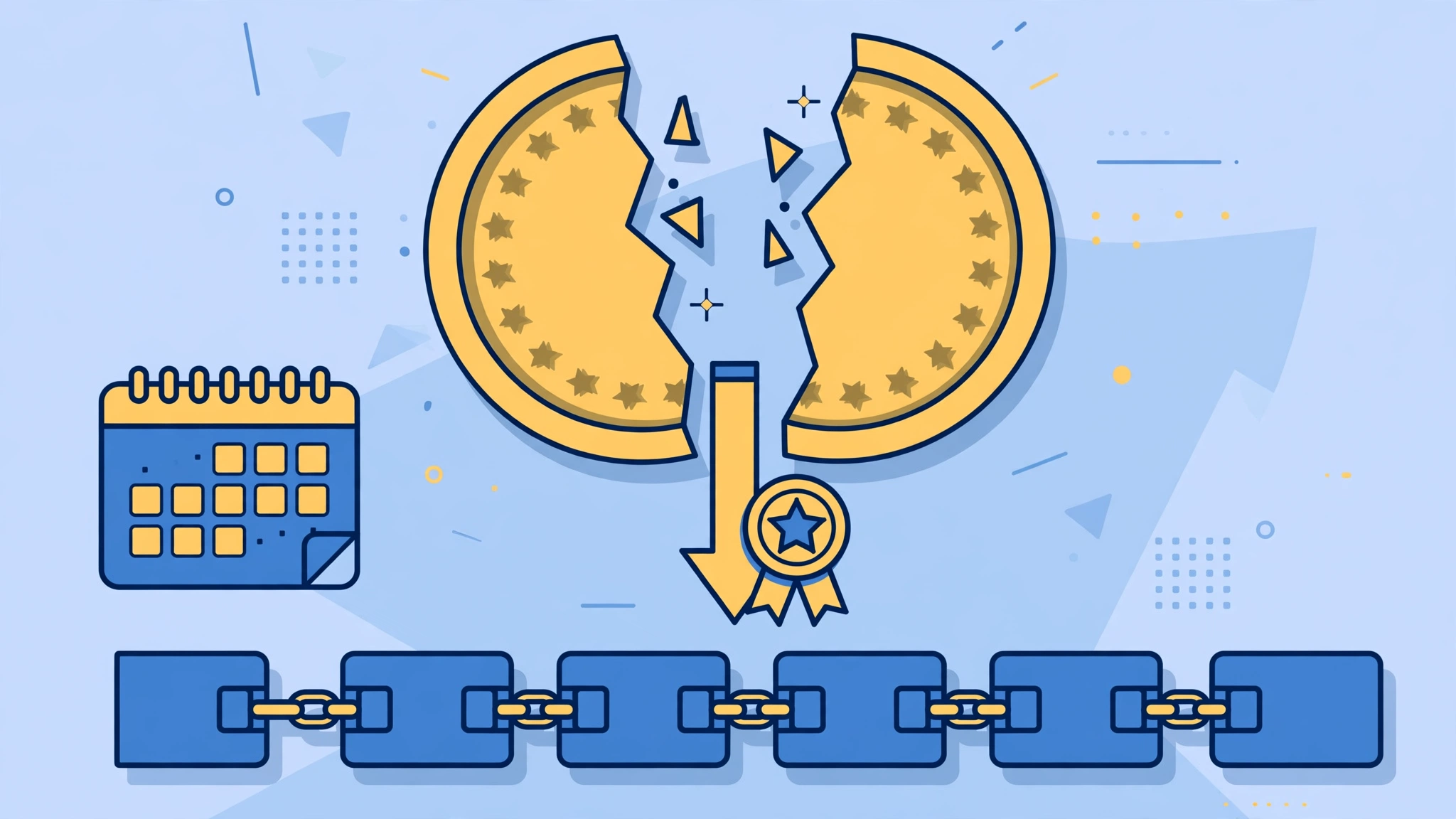
Bitcoin Halving Explained for Beginners: What It Is and Why It Matters
Bitcoin Halving Explained for Beginners: What It Is and Why It Matters
Risk disclaimer: Cryptocurrencies are volatile. Prices can rise and fall sharply, and you can lose everything you put in. This article is educational only and is not financial advice. Never invest money you cannot afford to lose, and do your own research before making any decision involving crypto.
Every few years, Bitcoin does something no ordinary currency does: it cuts the rate at which new coins are created in half, automatically, without a committee vote, a central bank announcement, or anyone’s permission. This event is called the halving, and it is one of the most talked-about features of Bitcoin. Fans treat it as a countdown to scarcity. Sceptics call it overhyped. Beginners are often left somewhere in between, hearing that the halving “matters” without a clear explanation of what actually happens.
This guide explains the halving from scratch: what Bitcoin mining is, why rewards exist, what changes on halving day, why Bitcoin’s supply is capped, and what the halving can and cannot tell you about price. No prior knowledge of mining is assumed.
First, What Is Bitcoin Mining?
Bitcoin is a decentralised network: there is no company or bank in charge of it. Instead, thousands of computers around the world maintain a shared record of transactions called the blockchain. When someone sends bitcoin, that transaction is broadcast to the network and grouped with others into a block. For the system to work, the network must agree on which blocks are valid and in what order they belong. That agreement process is where mining comes in.
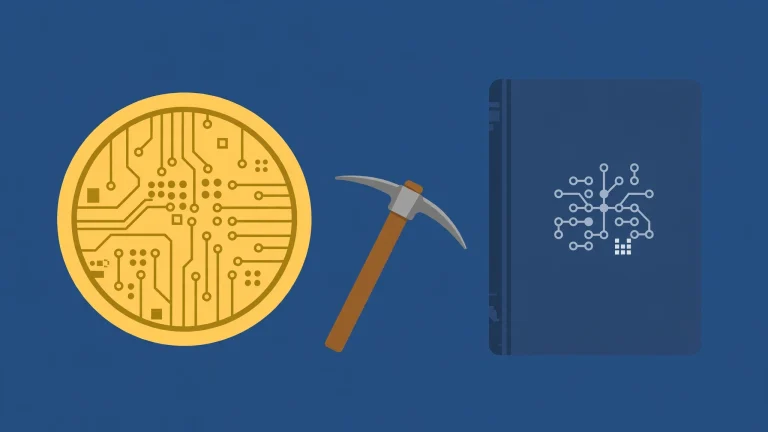
Miners are computers (and the people who run them) that compete to solve a difficult mathematical puzzle. The first to solve it gets to add the next block to the chain, and the rest of the network checks the work. Solving the puzzle is deliberately expensive in computing power and electricity, which makes it costly to cheat: attacking the network would require outspending all honest miners combined. The puzzle adjusts automatically so that a new block is added roughly every ten minutes, regardless of how many miners join or leave.
Miners do this work for a reward. Each new block earns its miner two things: the transaction fees paid by users whose transactions are included in the block, and a block reward of newly created bitcoin. It is that block reward — the new bitcoin entering circulation — that the halving cuts.
What Exactly Happens at a Halving?
A halving is a scheduled event written into Bitcoin’s code. After every 210,000 blocks — roughly every four years, given the ten-minute block time — the block reward is cut in half. When Bitcoin launched in 2009, the reward was 50 bitcoin per block. The first halving, in 2012, cut it to 25. The second, in 2016, cut it to 12.5. The third, in 2020, cut it to 6.25. The fourth, in 2024, cut it to 3.125. The next halving will cut it to 1.5625, and so on, until the reward eventually becomes so small that it effectively reaches zero.
Nothing else about Bitcoin changes at a halving. Transactions keep working the same way. Your wallet balance is untouched. The network does not pause or restart. The only change is the rate of new supply: after a halving, miners collectively earn half as much new bitcoin per block as they did before. That is why the halving is often described as a supply shock — not because existing coins disappear, but because the flow of new coins slows.
It is worth pausing on how unusual this is. A traditional currency’s supply is managed by a central bank, which can expand or contract it in response to economic conditions. Bitcoin’s supply schedule, by contrast, was fixed at launch and cannot be changed by any single person, company, or government without convincing the entire network to adopt different rules — something the network’s design makes extremely difficult. The halving is not a policy decision. It is a rule executing itself.
Why Does Bitcoin Have a Halving at All?
The halving exists because of how Bitcoin’s creator designed its money supply. Bitcoin has a maximum supply of 21 million coins, and that cap will never be exceeded under the current rules. New bitcoin is released gradually through block rewards, following a schedule that slows over time. The halving is the mechanism that produces that slowdown.
Think of it like this: if the reward stayed constant, new bitcoin would pour into circulation at the same rate forever, and the total supply would grow without bound. If the reward dropped to zero immediately, miners would have no incentive to secure the network in its early days. The halving schedule is a compromise between those extremes. It starts generous, to bootstrap the network when it needs miners most, and tapers off as the network matures and transaction fees are expected to take over as the main miner incentive.
That tapering has a mathematical consequence worth understanding. Because each halving cuts the remaining issuance in half, the total supply approaches 21 million asymptotically but never quite passes it. The last fractions of a bitcoin are expected to be mined far in the future, around the year 2140, at which point miners will rely entirely on transaction fees. That distant date matters less than the principle it illustrates: Bitcoin’s supply is predictable. Anyone can calculate, in advance, how many bitcoin will exist at any future date, assuming the rules stay as they are. In traditional finance, that kind of long-term supply certainty is rare.
Does the Halving Affect the Price?
This is the question most people actually care about, and it is also where you should be most careful. The simple supply-and-demand argument goes like this: if demand stays the same while the flow of new supply is halved, the price should rise, because fewer new coins are available to meet that demand. Many commentators point to past halvings and note that significant price rises followed each one, sometimes months later.
That argument has some logic to it, but it is far from a guarantee, and several caveats matter.
First, the halving is known in advance. Everyone can see the schedule, count down the blocks, and plan around it. In an efficient market, predictable events are often priced in before they happen — meaning traders buy beforehand in anticipation, so the event itself may not move the price much. The fact that past price rises followed halvings does not prove the halving caused them, and it certainly does not prove the next one will do the same.
Second, the new supply from mining is only a small part of daily trading volume. Most bitcoin traded on a given day is existing coins changing hands, not freshly mined ones. Halving the miner flow therefore changes a relatively small slice of overall supply, and its effect can easily be swamped by larger forces: macroeconomic conditions, interest rates, regulation, institutional adoption, exchange failures, or simple market sentiment.
Third, past performance is a weak guide in a market that has changed dramatically. The early halvings happened when Bitcoin was tiny, lightly traded, and largely unknown. Later halvings happened in a market with derivatives, institutional products, and global media attention. Treating each halving as a repeat of the last ignores how much the market itself has grown and changed.
None of this means the halving is irrelevant. It is a real, mechanical reduction in new supply, and supply matters. But the honest summary is that the halving is one factor among many, its effect is uncertain and often delayed, and anyone promising you a specific price outcome from a halving is selling certainty that does not exist. If you are new to Bitcoin, start with our beginner’s guide to what Bitcoin is and how it works (https://stylishnamees.com/what-is-bitcoin-beginners-guide-btc-mining-risks/) before trying to trade around events like this.
What Happens to Miners After a Halving?
Miners feel the halving immediately, because their revenue from block rewards drops by half overnight. Whether a mining operation stays profitable depends on its electricity costs, its hardware efficiency, and the price of bitcoin. Less efficient miners may shut down, at least temporarily. When miners leave, the network’s total computing power falls, and Bitcoin’s difficulty adjustment — which recalibrates roughly every two weeks — makes the puzzle easier, restoring the ten-minute block time and improving profitability for those who remain.
This self-adjusting mechanism is one of Bitcoin’s elegant features. The network does not need a manager to decide how many miners should exist; the difficulty adjustment keeps block times steady regardless. Historically, mining activity has recovered after halvings as the remaining miners adapt, but there is no guarantee that any particular miner survives. Mining is a competitive, capital-intensive business with thin margins, and halving day is its hardest deadline.
For ordinary users, the miner shakeout rarely matters directly. Your transactions still confirm, your wallet still works, and the network keeps running. The main visible effect, if any, is on transaction fees, which can fluctuate with network activity, and on the broader market conversation around Bitcoin’s scarcity story.
Common Halving Myths
Several myths circulate around every halving, and clearing them up will save you from bad decisions.
One myth is that the halving makes existing bitcoin more valuable automatically. It does not. Your coins are exactly the same coins the day after a halving as the day before. Scarcity of new supply is not the same as increased demand, and value depends on both.
Another myth is that halvings happen exactly every four years on a fixed date. They happen every 210,000 blocks, and because block times vary slightly around the ten-minute target, the calendar date drifts. “Roughly every four years” is accurate; a precise anniversary is not.
A third myth is that Bitcoin will run out, or that mining will stop, when the rewards end. Mining will not stop: miners will still earn transaction fees, and the final reward is more than a century away. The system was designed for that transition from the start.
A fourth myth, and a dangerous one, is that the halving is a safe moment to invest. Scammers exploit halving hype with fake giveaways, fraudulent “halving investment” schemes, and impersonation accounts promising doubled returns. The halving is a protocol event, not a promotion, and no legitimate project asks you to send bitcoin to participate in it. Our guide on how to survive a crypto bear market (https://stylishnamees.com/crypto-bear-market-survival-guide-beginners/) is worth reading before halving season brings the scammers out in force, and if you hold any crypto at all, our wallet safety guide (https://stylishnamees.com/crypto-wallets-beginners-2026-choose-stay-safe/) covers how to keep it secure.
How Should Beginners Think About the Halving?
The most useful way to think about the halving is as a lesson in Bitcoin’s design, not as a trading signal. It shows you, in one event, that Bitcoin’s supply is finite, its issuance is predictable, and its rules are enforced by code rather than by committee. Those are genuine differences from traditional money, and understanding them helps you understand why people find Bitcoin interesting in the first place — and also why its price is so volatile, since a fixed supply meeting fluctuating demand produces sharp swings.
If you are considering buying bitcoin, the halving should not be your reason. Your reason should be that you understand what you are buying, you have read about the risks — including the possibility of losing everything — and you are using money you can afford to lose. Consider how you will store it safely, how you will track it for tax purposes (see our crypto taxes basics guide (https://stylishnamees.com/crypto-taxes-basics-beginners-what-to-track/)), and how you will react if the price falls sharply after you buy, as it has many times before. A plan made calmly before you buy is worth far more than a prediction made during halving hype.
It also helps to keep the halving in proportion. Bitcoin’s story includes many other developments that matter at least as much: improvements in wallets and custody, changes in regulation, the growth of second-layer payment networks, and the broader adoption of crypto as a whole. The halving is a scheduled, mechanical event. It deserves attention, but not obsession.
Frequently Asked Questions
When is the next Bitcoin halving?
Halvings occur every 210,000 blocks, roughly every four years. The exact date of the next halving depends on block times and is best checked on a reputable block explorer or Bitcoin statistics site close to the time, rather than memorised years in advance.
Will Bitcoin’s price always rise after a halving?
No. Price rises have followed past halvings, but correlation is not causation, and the market conditions around each halving were different. The halving reduces new supply, but demand, regulation, and broader economic conditions also drive price, and they can move in either direction.
Does the halving affect other cryptocurrencies?
Indirectly, sometimes. Because Bitcoin dominates the crypto market, major Bitcoin events can influence sentiment across the market, and some other cryptocurrencies have their own halving-like schedules. But each coin has its own rules, and a Bitcoin halving does not change another coin’s supply directly.
What happens when all 21 million bitcoin are mined?
Mining will continue, but miners will earn only transaction fees instead of block rewards plus fees. This transition is expected around the year 2140, so it is a design question for the distant future rather than something current users need to plan around.
Can the halving schedule be changed?
In theory, the network’s participants could agree to change Bitcoin’s rules, but doing so would require overwhelming consensus across miners, developers, users, and businesses — and any change to the 21 million cap would undermine the scarcity story that many holders value. In practice, the schedule is treated as fixed, which is precisely why it is trusted.
Conclusion
The Bitcoin halving is simple at its core: every 210,000 blocks, the reward for mining a new block is cut in half, slowing the creation of new bitcoin on a fixed schedule that ends at 21 million coins. It is a deliberate design choice that makes Bitcoin’s supply predictable and scarce in a way traditional currencies are not, and it forces miners to adapt every four years. What it is not is a promise. It does not guarantee a price rise, it does not make your coins more valuable by itself, and it does not turn Bitcoin into a safe investment.
Understand the halving, appreciate what it reveals about how Bitcoin works, and resist anyone who uses it to rush you into a decision. The best time to learn about Bitcoin is before you buy, not during the hype that surrounds a halving. For a fuller picture, keep reading our beginner crypto guides — on wallets, on stablecoins (https://stylishnamees.com/stablecoins-explained-usdt-usdc-risks-beginners/), on reading price charts, and on surviving the market’s inevitable downturns — and build your understanding one solid concept at a time.