Casino Myths Debunked for Thai Beginners: What Is True and What Is Not
Casino Myths Debunked for Thai Beginners: What Is True and What Is Not
Walk into any casino, or spend ten minutes reading casino forums, and you will hear confident advice about how games really work. This machine is hot. That table is cold. A win is due. The dealer is controlling the cards. A betting system can beat the house. Wear your lucky shirt and the cards will turn. Some of this advice is harmless superstition. Some of it is expensive, because it changes how people bet, and changed betting is where money is actually lost.
This guide takes the most common casino myths one by one, explains what is true and what is not, and gives the plain reason in each case. You do not need to know any mathematics to follow it. You only need one idea, which runs through almost every myth in this guide: casino games are designed so that each round is independent of the last one, and the house has a built-in advantage that no belief, ritual, or betting pattern can remove.
If you are new to casino games, learning these myths early will save you more money than learning any betting system ever could. A beginner who understands that a machine is never “due” is already playing more wisely than a regular who has spent years chasing patterns that do not exist.
Myth: Hot and Cold Machines
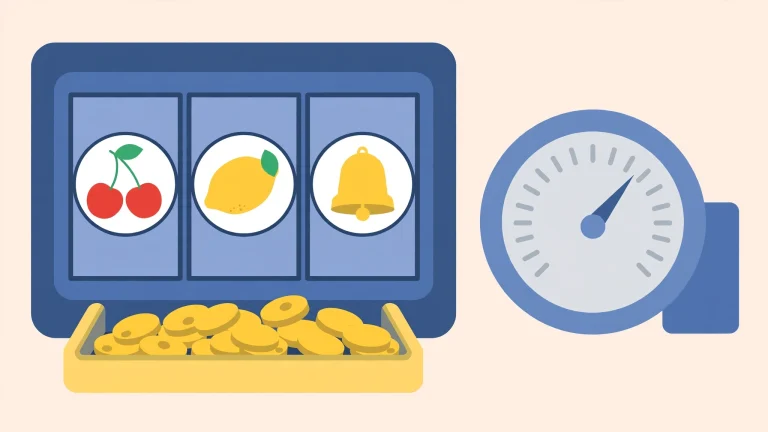
The idea is simple and very persistent: a slot machine that has paid out recently is “hot” and will keep paying, while a machine that has not paid out for a while is “cold” and should be avoided, or the reverse version, that a cold machine is “due” to pay soon. Players watch other players, note which machines seem busy, and choose their machine accordingly. It feels like observation. It is actually pattern-seeking in randomness.
Modern slot machines use a random number system that produces a fresh result for every spin, independent of every spin before it. A machine has no memory of its last payout, no build-up towards a future payout, and no state of being hot or cold. A machine that paid out on the last spin has exactly the same chance on the next spin as a machine that has not paid out all day. The same is true in reverse: a long run without a payout does not make a payout more likely next time, any more than a run of rainy days makes sunshine more likely tomorrow in any exact sense.
Why does the myth feel so convincing? Because random results naturally come in streaks. If you watch enough machines for long enough, some will pay out several times in a short period and some will go quiet for a long stretch, purely by chance. The human brain is very good at spotting streaks and very bad at accepting that they can happen without a cause. Once you have labelled a machine “hot”, you notice its wins and forget its losses, and the label seems to confirm itself. That is selective memory, not evidence.
The practical point is straightforward: choose a machine because you enjoy the game, because the stake size suits your budget, and because you understand what you are playing. Do not choose it because of its recent history, and do not leave a machine you enjoy because it has gone quiet. Its history tells you nothing about its next spin. Our guide to slot machines explained for beginners covers how random results and payout structures actually work, without the folklore.
Myth: A Win Is Due After a Losing Run
This is the most expensive myth in the casino, and it has a formal name: the gambler’s fallacy. It is the belief that if something has not happened for a while, it becomes more likely to happen soon, as if chance were keeping score and owed you a correction. A roulette player sees several red results in a row and bets heavily on black, convinced black is due. A dice player sees no seven for a while and expects one. A card player expects a good hand because the last few hands were poor.
Chance does not keep score. Each spin of a roulette wheel, each roll of dice, each shuffle in a properly run game is independent of the last. A roulette wheel does not remember that it landed on red five times. It has no mechanism for remembering, and no reason to compensate. The chance on the next spin is the same as it was on the first spin of the day. A losing run does not increase your chances on the next round, and a winning run does not decrease them either. Streaks happen in random games, and they end when they end, not when they “should”.
This myth is expensive because it drives the most dangerous betting behaviour: raising stakes after losses. If you believe a win is due, then doubling your bet seems logical, because the win you expect will recover everything. But the win is not due, so the doubled bet simply risks more money on a round with the same chances as always. Do this a few times in a row and a modest losing run becomes a large loss, not because the game changed, but because your stakes did. Our guide to roulette strategies and their risks explains how this exact logic powers the famous betting systems, and why they fail in practice.
The antidote to this myth is a flat stake and a session budget. Bet the same comfortable amount each round, decide in advance how much you are willing to lose, and stop when you reach that limit. That discipline does not change the odds, but it stops a false belief about odds from deciding how much you risk.
Myth: The Dealer Controls the Cards
In card games, some players believe the dealer can control the outcome: dealing good cards to themselves, dealing bad cards to certain players, or shuffling in a way that favours the house. It is an understandable suspicion, because the dealer handles the cards and the house profits in the end. But suspicion is not evidence, and the mechanics of dealing make this myth very hard to sustain.
In a properly run game, the cards are shuffled thoroughly, often by machine, and then cut by a player before dealing. The dealer follows strict procedures about how cards are dealt, when they are revealed, and how hands are settled, and those procedures are watched by other staff and by cameras. A dealer who could control the cards would need to defeat the shuffle, the cut, the dealing procedure, and the surveillance, all while appearing to play normally. That is not a plausible skill; it is a conspiracy theory with a large cast.
What actually explains the feeling that the dealer is against you is simpler: the house does not need to cheat, because the rules already give it an advantage. In blackjack, for example, the dealer acts last, and a player who busts loses even if the dealer later busts too. That rule alone creates the house’s edge, with no manipulation required. In other games, the payout structure does the same job. The house wins over time because the game is designed that way, openly, not because the dealer is secretly steering the cards.
If you play in a licensed, regulated casino, the games are audited and the equipment is tested. If you play somewhere unregulated, you have a different problem: no protection at all, and no reason to trust the game. That is one of the reasons the legal section of this guide matters so much for Thai readers. The answer to distrust is not to invent a story about the dealer. It is to understand the rules, accept the built-in advantage, and only play where games are properly regulated, if you play at all.
Myth: Betting Systems Can Beat the House
Betting systems are the most polished myths in the casino, because they come with names, charts, and confident explanations. The best known is the Martingale, where you double your bet after every loss, so that the first win recovers all previous losses plus a small profit. Others use sequences of numbers, or raise bets after wins, or follow elaborate patterns that look mathematical. They all share one flaw: they change how much you bet, but they never change the odds of the game itself.
Think about the Martingale for a moment. It works perfectly until it does not, and the moment it stops working is the moment a losing run lasts longer than your budget or the table limit allows. Losing runs that long are not rare. They are a normal part of random games. When one arrives, the system demands a bet many times larger than your starting stake, and if that bet loses too, the loss is enormous. The system has not beaten the house. It has simply rearranged your risk, trading many small wins for occasional large losses that wipe out everything the small wins earned.
Other systems fail for the same reason in different clothing. A system based on a number sequence still raises stakes after losses. A system based on raising bets after wins still risks your winnings on rounds with unchanged odds. No arrangement of bet sizes can turn a game with a house advantage into a game with a player advantage, because the advantage lives in the rules and the payouts, not in the order of your bets. If a system truly beat the house, casinos would not allow it, and the person selling it would be using it quietly instead of selling it to you.
There is one legitimate use of a “system”, and it is not a system at all: deciding your stake size in advance, keeping it flat, and stopping at a limit. That is bankroll management, and it works, not by beating the house, but by controlling how much you risk and how long you play. Our guide to casino bankroll management for beginners in Thailand covers that discipline properly, without promising anything it cannot deliver.
Legal Status in Thailand — Read This First
Gambling in Thailand is governed by the Gambling Act B.E. 2478 (1935), and under that law most forms of gambling are prohibited. The only major exceptions are the government lottery and licensed horse racing. Online casinos are NOT licensed in Thailand, and playing at offshore casino sites sits outside any Thai licensing or consumer protection framework. This guide is educational only: it explains how a game works so that readers can understand it, not so that readers will seek out a place to play it.
If you are reading this from Thailand, treat any casino content as information, not as an invitation. You must be 18+ (18 or older) to gamble anywhere it is legal, and even where it is legal, there are no guaranteed winnings in any casino game. The house edge exists precisely because, over time, the casino expects to come out ahead. Do not gamble to recover losses — never chase losses by increasing your bets after a bad run, and never gamble with money needed for rent, food, bills, or family obligations. If gambling stops feeling like entertainment, help is available from BeGambleAware and Gamblers Anonymous, both of which offer free, confidential support and self-assessment tools.
Common Beginner Mistakes
The first mistake is trusting a streak: leaving a machine because it went cold, or crowding a machine because it went hot, when neither state exists. The second is raising stakes because a win feels due after losses. The third is buying or following a betting system that promises to beat the house. The fourth is blaming the dealer for results that the rules already explain. The fifth is letting a ritual decide how long you play or how much you bet. Each of these mistakes has the same root: treating randomness as if it had a memory, a mood, or a pattern you can exploit. Drop that root belief, and all five mistakes become easy to avoid.
Frequently Asked Questions
Is a slot machine more likely to pay after a long run without a payout?
No. Each spin is independent, and the machine has no memory of previous spins. A long quiet run does not make the next spin more likely to pay.
Does doubling my bet after losses guarantee I will recover?
No. A losing run can last longer than your budget or the table limit allows, and when it does, the loss is much larger than the small wins the system earned before it.
Can the dealer influence which cards I get?
In a properly run game, no. Shuffling, cutting, dealing procedures, and surveillance make dealer control implausible, and the house does not need it, because the rules already give it an advantage.
Do lucky charms or rituals help at all?
They can make the game more fun, but they do not change the result. They become harmful only when they start deciding your stake or your session length.
Are some people naturally luckier at casino games?
In games of pure chance, no. Some players have fortunate runs by chance, and those runs are the ones you hear about. In games against the house, there is no luck skill to possess.
If no system works, is there any good advice at all?
Yes: learn the rules, keep your stake flat, set a budget and a stopping point, take breaks, and never chase losses. That advice does not beat the house, but it controls what you risk, which is the part you can actually control.
Conclusion
Casino myths survive because they feel like knowledge. They offer a story about why things happen, and stories are more comfortable than randomness. But comfort is not accuracy, and in a casino, acting on a comfortable falsehood costs real money. Machines are not hot or cold. Wins are not due. Dealers are not steering the cards. Betting systems do not beat the house. Rituals do not change random results. Once you accept those truths, casino games become simpler and safer: entertainment with a known price, played at a stake you chose, for a time you planned, with no illusions about what comes next. That clear-eyed approach will not make you win more often, but it will stop myths from making you lose more than you intended.