Crypto Mining Explained for Beginners: How It Works in 2026
Crypto Mining Explained for Beginners: How It Works in 2026
Risk disclaimer: Cryptocurrencies are volatile and can lose most or all of their value. Nothing in this article is financial advice. Never invest money you cannot afford to lose, and do your own research before buying any cryptocurrency.
Crypto mining sounds like digging for digital gold, and the comparison is closer than you might think. Just as gold miners do hard work to find new gold, crypto miners do hard computational work to secure a blockchain and, in return, earn new coins. But the details matter, because mining is also expensive, competitive, energy-hungry, and, for most ordinary people in 2026, no longer the easy way to earn crypto that it once appeared to be.
This guide explains mining from scratch. You will learn what mining actually does, how proof of work functions, what hardware miners use, how mining pools work, what it costs, whether it is still profitable for a beginner, and what alternatives exist. No technical background is needed, and no prior knowledge of mining is assumed.
What Mining Actually Does
Mining is not really about creating new coins, even though that is the part people notice. Its main job is security. A blockchain is a shared record of transactions, and the network needs a way to agree on which transactions are valid and in what order they happened, without trusting any single person or company. Mining is the mechanism that Bitcoin and other proof-of-work blockchains use to reach that agreement.
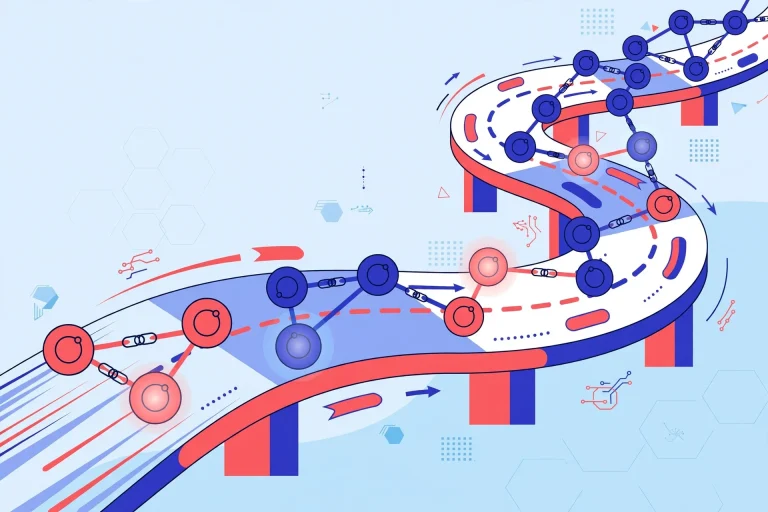
Here is the basic idea. Transactions are grouped into blocks. Miners compete to be the one who adds the next block to the chain. To do that, they must solve a mathematical puzzle that is hard to solve but easy to check. The puzzle is essentially a guessing game: miners try billions of random numbers, called nonces, until one of them produces a hash, a kind of digital fingerprint, that meets the network’s requirements. The first miner to find a valid answer broadcasts their block to the network, the other nodes check it, and if it is valid, the block is added to the chain and the miner is rewarded.
That puzzle is deliberately wasteful. It has no useful purpose beyond proving that the miner spent real computing power and real electricity. That waste is the point. Because the puzzle is expensive to solve, it is expensive to attack the network: to rewrite history or fake transactions, an attacker would need to control more computing power than all the honest miners combined, which would cost an enormous amount of money. The energy cost of mining is not a bug. It is the security budget of the network, paid for in electricity.
The miner who wins a block earns two things: a block reward, which is newly created coins, and the transaction fees from the transactions in that block. In Bitcoin, the block reward started at 50 bitcoins per block in 2009 and halves roughly every four years, in an event called the halving. The reward is now a small fraction of what it once was, and it will keep shrinking until it reaches zero, at which point miners will be paid only from transaction fees. That design is deliberate: Bitcoin’s total supply is capped at 21 million coins, and the halving is how the network slows down the creation of new coins over time. Our guide to what Bitcoin is (https://stylishnamees.com/what-is-bitcoin-beginners-guide-btc-mining-risks) explains the halving and Bitcoin’s supply in more detail.
Proof of Work: The Puzzle in Plain Language
Proof of work is the name for the consensus mechanism that mining uses, and it is worth understanding properly, because it is the foundation of the whole system. The name describes what it is: a miner proves they did work by presenting a solution to the puzzle, and the network accepts the solution as proof.
The puzzle itself is based on a hash function, a mathematical operation that takes any input and produces a fixed-length string of characters, called a hash. The key property of a hash function is that it is unpredictable: changing one character of the input produces a completely different hash, and there is no shortcut to finding a hash with particular properties. You just have to try inputs one after another until you get lucky.
In Bitcoin mining, the network sets a target: the hash of a block must be below a certain number. Miners take the block’s data, add a random number, hash the result, and check whether it is below the target. If it is not, they try a different random number, and keep trying, billions of times a second. When a miner finds a hash that meets the target, they have won the block. The difficulty of the target adjusts automatically, roughly every two weeks in Bitcoin, so that blocks are found about every ten minutes on average, no matter how much computing power joins or leaves the network. If more miners join, the puzzle gets harder. If miners leave, it gets easier.
This system has two important consequences. The first is that mining is a lottery with expensive tickets. Each guess costs a tiny amount of electricity, and the miner who makes the most guesses has the best chance of winning, but no one is guaranteed to win. A small miner with one machine could, in theory, win a block, but the odds are so low that it might take years. The second consequence is that the network’s security depends on the total amount of computing power, called the hash rate. The higher the hash rate, the more expensive it is to attack the network, and the more secure it is. Bitcoin’s hash rate has grown enormously over the years, which is why attacking Bitcoin is now considered practically impossible for anyone without nation-state resources.
The Hardware: From Laptops to ASICs
In the early days of Bitcoin, you could mine with an ordinary laptop. That era is long gone. Mining has gone through several generations of hardware, each one more specialised and more powerful than the last, and each one making the previous generation obsolete.
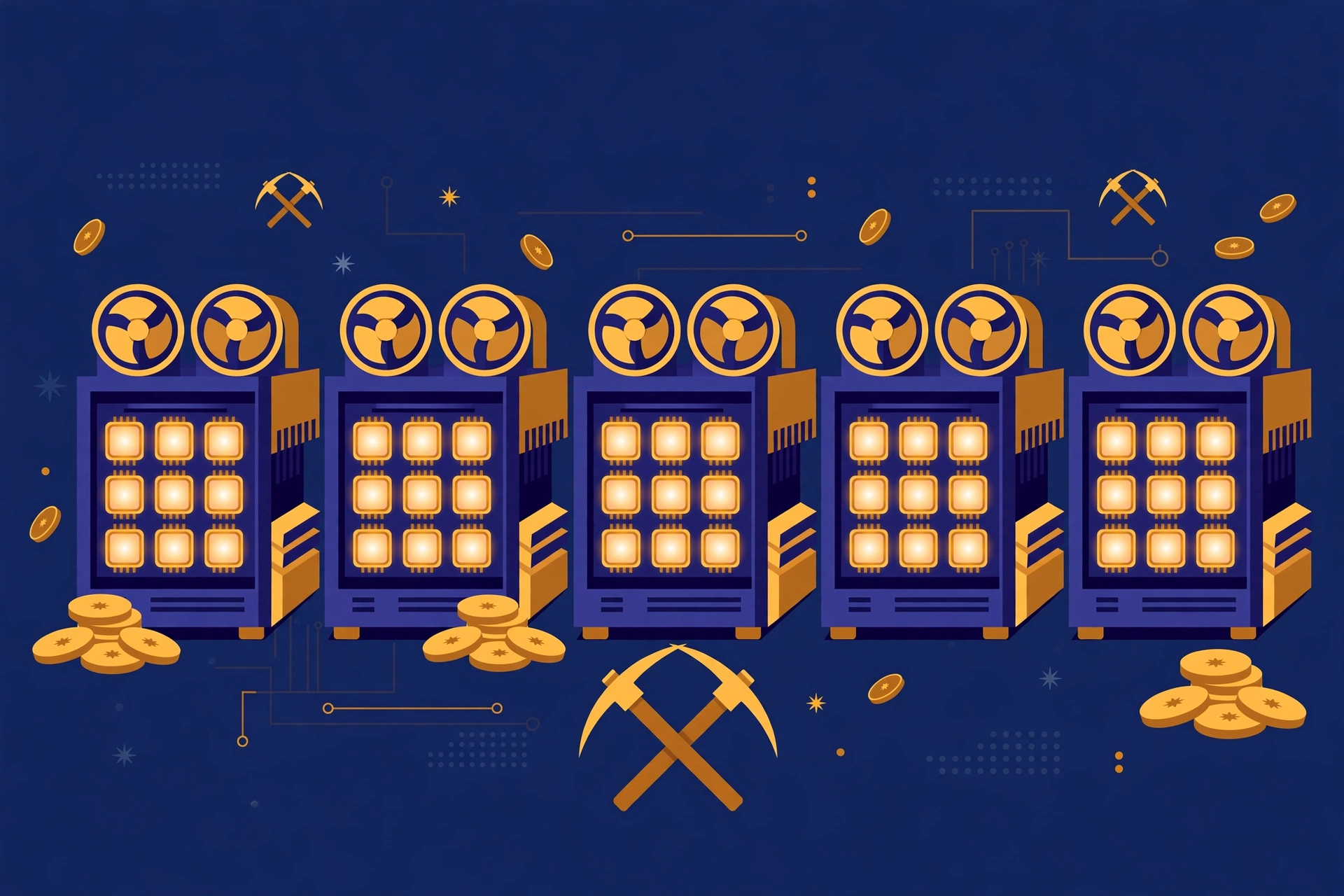
The first generation was CPUs, ordinary computer processors. They were quickly replaced by GPUs, graphics cards, which are much better at the repetitive calculations mining requires. For a while, people built mining rigs out of multiple GPUs, and some still do, for coins that are designed to resist specialised hardware. But for Bitcoin, GPUs were replaced by FPGAs, programmable chips, and then by ASICs, application-specific integrated circuits. An ASIC is a chip designed to do one thing, mining a particular algorithm, and to do it far more efficiently than any general-purpose hardware. A modern Bitcoin ASIC can perform trillions of hashes per second while using a few thousand watts of electricity.
That specialisation has consequences. An ASIC that mines Bitcoin cannot mine anything else, and it becomes obsolete as newer, more efficient models are released. Buying mining hardware is a bet that the machine will earn back its cost before it becomes unprofitable, and that calculation depends on the price of the coin, the price of electricity, the difficulty of the network, and the release of new hardware. It is a bet that many people have lost.
There is also the question of where miners operate. Mining is concentrated in places with cheap electricity, because electricity is the main ongoing cost. That has included regions with abundant hydroelectric power, places with cheap natural gas, and, controversially, places where miners use coal or other fossil fuels. The geography of mining shifts as energy prices and regulations change, and it has been a political issue in several countries. Some governments have welcomed miners, others have banned them, and the rules can change suddenly, which is a risk that a miner must factor in.
Mining Pools: Why Miners Team Up
Because mining is a lottery, and because a small miner might wait years to win a single block, most miners join mining pools. A pool is a group of miners who combine their computing power and share the rewards. When any member of the pool wins a block, the reward is split between all members, in proportion to how much computing power each contributed. That turns a rare, large payout into a steady, small stream of income, which is much more practical for paying electricity bills.
Pools are run by operators who take a small fee, and they coordinate the work: the pool server assigns tasks to miners, collects their results, and distributes rewards. Joining a pool does not require trust in the other miners, only in the pool operator, and miners can switch pools freely. Most of the world’s Bitcoin mining now happens through pools, and a handful of large pools account for a significant share of the total hash rate. That concentration worries some people, because a pool operator who controlled more than half of the network’s hash rate could theoretically attack it, but in practice, miners would leave a pool that behaved badly, and pool operators have strong incentives not to undermine the network they depend on.
For a beginner, the practical point is this: if you mine at all, you will almost certainly mine in a pool. Solo mining is a lottery ticket, and pool mining is a small, steady income. The pool’s fee, its payout method, and its reliability are all worth checking before you join, and you should be wary of pools that promise unusually high returns, because that is a common pattern in mining scams.
What Does Mining Cost?
Mining has three main costs, and the balance between them determines whether it is profitable. The first is hardware: the cost of the ASIC or GPU rig, plus the supporting equipment, such as power supplies, cooling, and shelving. A single modern Bitcoin ASIC can cost several thousand dollars, and a serious operation uses many of them. The second is electricity: the ongoing cost of running the machines, which typically run twenty-four hours a day, seven days a week. The third is everything else: rent for the space, cooling, maintenance, internet, and the time spent managing the operation.
Electricity is usually the deciding factor. A miner paying a high residential electricity rate will almost always lose money mining Bitcoin, because the cost of the electricity used to find a block exceeds the value of the reward. A miner with access to very cheap electricity, for example from a hydroelectric dam or from surplus renewable energy, might profit. That is why mining is a business dominated by professionals with access to cheap power, not by hobbyists with a spare computer.
There are calculators online that estimate mining profitability, but they should be treated with caution. They depend on inputs that change constantly: the price of the coin, the difficulty of the network, the cost of electricity, and the efficiency of the hardware. A calculation that shows a profit today can show a loss next month if the coin’s price falls or the difficulty rises. Anyone considering mining should run the numbers with pessimistic assumptions, not optimistic ones, and should assume that the coin’s price could fall significantly.
Is Mining Still Worth It for a Beginner in 2026?
For most beginners, the honest answer is no, at least not for Bitcoin. The reasons are straightforward. The hardware is expensive, the competition is intense, the difficulty is high, and the margins are thin. A single ASIC bought at retail prices, running on residential electricity, is very unlikely to earn back its cost. The people who profit from Bitcoin mining are professionals with scale: cheap electricity, bulk hardware purchases, and efficient operations.
That does not mean mining is dead. It means it has become an industry, and industries are hard for hobbyists to compete in. There are still opportunities in mining other coins, particularly newer or smaller ones that are designed to be mined with GPUs and that have lower difficulty. But those coins carry their own risks: they may be worth very little, they may fail, and their mining algorithms may change. Mining a small coin in the hope that it becomes valuable is a speculation, not a reliable income, and it should be treated as one.
There are also alternatives to mining that are worth considering. Buying cryptocurrency directly on an exchange is simpler, cheaper, and more flexible than mining it, and for most people, it is the better way to acquire crypto. Staking, which is available on proof-of-stake networks like Ethereum and Solana, lets you earn rewards by locking up coins you already own, without buying specialised hardware or paying for electricity. Our guide to crypto staking versus lending (https://stylishnamees.com/crypto-staking-vs-lending-risks-beginners) explains staking in detail, and our guide to how to buy crypto safely (https://stylishnamees.com/how-to-buy-crypto-safely-beginners-checklist) explains how to buy coins without mining.
If you still want to try mining, start small, treat it as a learning experience rather than an investment, and never spend money you cannot afford to lose on hardware. Mine a coin you understand, use a reputable pool, and keep careful records, because mining income may be taxable in your country.
The Environmental Question
No discussion of mining is complete without the environmental question, because it is one of the most debated topics in crypto. Proof-of-work mining uses a lot of electricity, and that is a fact, not an opinion. Bitcoin’s network uses roughly as much electricity as a medium-sized country, and that figure is often quoted as proof that mining is wasteful. But the number alone does not tell you much, because what matters is where that electricity comes from and what it is used for.
Supporters of mining argue that miners seek out the cheapest electricity, which is often surplus renewable energy that would otherwise go to waste, such as hydroelectric power in remote regions or solar power during peak production. They also argue that mining can stabilise energy grids by providing a buyer for excess power, and that the share of renewable energy in mining has grown over the years. Critics reply that much mining still uses fossil fuels, that the total energy use is large regardless of the source, and that the energy could be used for something else. Both arguments have merit, and the honest position is that mining’s environmental impact depends on the energy mix, which varies by location and over time, and that it is a real cost that should be weighed alongside the security benefits.
It is also worth noting that not all cryptocurrencies use mining. Ethereum, the second-largest cryptocurrency, moved from proof of work to proof of stake in 2022, in an event called the Merge, which reduced its energy use dramatically. Many newer blockchains use proof of stake from the start, and they do not require mining at all. That means the environmental question is specific to proof-of-work coins like Bitcoin, not to crypto as a whole. Our guide to what Ethereum is (https://stylishnamees.com/what-is-ethereum-beginners-guide) explains the Merge and how proof of stake works.
Mining Scams and What to Avoid
Mining attracts scams, because it combines technical complexity with the promise of passive income, and that is a combination that scammers love. The most common scam is cloud mining: a company offers to rent you mining power, you pay upfront, and you receive regular payouts that look like mining rewards, until the company disappears. Some cloud mining services are legitimate, but many are not, and it is very hard for a beginner to tell the difference. A good rule is that if a service guarantees returns, it is almost certainly a scam, because real mining returns are never guaranteed.
Other scams include fake mining hardware sold online, mining apps that claim to mine on your phone, and social media accounts that promise to double your mining investment. Phone mining, in particular, is almost always a scam or a gimmick: a phone’s processor is far too weak to mine profitably, and any app that claims otherwise is either showing you fake numbers or using your phone for something else. Learn the warning signs of crypto scams before you send money to any mining service.
A simpler rule covers most cases: if you cannot explain how a mining opportunity makes money, do not put money into it. Real mining makes money from block rewards and fees, minus the cost of hardware and electricity. If the numbers do not add up, or if the company will not show you its hardware, its electricity costs, or its mining pool, walk away.
Frequently Asked Questions
What is crypto mining in simple terms?
Crypto mining is the process of using computers to secure a proof-of-work blockchain, by competing to solve a mathematical puzzle. The miner who solves the puzzle adds the next block of transactions to the chain and earns a reward in newly created coins plus transaction fees.
How does Bitcoin mining work?
Bitcoin miners use specialised hardware called ASICs to try billions of random numbers per second, looking for a hash that meets the network’s target. The first miner to find one wins the block reward, which halves roughly every four years. Blocks are found about every ten minutes.
Can I mine crypto on my laptop or phone?
Not profitably. Bitcoin mining requires ASICs, and even GPU mining of other coins requires powerful graphics cards. A laptop or phone is far too weak to compete, and any app that claims to mine on a phone is almost certainly a scam or a gimmick.
Is crypto mining profitable?
It depends on the coin, the hardware, and, above all, the price of electricity. For Bitcoin, mining is generally only profitable for professionals with cheap electricity and scale. For a beginner on residential electricity, it is very unlikely to be profitable, and the hardware may never pay for itself.
What is a mining pool?
A mining pool is a group of miners who combine their computing power and share the rewards. When any member wins a block, the reward is split in proportion to each member’s contribution, turning rare large payouts into a steady small income.
What is the difference between mining and staking?
Mining secures proof-of-work blockchains like Bitcoin by spending computing power and electricity. Staking secures proof-of-stake blockchains like Ethereum and Solana by locking up coins as collateral. Staking requires no specialised hardware and uses far less energy, but it is only available on proof-of-stake networks.
Does mining use a lot of electricity?
Yes. Bitcoin mining uses a large amount of electricity, comparable to a medium-sized country. The environmental impact depends on where that electricity comes from, and the share of renewable energy in mining has grown, but the total energy use remains a real cost and a subject of debate.
What happens when all Bitcoin is mined?
Bitcoin’s supply is capped at 21 million coins, and the block reward halves until it reaches zero. After that, miners will be paid only from transaction fees. That transition is expected to take more than a century, and whether fees alone will be enough to secure the network is an open question.
Conclusion
Crypto mining is the engine that secures Bitcoin and other proof-of-work blockchains, and it is an elegant idea: make security expensive, and the network becomes expensive to attack. But elegance does not make it a good opportunity for everyone. Mining has become a professional industry, dominated by operators with cheap electricity, bulk hardware, and scale, and the days when an ordinary person could mine Bitcoin on a home computer are long gone. For most beginners in 2026, buying crypto directly, or staking on a proof-of-stake network, is simpler, cheaper, and more flexible than mining, and the money that would have gone into hardware and electricity is better spent on learning and on careful, small purchases. If you do decide to try mining, do it with your eyes open: run the numbers with pessimistic assumptions, use a reputable pool, start small, and treat it as a learning experience rather than a source of income. Read our guide to how to buy crypto safely (https://stylishnamees.com/how-to-buy-crypto-safely-beginners-checklist) before you acquire any coins, our guide to crypto staking versus lending (https://stylishnamees.com/crypto-staking-vs-lending-risks-beginners) if you want to earn rewards without hardware, and our guide to what Bitcoin is (https://stylishnamees.com/what-is-bitcoin-beginners-guide-btc-mining-risks) to understand the coin that mining was invented for.