What Is XRP (Ripple)? A Beginner’s Guide to How It Works
What Is XRP (Ripple)? A Beginner’s Guide to How It Works
Risk disclaimer: Cryptocurrencies are volatile and can lose most or all of their value. Nothing in this article is financial advice. Never invest money you cannot afford to lose, and do your own research before buying any cryptocurrency.
XRP is one of the oldest and most talked-about cryptocurrencies, and it is also one of the most misunderstood. It is often described as the cryptocurrency for banks, because its main pitch is not to replace the banking system but to make cross-border payments faster and cheaper. That puts it in a very different category from Bitcoin, which was designed as an alternative to banks, and from Ethereum, which was designed as a platform for applications. XRP’s story is about payments: moving money across borders in seconds, for a fraction of a cent, instead of days and high fees.
That story has made XRP famous and controversial in equal measure. It has a large community of supporters, a long legal battle with American regulators, and a set of design choices that critics say make it too centralised to be called a cryptocurrency at all. A beginner needs to understand all of that, because XRP is not a coin you can understand by looking at a price chart. Its value, its risks, and its future are all tied up in questions about how payments work, who controls the network, and what regulators decide.
This guide explains XRP from scratch. You will learn the difference between Ripple and XRP, how the XRP Ledger works, what XRP is actually used for, how it compares with Bitcoin, and what risks a beginner should weigh before buying any.
Ripple and XRP: Two Different Things
The first thing to get straight is that Ripple and XRP are not the same thing, even though people use the names interchangeably. Ripple is a company, Ripple Labs, founded in 2012 and based in the United States. XRP is a digital asset that runs on a public blockchain called the XRP Ledger. The ledger was created before the company in its current form, and the company uses the ledger and the asset, but it does not own them in the way a company owns a product.
Think of it this way: Ripple is like a company that builds software for banks, and XRP is like a currency that the software can use. Ripple builds payment products, sells them to financial institutions, and holds a large amount of XRP. The XRP Ledger itself is open-source software, maintained by a mix of Ripple engineers and independent developers, and anyone can run a node or build on it. That distinction matters, because the debates about XRP are often really debates about Ripple the company, and separating the two helps you judge each on its own merits.
It also matters because of the history. The XRP Ledger was launched in 2012, making it one of the earliest blockchains after Bitcoin. Most of the XRP that will ever exist was created at the start, all at once, rather than being mined over time. The total supply is fixed at 100 billion XRP. A large share of that supply was given to Ripple, which has sold some of it over the years and locked much of the rest in escrow, releasing it on a schedule. That concentration of supply in one company’s hands is the single biggest source of criticism, and we will come back to it.
The Problem XRP Tries to Solve: Slow, Expensive International Payments
To understand XRP, you need to understand how international money transfers work today, because the current system is genuinely bad. If you send money from one country to another through a bank, the money usually travels through the correspondent banking system, a chain of banks that hold accounts with each other. Each bank in the chain takes a fee and adds a delay. A payment can take three to five business days, pass through several intermediaries, and cost a meaningful percentage of the amount sent. For a large company, that is an annoyance. For a worker sending money home to family, it is a real cost.
The reason the system is slow is not that banks are lazy. It is that banks in different countries do not hold each other’s currencies directly. A bank in Pakistan that wants to pay a bank in the Philippines needs a way to settle the payment, and the traditional answer is to hold pre-funded accounts, called nostro and vostro accounts, in each other’s currencies, with money sitting idle in those accounts just in case a payment needs to go through. That trapped money is called trapped liquidity, and it is expensive for banks to maintain.
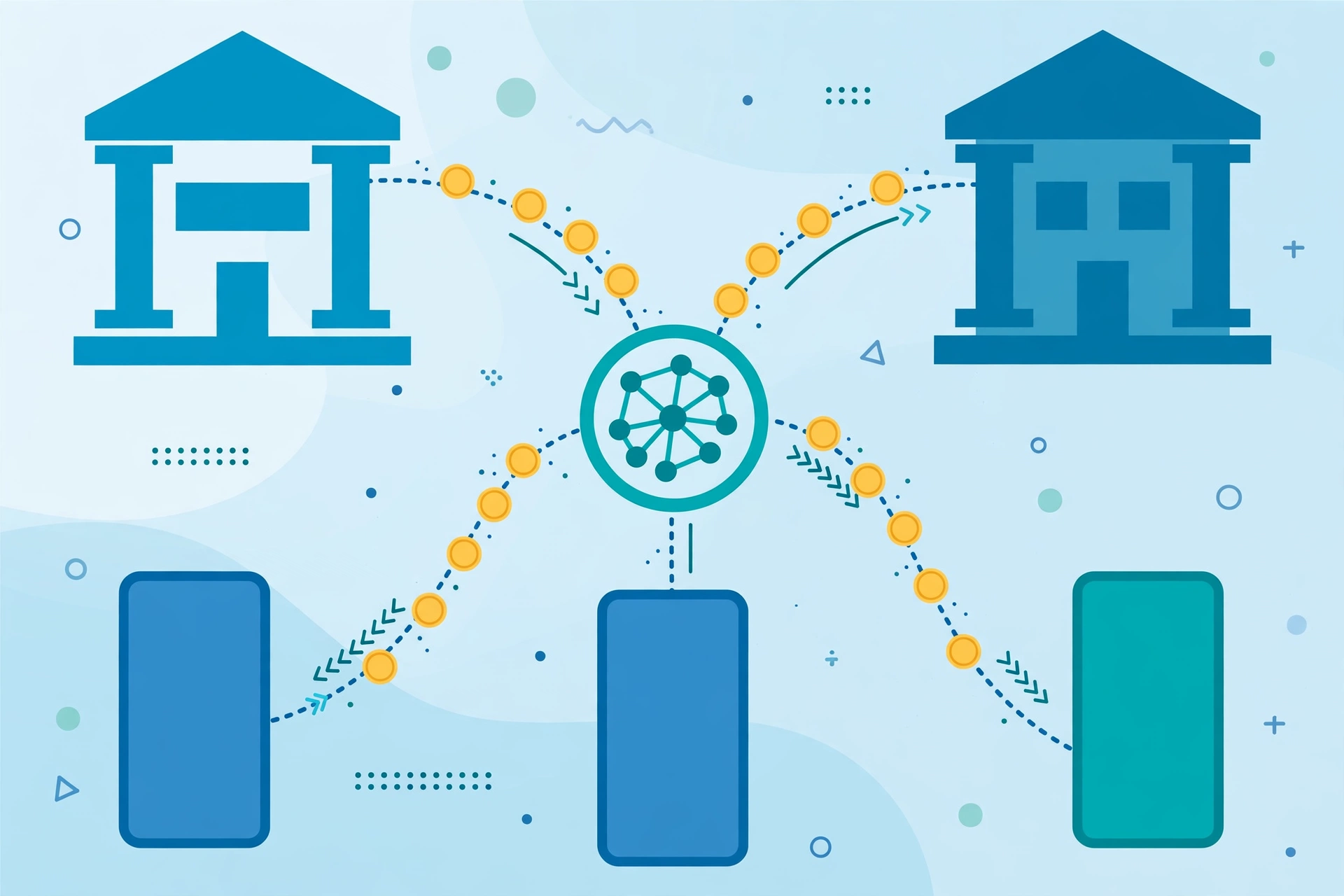
XRP’s pitch is simple: instead of holding money in dozens of pre-funded accounts around the world, a bank could hold XRP, convert its local currency into XRP, send the XRP across the world in seconds, and convert it into the destination currency on the other side. The XRP acts as a bridge currency, a neutral asset that both sides can use for the few seconds the payment takes. That is the idea behind Ripple’s payment product, originally called On-Demand Liquidity and now part of Ripple Payments. Whether it works at scale, and whether banks actually want it, is a separate question from whether the idea is sound, and the answer is still being worked out.
How the XRP Ledger Works
The XRP Ledger is the blockchain that XRP runs on, and it works very differently from Bitcoin or Ethereum. There is no mining. There are no miners competing to solve puzzles. Instead, the ledger uses a consensus mechanism based on agreement between validators, and new ledgers close every three to five seconds, which is why XRP transactions settle so quickly.
Here is the basic idea. A group of independent servers, called validators, each maintain a list of other validators they trust, called a Unique Node List. When a transaction is submitted, the validators check it, and if a large supermajority of the validators they trust agree that the transaction is valid, it is added to the ledger. There is no race, no lottery, and no energy-intensive competition. The result is a network that confirms transactions in seconds, handles a high volume of them, and uses very little energy compared with proof-of-work blockchains.
That design has a trade-off, and it is the heart of the debate about XRP. In Bitcoin, anyone can mine, and the security of the network comes from the enormous amount of computing power spread across the world. In the XRP Ledger, security comes from the agreement of validators, and the question is who runs those validators and how independent they really are. Ripple publishes a default list of trusted validators, and for much of the ledger’s history, Ripple itself ran a significant share of them. The number of independent validators has grown over time, and Ripple has reduced its share, but critics still argue that the network depends too much on Ripple’s choices. Supporters reply that anyone can run a validator and choose their own trusted list, and that the ledger has operated reliably for well over a decade without a major failure. Both points are true, and a beginner should hold both in mind.
The ledger also has features that Bitcoin does not. It has a built-in decentralised exchange, where XRP and other assets issued on the ledger can be traded directly. It has a system for issuing tokens, so that other currencies and assets can exist on the ledger alongside XRP. It supports payment channels and escrow, which are tools for conditional payments. And it burns a tiny amount of XRP with every transaction, as a fee, which means the total supply slowly decreases over time, very slightly. The transaction fee is a fraction of a cent, which is part of why XRP is marketed as cheap to use.
What Is XRP Actually Used For?
XRP has several uses, and it helps to separate the ones that are real today from the ones that are aspirational. The main intended use is as a bridge currency for cross-border payments, as described above. Ripple sells this to banks and payment companies, and a number of institutions have used or tested it. The volume of these payments has grown over the years, but it is still small compared with the total volume of global cross-border payments, and most banks still use the traditional system. The honest picture is that XRP’s payment use case is real but not yet dominant, and it may never be.
A second use is as a traded asset. Like most cryptocurrencies, XRP is bought and sold on exchanges by people who think its price will rise, or who want to trade it against other coins. This is, in practice, the main reason most people hold XRP, even if they describe it as an investment in the payment vision. There is nothing wrong with that, but it is worth being honest about it: if you buy XRP, you are probably buying it because you believe in its future price, not because you are sending money across borders.
A third use is within the XRP Ledger itself. XRP pays transaction fees on the ledger, and it acts as a reserve requirement: accounts on the ledger must hold a small amount of XRP to exist, which prevents spam. These are real but minor uses, and they do not by themselves explain XRP’s market value.
Finally, Ripple uses XRP in its business in other ways, including selling it to fund operations, which is a source of ongoing controversy, and holding it in escrow. The escrow releases up to one billion XRP per month, with unused amounts returned to escrow, which means there is a steady, predictable supply of XRP entering the market from Ripple. Some holders see this as a problem, because it puts downward pressure on the price. Others see it as transparent and predictable, which is better than a surprise. Either way, it is something a buyer should know about before buying.
XRP vs Bitcoin: A Useful Comparison
XRP and Bitcoin are often mentioned in the same breath, but they are built on almost opposite philosophies. Bitcoin was designed to be a decentralised store of value and a form of money that no government or company controls. Its supply is fixed at 21 million, new coins are created slowly through mining, transactions take around ten minutes to confirm, and fees can be high when the network is busy. Its strength is its decentralisation and its simplicity. Its weakness, for payments, is its speed and cost.
XRP was designed to be fast and cheap, to work with banks rather than against them, and to settle payments in seconds. Its supply was created all at once, its consensus is based on validator agreement rather than mining, and its fees are negligible. Its strength is its speed and its focus on a real-world problem. Its weakness, in the eyes of critics, is that it is less decentralised and more dependent on one company.
If you are new to crypto generally, our guide to what Bitcoin is (https://stylishnamees.com/what-is-bitcoin-beginners-guide-btc-mining-risks) explains Bitcoin’s design and risks in detail, and our guide to what Ethereum is (https://stylishnamees.com/what-is-ethereum-beginners-guide) explains the platform that most decentralised applications are built on. Reading those alongside this one will give you a much better sense of where XRP fits.
Neither Bitcoin nor XRP is objectively better. They are trying to do different things. Bitcoin is trying to be digital gold. XRP is trying to be a tool for moving money. A beginner who understands that distinction will be much less confused by the arguments between their supporters, which are often really arguments about which goal matters more.
The Legal Battle: What Happened with the SEC
No guide to XRP is complete without the legal story, because it shaped XRP’s price, its availability on exchanges, and its reputation for years. In late 2020, the US Securities and Exchange Commission, the SEC, sued Ripple, claiming that XRP was an unregistered security and that Ripple had raised money by selling it illegally. The case became one of the most closely watched legal fights in crypto history, because its outcome would affect not just XRP but the question of whether many other cryptocurrencies were securities too.
Several major exchanges delisted or suspended XRP trading while the case was pending, and XRP’s price fell sharply. The case dragged on for years, with both sides winning partial victories. In 2023, a court ruled that XRP sold on public exchanges was not a security, while sales to institutional investors were a different matter. That ruling was seen as a partial win for Ripple, and XRP was relisted on major US exchanges. The case continued through appeals and settlement discussions, and the practical effect was that XRP survived, but with a legal cloud that took years to clear.
What should a beginner take from this? First, that regulation is a real risk for cryptocurrencies, and that a coin’s legal status can change its price and its availability overnight. Second, that XRP’s regulatory story is not fully over, because other countries have their own rules, and the US position could evolve. Third, that the case made XRP unusually well-known: it is one of the few cryptocurrencies whose legal status has been tested in court, which some people see as a strength and others see as a warning. Regulatory and tax questions matter for every crypto holder, not just XRP holders, and the rules vary by country.
The Honest Risks and Criticisms
XRP has real risks, and a beginner should weigh them honestly rather than hearing only the positive case. The first is centralisation. Ripple holds a large share of XRP, and its choices, including how much it sells and when, affect the market. The XRP Ledger is more centralised than Bitcoin in practice, and that is a genuine trade-off for its speed. If you believe that decentralisation is the whole point of cryptocurrency, XRP will disappoint you. If you believe that speed and practical usefulness matter more, you may see the trade-off differently, but you should not pretend it does not exist.
The second risk is adoption. XRP’s payment use case depends on banks and payment companies actually using it, and progress there has been slower than supporters hoped. Many banks have tested Ripple’s products without committing to using XRP itself, and some use Ripple’s messaging software while settling payments in traditional currencies. That means the vision of XRP as a bridge currency is still partly a promise rather than a fact, and a buyer is betting that the promise will be kept.
The third risk is competition. XRP is not the only project trying to improve cross-border payments. Stablecoins, which are cryptocurrencies pegged to the dollar, are increasingly used for the same purpose, and they have the advantage of a stable value, which matters when you are moving money rather than speculating. Central bank digital currencies are also being developed, and traditional payment companies are improving their own systems. XRP competes with all of these, and it is not obvious that it will win. Stablecoins are a serious competitor for the payments use case, precisely because their value does not move.
The fourth risk is regulatory. The SEC case is largely resolved, but regulation is an ongoing process, and a change in the law or in enforcement could affect XRP in any country. This is true of all cryptocurrencies, but XRP’s history makes the point more vividly than most.
Finally, the usual crypto risks apply: XRP’s price is volatile, it can fall sharply for reasons that have nothing to do with Ripple’s business, and the market is full of scams that use XRP’s name. Learn how to spot crypto scams before you buy any coin, and our guide to how to buy crypto safely (https://stylishnamees.com/how-to-buy-crypto-safely-beginners-checklist) explains the practical steps and safety checks.
What Beginners Should Know Before Buying XRP
If you are considering buying XRP, there are a few practical points to keep in mind. The first is storage. XRP can be held on an exchange, which is convenient but carries the risk that the exchange could fail or be hacked, or in a wallet you control, which is safer but requires you to manage your own security. Our guide to crypto wallets (https://stylishnamees.com/crypto-wallets-beginners-2026-choose-stay-safe) explains the options, including cold storage, which keeps crypto offline for maximum safety.
The second point is the reserve requirement. To hold XRP in a wallet on the XRP Ledger, your account must maintain a small minimum balance, which is locked and cannot be spent. The amount is small, but it catches beginners by surprise, and it means you cannot withdraw every last fraction of XRP from a wallet.
The third point is that XRP’s price is not the same as Ripple’s success. Ripple could sign up many banks and still see XRP’s price fall, because the price depends on supply and demand in the trading market, not on the company’s revenue. Do not assume that good news for Ripple automatically means good news for XRP’s price, and do not assume the reverse either.
The fourth point is to be careful about where you get information. XRP has one of the most passionate communities in crypto, and also some of the most misleading hype. Claims that XRP is about to replace the dollar, or that a particular price target is guaranteed, are not information. They are marketing. Stick to sources that explain the technology and the business, and be sceptical of anyone who promises returns.
Frequently Asked Questions
Is XRP the same as Ripple?
No. Ripple is a company that builds payment software. XRP is a digital asset that runs on the XRP Ledger, a public blockchain. Ripple uses XRP and holds a large amount of it, but the ledger itself is open source and maintained by a mix of Ripple engineers and independent developers.
How is XRP different from Bitcoin?
Bitcoin is a decentralised store of value created through mining, with a fixed supply and slow, expensive transactions. XRP is a fast, cheap payment asset designed for cross-border transfers, with a fixed supply created all at once and consensus based on validator agreement rather than mining.
Is XRP a security?
In the United States, a court ruled in 2023 that XRP sold on public exchanges was not a security, while institutional sales were treated differently. The legal position varies by country, and regulation continues to evolve, so this is not a settled question everywhere.
How fast are XRP transactions?
Transactions on the XRP Ledger typically settle in three to five seconds, with fees of a fraction of a cent. That is much faster and cheaper than Bitcoin or Ethereum for simple payments.
Can I stake XRP?
XRP does not have staking in the way that proof-of-stake coins like Ethereum or Solana do. You cannot earn rewards by locking up XRP to secure the network, because the ledger does not use staking. Some exchanges and platforms offer lending or rewards programmes for XRP, but those are not the same as staking, and they carry their own risks, so understand the difference between staking and lending before using one.
Is XRP centralised?
XRP is more centralised than Bitcoin, because Ripple holds a large share of the supply and has historically run a significant share of validators. The number of independent validators has grown, and anyone can run one, but the concentration of supply in Ripple’s hands remains a genuine concern for critics.
What is XRP used for?
Its main intended use is as a bridge currency for cross-border payments, letting banks convert one currency into XRP, send it across the world in seconds, and convert it into the destination currency. It is also traded as an asset on exchanges, and it pays transaction fees on the XRP Ledger.
Is XRP a good investment?
No one can answer that for you, and anyone who claims to know is selling something. XRP has a real use case, a long history, and serious risks, including centralisation, competition from stablecoins, and regulatory uncertainty. Treat any investment decision as your own research, not as a tip.
Conclusion
XRP is a cryptocurrency built for a specific job: making international payments faster and cheaper. Its technology, the XRP Ledger, does that job well, settling transactions in seconds for a fraction of a cent, and it has operated reliably for well over a decade. Its business, Ripple, has built real relationships with financial institutions, and its legal battle with the SEC, while costly, ended without the worst outcome its critics feared. Those are genuine strengths, and they explain why XRP has survived longer than most cryptocurrencies and kept a large, loyal community.
They do not erase the criticisms. XRP is more centralised than Bitcoin, Ripple holds a large share of the supply, adoption by banks has been slower than hoped, and stablecoins are now serious competitors for the same payments use case. The price of XRP depends on trading markets, not on Ripple’s revenue, and it can fall sharply for reasons that have nothing to do with the technology. A beginner who understands both sides, the speed and the centralisation, the real use case and the slow adoption, the legal victory and the ongoing regulatory risk, is in a much better position than someone who has only heard one side. Read our guide to how to buy crypto safely (https://stylishnamees.com/how-to-buy-crypto-safely-beginners-checklist) before any purchase, keep your holdings in a wallet you control, and never invest more than you can afford to lose. If you want to understand the coin XRP is most often compared with, start with what Bitcoin is (https://stylishnamees.com/what-is-bitcoin-beginners-guide-btc-mining-risks), and remember that the stablecoins competing for the same payments job have the advantage of a steady value.