Best AI Grammar and Writing Checkers in 2026: What They Catch, What They Miss, and Privacy
Best AI Grammar and Writing Checkers in 2026: What They Catch, What They Miss, and Privacy
Almost everyone writes more than they used to. Emails, job applications, essays, social media posts, reports, messages to clients — writing is now part of nearly every job, and a single careless error can change how a reader judges the whole message. AI grammar and writing checkers promise to catch those errors before anyone else sees them, and for the most part, they do a useful job. But they are not magic, and they are not all the same.
This guide explains what these tools actually check, where they still fall short, how to think about privacy when you paste your writing into someone else’s service, and how free and paid tiers generally differ. It does not rank one specific product as the winner for everyone, because the right choice depends on what you write, how often you write, and how sensitive your writing is.
What Grammar Checkers Actually Do
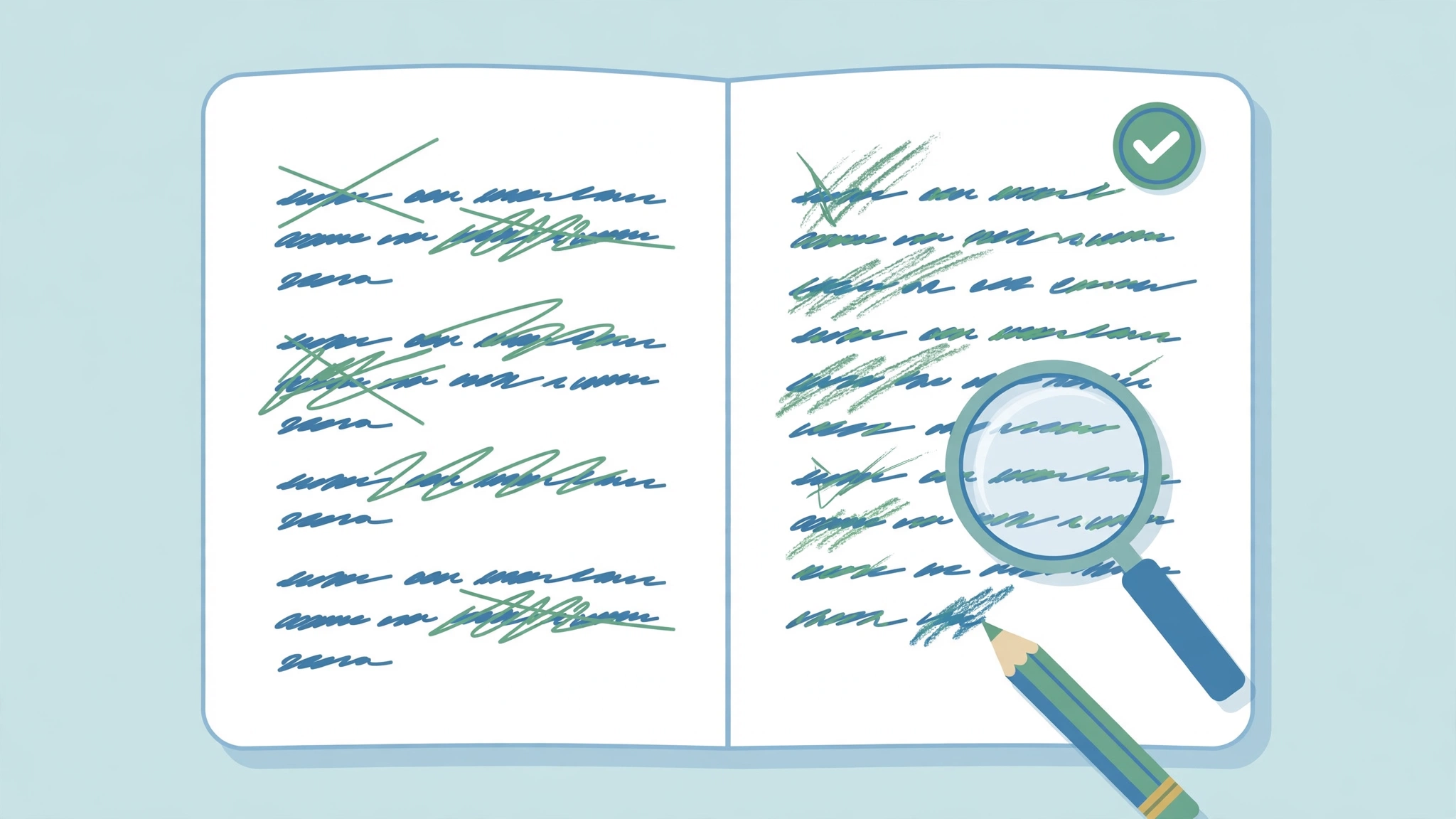
At their simplest, grammar checkers look for mistakes in spelling, punctuation and sentence structure. A missing apostrophe, a verb that does not agree with its subject, a comma in the wrong place, a word used twice in a row — these are the bread and butter of the category, and modern tools catch them reliably. Most also flag commonly confused words, such as their, there and they’re, or affect and effect, where a plain spellchecker would stay silent because every word is spelled correctly.
Beyond basic correctness, most AI writing checkers now offer style suggestions. They may point out sentences that run too long, passive constructions that could be simpler, repeated words, or a tone that does not match your stated goal — formal for a job application, friendly for a message to a colleague. Some offer vocabulary suggestions, proposing a more precise word where yours is vague. These style features are where tools start to differ from one another, because style is a matter of judgement, not a matter of right and wrong.
More advanced tools add features aimed at particular kinds of writing. A student tool might check citation formatting and academic tone. A business tool might check for clarity in long reports and flag jargon. Some tools now include plagiarism-style checks that compare your text against published sources, and AI-detection features that estimate whether text looks machine-generated. Those extras can be useful, but they are also the features most likely to be misunderstood, as this guide explains below.
The important thing to understand is that a grammar checker works on patterns in language, not on understanding your meaning the way a human editor does. It knows that a sentence looks unusual; it does not always know what you meant to say. That distinction explains most of the tool’s strengths and most of its mistakes.
What They Catch Well
Spelling errors are the most obvious win. A good checker catches typos that your eyes skip over because you know what you meant to write. This matters most in long documents, where fatigue sets in and proofreading your own work becomes unreliable. If you have ever sent an email and spotted a typo the second after pressing send, you know exactly why an automated second pair of eyes is valuable.
Grammar errors in standard, straightforward sentences are the next strength. Subject-verb agreement, article use, misplaced modifiers in simple sentences, and punctuation around clauses are all handled well by current tools. For someone writing in a second language, this is often the single most helpful feature, because these are precisely the errors that are hardest to spot in your own writing and easiest for a reader to notice.
Consistency checks are a quieter but real benefit. Some tools notice when you switch between spelling variants, use a term two different ways in the same document, or change your capitalisation of a product name halfway through. In professional writing, inconsistency reads as carelessness even when every individual sentence is correct, so catching it matters.
Finally, checkers are excellent at the mechanical parts of proofreading that humans find boring: double spaces, missing full stops, duplicated words, and mismatched brackets. Handing those chores to software frees your attention for the parts of editing that actually need judgement, such as whether your argument makes sense and whether your opening paragraph earns the reader’s attention.
What They Miss — and What They Get Wrong
The limits of grammar checkers matter as much as their strengths, because trusting them blindly creates new problems. The first limit is meaning. A sentence can be grammatically perfect and still say the wrong thing. If you write “the meeting is on Tuesday” when you meant Thursday, no grammar checker will save you, because Tuesday is a perfectly valid word in that sentence. Factual errors, wrong numbers, wrong names and wrong dates are entirely outside what these tools check, and they are often the errors with the worst consequences.
The second limit is context. A checker does not know your audience, your relationship with the reader, or the history behind a message. It may suggest making a sentence more direct when you deliberately chose a softer wording for a sensitive email, or flag a sentence as too informal when you are writing to a close colleague. Accepting every suggestion without thinking turns your writing into something technically correct but stripped of your voice and your judgement. A good rule is to treat suggestions as questions — “is this better?” — rather than as corrections.
The third limit is specialist and creative language. Technical terms, proper nouns, dialect, slang, dialogue in fiction, and deliberate stylistic choices are all frequent sources of false alarms. A checker may flag a character’s spoken grammar in a story, a brand name it does not recognise, or a sentence fragment you used deliberately for emphasis. If you write in a field with its own vocabulary, expect to teach the tool by adding words to a personal dictionary, and expect to ignore some suggestions entirely.
The fourth limit is nuance in longer writing. Checkers work sentence by sentence, or at most paragraph by paragraph. They are poor at judging whether an argument flows logically from one paragraph to the next, whether a report repeats itself in different words, or whether a conclusion actually follows from the evidence presented. Those are editing problems, not grammar problems, and they still need a human reader — ideally someone other than the author.
AI-detection features deserve particular caution. Tools that claim to detect AI-generated text produce estimates, not verdicts, and they are known to misclassify human writing, especially short texts and writing by non-native speakers. No responsible decision about a student, an employee or a freelancer should rest on an AI-detection score alone. If a checker offers this feature, treat its output as a rough signal to investigate further, never as proof.
Privacy: What Happens to Your Text
Privacy is the question most users skip, and it is the one that matters most when the writing is sensitive. When you paste text into an online grammar checker, that text is sent to the company’s servers for analysis. What happens next depends on the company’s policy, and policies differ widely. Some services state that they do not use your text to train their models, or that they delete it after a short period. Others reserve broader rights, particularly on free tiers, where your data may be part of what pays for the service.
Before pasting anything sensitive, check three things. First, does the service explain in plain language what it does with your text, and does it distinguish between free and paid accounts? Second, does it offer an option to exclude your documents from training or improvement programs? Third, does it support the kind of account your situation needs — for example, a business or education plan with stronger data protections than a personal free account?
As a practical rule, do not paste material you would not want stored elsewhere into a free checker: unpublished work, legal documents, medical details, financial information, passwords, private correspondence, or anything covered by a confidentiality agreement. For everyday writing — a social media post, a draft blog paragraph, a practice essay — the risk is low and the benefit is real. For sensitive writing, prefer a tool with a clear paid privacy policy, a desktop or browser extension that processes text locally where available, or simply proofread by hand and ask a trusted person to read it.
Workplace and school rules add another layer. Some employers and universities restrict which AI tools may be used on work or coursework, and some prohibit submitting student work to external checkers altogether. If you write for an employer or a school, check their policy before adopting a new tool, because a privacy problem can also become a disciplinary problem.
Free vs Paid Tiers: What You Actually Get
Most grammar checkers follow a similar pattern: a free tier that covers basic spelling and grammar, and a paid tier that adds style, tone, vocabulary and advanced features. The free tier is genuinely useful for everyday writing. If your main need is catching typos and basic grammar slips in emails and short documents, a free checker may be all you ever need, and there is no reason to pay for features you will not use.
Paid tiers generally add several kinds of value. The first is depth: more style suggestions, tone adjustment, sentence rewrites, and word-choice advice. The second is scope: higher word limits, longer documents, and checks across more kinds of writing. The third is integration: extensions and apps that check your writing inside word processors, email clients and browsers, so you do not have to copy and paste. The fourth, sometimes overlooked, is privacy and support: paid plans often come with clearer data terms and access to human help when something goes wrong.
Whether paying is worth it depends on volume and stakes. A professional writer, editor, teacher or jobseeker who writes all day will likely benefit from a paid plan, because the time saved and the polish gained accumulate quickly. An occasional writer who drafts a few emails a week probably will not. Most tools offer a trial period, and that trial is the honest way to decide: use it on your real writing, not on sample text, and notice whether the extra suggestions actually improve your work or merely add noise you end up ignoring.
Be wary of two common traps. The first is paying for a bundle of features — plagiarism checks, AI detection, translation, document storage — when you only need grammar. The second is the reverse: choosing a free tool for sensitive professional writing because it is free, when its privacy terms are weaker than a paid plan’s. Price and privacy are connected in this market, and the cheapest option is not always the cheapest in the long run.
How to Use a Checker Well
A checker works best as one step in a writing routine, not as the routine itself. Write your draft first without worrying about every error, because stopping to fix grammar mid-thought interrupts the thinking that produces good content. Then run the checker, and go through its suggestions one by one, accepting the clear errors and questioning the style suggestions. Read the whole piece aloud afterwards — your ear catches awkward phrasing, repetition and missing words that no checker reliably finds. If the document matters, ask another person to read it too, because a fresh reader sees what the author cannot.
For learning, rather than just correcting, pay attention to repeated flags. If the same kind of error appears in every document you write, that pattern is worth understanding properly, with a grammar guide or a short tutorial, rather than relying on the checker to fix it each time. Over months, this turns a checker from a crutch into a tutor. Our guide to writing better AI prompts follows the same principle for a different tool: understanding what you are asking for improves every result you get.
If you create content regularly, pairing a grammar checker with broader writing tools makes sense. Our guide to the best AI tools for content creators covers tools for drafting, editing and planning, and our AI tools for students guide discusses checkers in an academic context, including the rules that apply to coursework.
Frequently Asked Questions
Is a free grammar checker good enough?
For everyday writing, yes. Free tiers reliably catch spelling mistakes and basic grammar errors. Paid tiers add style, tone and vocabulary help, which matter more for professional writers and for long, high-stakes documents.
Can a grammar checker replace a human editor?
No. Checkers catch mechanical errors well but miss factual mistakes, logical problems and questions of audience and tone. For important documents, a human reader remains essential, even after a checker has done its pass.
Should I worry about privacy when using a grammar checker?
It depends on what you write. Everyday drafts carry low risk. Sensitive, unpublished, legal, medical or confidential writing deserves a tool with clear privacy terms, and you should avoid pasting such material into free services with broad data-use policies.
Why does my checker flag correct sentences?
Because it works on patterns, not meaning. Specialist vocabulary, creative style, dialect, dialogue and deliberate sentence fragments all trigger false alarms. Adding words to your personal dictionary and ignoring suggestions that conflict with your intent are normal parts of using these tools.
Are AI-detection scores reliable?
No, not as verdicts. They are estimates and are known to misclassify human writing, particularly short texts and writing by non-native speakers. Never base an important decision on a detection score alone.
Conclusion
AI grammar and writing checkers are among the most practical AI tools available, precisely because they solve a concrete problem: catching the small errors that undermine good writing. They are at their best on spelling, basic grammar and mechanical consistency, and at their weakest on meaning, facts and judgement — which is exactly where human writers still matter most.
Choose a tool that fits what you actually write, read its privacy terms before pasting anything sensitive, and use the free tier honestly before paying for more. Then use the checker as a careful assistant, not an authority: accept its clear corrections, question its style advice, read your work aloud, and let another person read anything that truly matters. Good writing was never only about correct grammar. It is about clear thinking, expressed in your own voice — and a checker, used well, helps you protect both.