How to Play Slots for Beginners: A Simple Step-by-Step Guide
Slot machines are the most popular casino game in the world, and the reason is simple: they are easy to play. There are no rules to memorise, no opponents to read, and no decisions that take years to master. You choose your bet, press a button, and the reels spin. But behind that simplicity there is a lot going on — paylines, symbols, bonus rounds, and a random number generator that decides every result. Understanding those parts will not change your odds, but it will help you choose games you enjoy, manage your money sensibly, and avoid the mistakes that catch beginners out.
This guide explains how to play slots for beginners, step by step. It covers how a slot machine works, what the symbols mean, how paylines and ways to win differ, what bonus features do, and how to set a budget and stick to it. It is written for someone who has never played a slot machine before, and it assumes no prior knowledge at all.
What Is a Slot Machine?
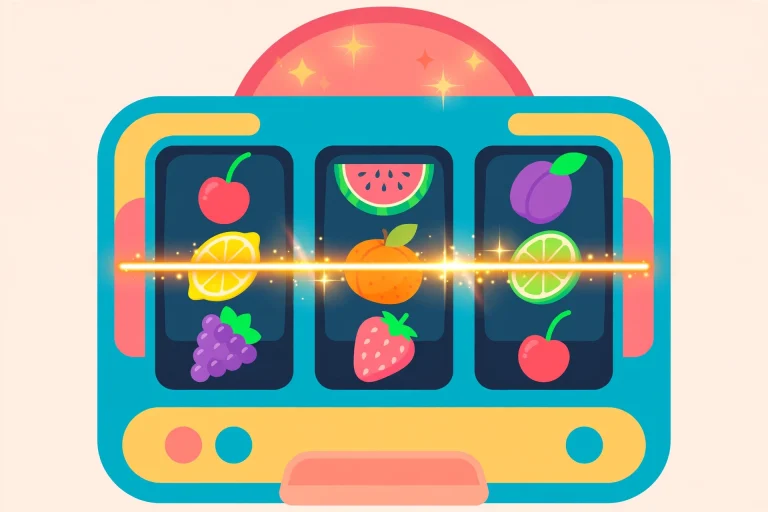
A slot machine is a game with spinning reels covered in symbols. In a classic machine, there are three reels and symbols like cherries, lemons, bells, and sevens. In a modern video slot, there are usually five reels and many more symbols, including themed pictures, letters, and numbers. You place a bet, spin the reels, and if the symbols line up in a winning combination, you win a payout based on the paytable.
The most important thing to understand about a slot machine is that every spin is decided by a random number generator, often called an RNG. This is a computer program that produces random results thousands of times per second, even when nobody is playing. When you press spin, the machine takes the number generated at that exact moment and uses it to decide where the reels stop. That means every spin is independent. The machine has no memory, no hot or cold streaks in any meaningful sense, and no way of knowing whether you have just won or lost. A machine that has not paid out for hours is no more likely to pay out on the next spin than one that paid out a minute ago.
This matters because it corrects the most common misunderstanding about slots. There is no skill involved in the spin itself, and no timing trick that improves your chances. Your real choices are which game to play, how much to bet, and when to stop. Those choices matter, and this guide will help you make them well.
Legal Status in Thailand — Read This First
Before going any further, it is important to be clear about the law. Under the Gambling Act B.E. 2478 (1935), most forms of gambling are prohibited in Thailand. The only legal exceptions are the government lottery and licensed horse racing. Online casinos are NOT licensed in Thailand, and playing on them carries legal risk.
This article is educational only. It explains how slot machines work so you can understand the game, not as an invitation to gamble. Slots should only ever be played by adults aged 18 and over, and only where it is legal to do so. There are no guaranteed winnings on slots, or in any casino game. Every spin is random, and no strategy can change the odds. Never chase losses, never play with money you cannot afford to lose, and if gambling ever stops feeling like entertainment, stop and get help. Support is available at BeGambleAware and Gamblers Anonymous.
How to Play Slots: Step by Step
Playing a slot machine takes only a few steps, and once you have done it once, it becomes second nature. Here is the full process, from choosing a game to collecting a win.
First, choose a game. Look at the theme, the number of reels, and the paytable, which shows what each symbol pays and what the bonus features are. If the game looks confusing, try its free or demo version first, where available. There is no reason to spend real money learning a game you could have learned for free.
Second, read the paytable. This is the most overlooked step, and the most useful. The paytable tells you which symbols pay the most, which ones trigger bonuses, how many paylines the game has, and whether the jackpot requires a maximum bet. Spend a minute reading it before you spin. It is the instruction manual for the game, and it answers most of the questions beginners ask later.
Third, set your bet. Most video slots let you choose the coin size and the number of coins per line, or simply the total bet per spin. Your total bet is what you risk on each spin. Start small. A lower bet means your money lasts longer, which means more spins, which means more entertainment for the same budget. There is no advantage in betting big on your first spins.
Fourth, choose how many paylines to play, if the game lets you. Many modern slots have fixed paylines, so this step is already decided for you. On games where you can choose, playing all paylines gives you the best chance of hitting a winning combination, though it also costs more per spin. Playing fewer paylines saves money but means you can miss wins on lines you did not cover, which is a frustrating experience.
Fifth, press spin, or use the autoplay feature if the game offers it and you want to play a set number of spins automatically. Watch the reels, and if you win, the machine will show the payout and add it to your balance. If a bonus round triggers, follow the on-screen instructions: pick a symbol, spin a bonus wheel, or play a short mini-game.
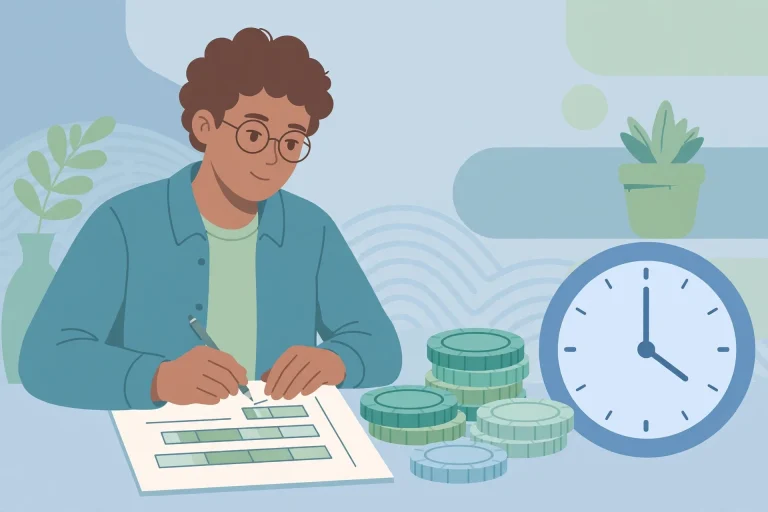
Sixth, decide when to stop. This is the step that matters most, and it is the one beginners skip. Set a limit before you start, in money and in time, and stop when you reach it, whether you are winning or losing. Slots are designed to be absorbing, and it is easy to lose track of both. A limit decided in advance is worth more than any strategy.
Paylines, Ways to Win, and Cluster Pays
The payline is the line on which matching symbols must land for you to win. On a classic three-reel slot, there is usually one payline running across the middle. On a five-reel video slot, there may be 10, 20, 25, or even hundreds of paylines, running in straight lines, zigzags, and V-shapes across the reels. A win only counts if the matching symbols land on a payline you have active, starting from the leftmost reel in most games.
Some modern slots use ways to win instead of paylines. In a 243-ways game, any matching symbols on adjacent reels count as a win, regardless of their position on each reel, as long as they start from the leftmost reel. That gives you 243 possible winning combinations on a five-reel, three-row game. Some games go further, with 1,024 ways or even more, using extra rows or expanding reels.
A newer format is cluster pays, where symbols win by forming a cluster of matching symbols touching each other, rather than by lining up on a payline. When a cluster wins, those symbols often disappear and new ones fall into place, which can create chain reactions of wins from a single spin.
None of these formats is better than the others in terms of odds. They are different ways of presenting the same idea: matching symbols win money. Choose the format you find most enjoyable to watch, and check the paytable to understand how wins are formed in that particular game. Our guide to slot machines explained covers the history and types of slot machines in more depth.
Symbols: What They Mean
Every slot game has regular symbols and special symbols, and knowing the difference is essential. Regular symbols are the pictures on the reels: cherries, sevens, themed characters, playing card letters and numbers. They pay out when enough of them land on a payline. The paytable ranks them, so you can see at a glance which ones are worth the most.
Wild symbols act as a substitute for other symbols, helping to complete a winning combination. If you have two matching symbols on a payline and a wild next to them, the wild counts as a third matching symbol and you win. Some games have expanding wilds that cover a whole reel, sticky wilds that stay in place for several spins, or stacked wilds that appear in groups.
Scatter symbols are different. They usually do not need to land on a payline. Landing three or more scatters anywhere on the reels typically triggers a bonus feature, most often free spins. Scatters often pay out as well, based on the total number that appear, regardless of position.
Bonus symbols trigger a bonus game when enough of them appear. The bonus game might be a pick-and-win round, a wheel spin, or a second screen with its own reels. Bonus games are where the biggest wins in many slots happen, but they are also rare, and it is a mistake to chase them by increasing your bets.
Free Spins, Bonus Rounds, and Jackpots
Free spins are the most common bonus feature in modern slots. Triggered by scatter symbols, they give you a set number of spins, often 10 or 15, that cost you nothing but pay out real winnings. Many free spins rounds include a multiplier, which doubles or triples your wins, or extra wild symbols, which increase the chance of a big payout. Some games let you retrigger free spins during the round, adding more spins to the total.
Bonus rounds come in many forms. A pick-and-win round asks you to choose from a set of hidden prizes. A wheel bonus spins a prize wheel for a cash amount or a multiplier. A trail bonus moves a token along a path, collecting prizes as it goes. These rounds are entertaining, and they break up the rhythm of regular spins, but they are part of the game’s overall payout structure, not a separate opportunity to beat it.
Jackpots deserve a careful explanation, because they are the reason many people play slots, and also the reason many people lose more than they planned. A fixed jackpot is a set amount, shown in the paytable, that you win by landing a specific combination. A progressive jackpot grows over time, fed by a small share of every bet placed on that game, sometimes across many machines or even many casinos. Progressive jackpots can reach very large sums, but the odds of winning one are extremely long, and on some games you must bet the maximum amount to qualify. Never increase your bet beyond your budget in the hope of qualifying for a jackpot. The odds do not justify it.
RTP and Volatility: The Two Numbers That Matter
Two numbers describe how a slot behaves over time, and they are worth understanding before you choose a game. The first is RTP, or return to player. This is the percentage of all money wagered that a game is designed to pay back over a very long period. A slot with an RTP of 96 per cent is designed to return 96 units for every 100 wagered, over millions of spins. That does not mean you will get 96 per cent of your money back in a session. In a single session, anything can happen. RTP is a long-term average, not a promise.
The second is volatility, also called variance. A low-volatility slot pays out small wins frequently. A high-volatility slot pays out rarely, but when it does, the wins can be large. Low-volatility games are gentler on your bankroll and suit players who want a long, steady session. High-volatility games are swingier: long dry spells punctuated by big wins, which suit players who enjoy the risk and can afford the dry spells. Neither is better. The right choice depends on your budget and your temperament, and on how long you want your money to last.
Choosing a Slot Game
With thousands of slot games available, choosing one can feel overwhelming. Start with the theme: pick a game you actually enjoy looking at, because you will be watching it for a while. Then check the RTP, if it is published, and prefer games with an RTP of 96 per cent or above, which is a reasonable benchmark for a modern video slot. Then consider the volatility, and match it to your budget: low volatility if your budget is small and you want it to last, high volatility only if you can comfortably handle long stretches without a win.
Try the demo version first, where one is available. A few minutes in demo mode will tell you whether you enjoy the game, whether the bonus features are clear, and whether the pace suits you. It costs nothing, and it is the best way to avoid spending money on a game you do not like. Pay attention to the minimum and maximum bet, and make sure the minimum fits your budget. A game that requires a large minimum bet is not a game for a small budget, no matter how good it looks.
Common Beginner Mistakes
The most common mistake is believing a machine is due to pay out. It is not. Every spin is independent, and the random number generator does not keep track of how long it has been since the last win. A machine that has not paid out for an hour is no more likely to pay out on the next spin than one that paid out a minute ago. This belief, sometimes called the hot and cold machine myth, is the single most expensive idea in slots.
The second mistake is increasing your bet after a loss to win the money back. This is chasing losses, and it is the fastest way to lose a bankroll. Slots do not owe you a win, and bigger bets after a loss do not improve your odds. They only increase the amount you lose when the next spin does not go your way.
The third mistake is not reading the paytable. Beginners regularly miss wins because they do not know which symbols matter, or they trigger a bonus round and do not understand what to do. A minute spent reading the paytable before you start saves confusion and missed opportunities later.
The fourth mistake is playing without a budget. Slots are fast, absorbing, and designed to keep you playing. Without a limit decided in advance, it is easy to spend far more than you intended, and far more than you can afford. Our bankroll management guide explains how to set a gambling budget and stick to it, and our guide to casino myths debunked covers the hot machine myth and other common misunderstandings in detail.
The fifth mistake is treating a near miss as a sign. When two jackpot symbols land and the third just misses, it feels like you were close. You were not. The result is decided the moment you press spin, and the reels are a display, not a process. A near miss is a loss, and it tells you nothing about the next spin.
Playing Slots Responsibly
Slots are designed to be entertaining, and they are at their best when they are treated as entertainment with a fixed cost. Decide how much you are willing to spend before you start, and treat that money as the price of the entertainment, not as an investment. If you win, enjoy it. If you lose the amount you budgeted, stop. Never borrow money to play, never play with money set aside for rent, bills, or food, and never play when you are upset, tired, or under the influence of alcohol.
Take regular breaks. Slots are fast, and it is easy to lose track of time. Set a timer if it helps, and step away from the game for a few minutes every half hour. When you come back, you will have a clearer head and a better sense of how much you have spent. If you find yourself thinking about slots when you are not playing, or feeling anxious about money you have lost, those are warning signs worth taking seriously, and help is available from the support organisations listed in the legal section above.
Frequently Asked Questions
How do slot machines work?
Slot machines use a random number generator, a computer program that produces random results thousands of times per second. When you press spin, the machine uses the number generated at that moment to decide where the reels stop. Every spin is independent and random, and the machine has no memory of previous spins.
Can you win at slots with a strategy?
No strategy can change the odds on a slot machine, because every spin is random. What you can control is which game you choose, how much you bet, and when you stop. Choosing a game with a higher RTP, betting within your budget, and setting limits are sensible decisions, but they do not guarantee a win.
What is RTP on a slot machine?
RTP stands for return to player. It is the percentage of all money wagered that a game is designed to pay back over a very long period, usually millions of spins. A slot with 96 per cent RTP is designed to return 96 units for every 100 wagered over the long term. It is not a promise about any single session.
What does volatility mean in slots?
Volatility, also called variance, describes how a slot pays out. Low-volatility slots pay small wins frequently, while high-volatility slots pay rarely but can pay large amounts when they do. Low volatility suits a small budget and a long session; high volatility suits players who can handle long dry spells.
What are free spins in slots?
Free spins are a bonus feature, usually triggered by landing three or more scatter symbols. They give you a set number of spins that cost nothing but pay out real winnings. Many free spins rounds include multipliers or extra wild symbols, which can increase the payouts.
Do slot machines pay out more at certain times?
No. Slot machines pay out based on a random number generator, and the time of day, the day of the week, or how long it has been since the last win makes no difference. A machine is never due to pay out, and there is no best time to play.
What is a progressive jackpot?
A progressive jackpot is a prize that grows over time, fed by a small share of every bet placed on that game, sometimes across many machines. It can reach very large sums, but the odds of winning one are extremely long, and on some games you must bet the maximum amount to qualify for it.
How much should a beginner bet on slots?
There is no single right amount, but a good rule is to bet small enough that your budget covers at least 100 spins. That gives you a reasonable session length and enough spins to enjoy the game and trigger a bonus feature. Never bet more than you can afford to lose.
Conclusion
Playing slots is simple: choose a game, read the paytable, set your bet, press spin, and know when to stop. The complexity is in understanding what is happening behind the button — the random number generator that makes every spin independent, the paylines and symbols that decide wins, the bonus rounds and jackpots that add excitement, and the RTP and volatility that describe how a game behaves over time.
None of that knowledge will change your odds, and anyone who tells you otherwise is selling something. What it will do is help you choose games you enjoy, spend your money wisely, and recognise the myths that cost beginners money. Set a budget, treat slots as entertainment, and walk away when your limit is reached. That is the whole skill of slots, and it is the only one that matters.