Thai Government Lottery Explained: Draws, Prizes & How It Works
Thai Government Lottery Explained: Draws, Prizes & How It Works
The Thai government lottery is one of the most familiar sights in Thailand. Tickets are sold on street corners, in markets, outside shops, and by vendors walking through neighbourhoods with books of tickets. Twice a month, millions of people check the same six-digit numbers, hoping their ticket matches the draw. For many Thais, the lottery is a regular habit, a small hope bought for the price of a ticket, and a shared moment when the results are announced.
This guide explains the Thai government lottery in plain language. You will learn how the lottery works, when draws take place, how tickets are sold, how prizes are structured, how winners claim their money, and what new players should know before they buy a ticket. It also explains the legal position clearly, because the lottery occupies a special place in Thai law that other forms of gambling do not.
Legal Status in Thailand — Read This First
Before you read any further, understand the legal position clearly. Gambling in Thailand is governed by the Gambling Act B.E. 2478 (1935). Under that law, most forms of gambling are prohibited. The only legal exceptions are the government lottery and licensed horse racing. Online casinos are NOT licensed in Thailand, and playing at them is not a legal activity under Thai law.
This article is educational only. It explains how the government lottery works so you can understand it, not as an encouragement to gamble. The content is for readers aged 18 and over only. There are no guaranteed winnings in the lottery, or in any form of gambling, and no system, lucky number, or strategy can improve your chances of winning a draw. Never chase losses, never spend money you cannot afford to lose on lottery tickets, and if gambling ever stops feeling like entertainment, stop and seek help. Support is available at BeGambleAware (https://www.begambleaware.org/) and Gamblers Anonymous (https://www.gamblersanonymous.org/ga/).
What Is the Thai Government Lottery?
The Thai government lottery is a state-run lottery operated by the Government Lottery Office, usually known as the GLO. It is the official lottery of Thailand, and it is one of the two legal forms of gambling in the country, alongside licensed horse racing. The lottery has been running in various forms for many decades, and it is deeply embedded in Thai life, from the vendors who sell tickets to the draw ceremonies that are broadcast and reported across the country.
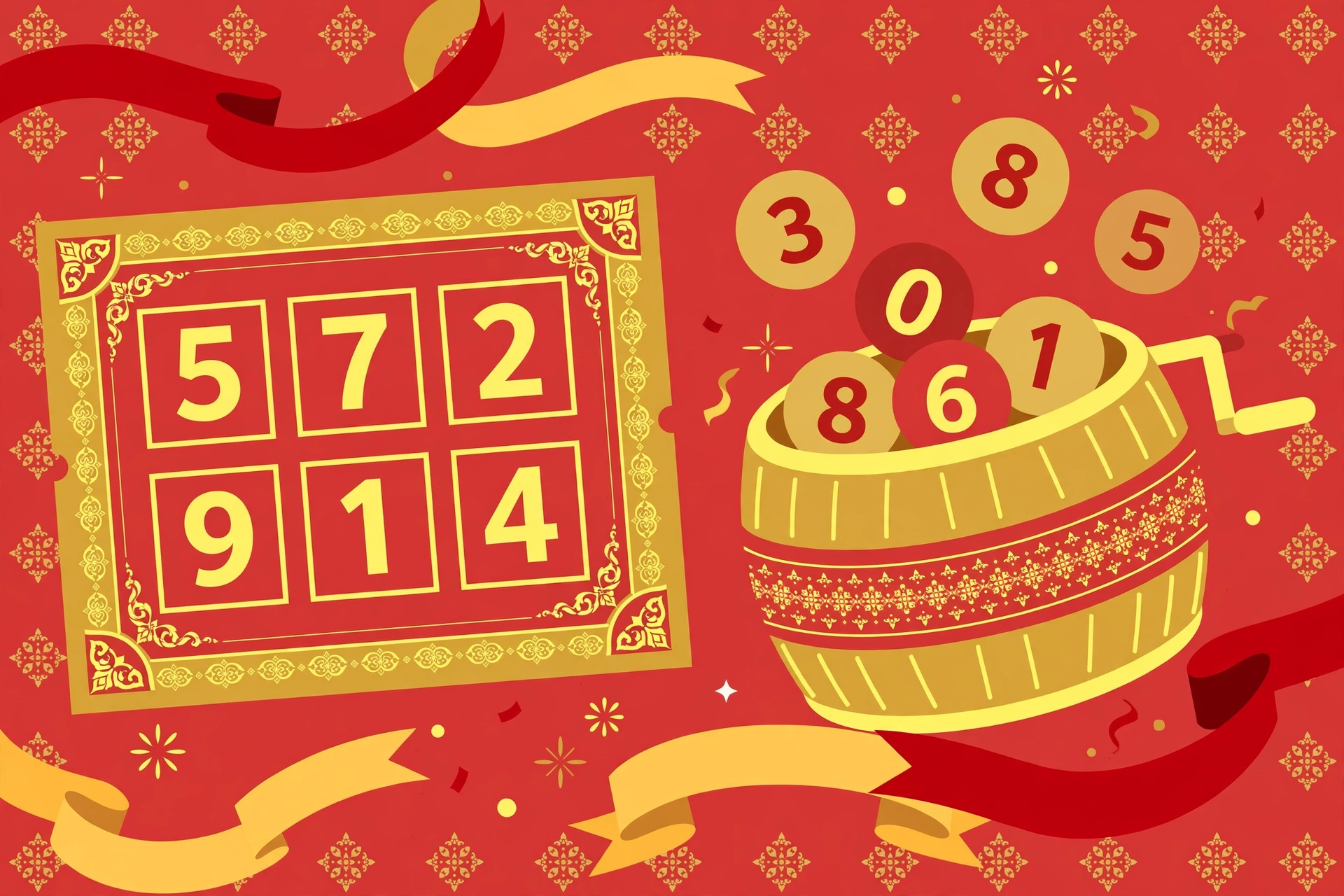
A lottery ticket is a printed ticket with a six-digit number. You buy a ticket with a number already printed on it, you wait for the draw, and you check whether your number matches one of the winning numbers. Unlike some lotteries in other countries, you do not choose your own numbers in the main government lottery draw. You choose a ticket from the numbers available, and the number on that ticket is the number you play.
The lottery is a game of pure chance. No skill is involved, no decision you make after buying a ticket changes the result, and every ticket in a draw has the same chance of winning the first prize as every other ticket. That simplicity is part of its appeal, and it is also why it is important to understand the odds honestly before you buy.
When Are the Draws Held?
Government lottery draws are normally held twice a month, on the 1st and the 16th of each month. That regular rhythm is familiar to most people in Thailand, and it shapes when tickets are sold, when vendors are busiest, and when results are checked.
There are exceptions to the regular schedule. If the 1st or the 16th falls on a public holiday, the draw may be moved to a nearby working day. Special draws are sometimes held for particular occasions. The exact date of a draw is always announced in advance, and the results are published on the day of the draw through official channels, newspapers, television, and online sources.
Tickets for a draw go on sale in the weeks before the draw, and they are sold until the draw takes place. A ticket is only valid for the draw printed on it. You cannot use a ticket from one draw in a later draw, and you cannot exchange a ticket for a different draw. If you buy a ticket, check the draw date printed on it and keep it safe until the results are announced.
How Much Does a Ticket Cost?
The official price of a government lottery ticket is 80 baht for a single ticket. That is the price set by the Government Lottery Office, and it is the price printed on the ticket itself.
In practice, many tickets are sold for more than the official price, especially for numbers that are considered lucky or popular. A ticket with a number that many people want can sell for well above 80 baht, and prices can rise in the days before a draw as the supply of popular numbers runs low. This overpricing is a long-standing issue, and the government has taken steps over the years to control it, including selling tickets through official channels at the official price, but in street sales the price you pay may be higher than 80 baht.
A ticket is often sold as a pair, sometimes called a set, which means two tickets with the same number. Buying a pair costs twice the price of a single ticket, and if that number wins, you win twice the prize, once for each ticket. Vendors may sell single tickets, pairs, or larger sets, and the price depends on how many tickets you are buying and how popular the number is.
Before you buy, check the price printed on the ticket, ask the price before you pay, and remember that paying more than the official price does not improve your chances. A ticket that costs more because its number is popular has exactly the same chance of winning as any other ticket.
Where Are Tickets Sold?
Government lottery tickets are sold by licensed vendors across Thailand. You will see them in markets, on street corners, outside shops and offices, and walking through residential areas with books of tickets. Vendors are a familiar part of daily life in Thailand, and many people buy from the same vendor regularly.
Tickets are also sold through official channels, including the Government Lottery Office’s own sales points and, in recent years, digital sales through official apps and platforms. These official channels sell at the official price, and they are the safest way to buy if you want to be sure you are paying the correct amount and buying a genuine ticket.
When you buy a ticket from a street vendor, check that the ticket is genuine, that the number is clearly printed, that the draw date is correct, and that the ticket is not damaged. Keep the ticket safe, because a lottery ticket is a bearer document, which means whoever holds it can claim the prize. If you lose the ticket, you lose the prize. Do not share a photo of your ticket number publicly before the draw if you want to keep your number private, and store the ticket somewhere you will not lose it.
How the Draw Works
The draw is a public ceremony conducted by the Government Lottery Office. Balls or other drawing equipment are used to select the winning numbers, and the process is witnessed and recorded. The draw is broadcast and reported, and the results are published officially on the day.
The draw selects winning numbers for several prize tiers, not just one number. The first prize is the main prize, for the ticket whose six-digit number matches the first prize number exactly. There are also second, third, fourth, and fifth prizes, for tickets whose numbers match the numbers drawn for those tiers. In addition, there are prizes for the first three digits, the last three digits, and the last two digits, which means many tickets can win a smaller prize even if they do not win a large one.
The exact structure of the prizes can change, and the Government Lottery Office announces the prize structure for each draw. The first prize is the largest amount, and the prizes decrease through the tiers. A ticket can win only one prize in most cases, usually the highest prize it qualifies for, and the prize amount is paid per ticket, which means a pair of tickets with the same winning number wins twice the amount.
Checking your ticket is straightforward. Compare your six-digit number with the first prize number. If it matches exactly, you have won the first prize. If it does not, check the other prize tiers, and check the first three digits, last three digits, and last two digits against the numbers drawn for those prizes. Many people check using a newspaper, a television broadcast, an official website, or an app, and it is worth checking carefully, because a ticket that does not win the first prize may still win a smaller prize.
Prize Tiers, Explained in Plain Language
The prize structure of the Thai government lottery has several tiers, and understanding them helps you know what to check and what a win might mean.
The first prize is the top prize, paid to the ticket or tickets whose number matches the first prize number exactly. It is the largest single prize in the draw, and it is the prize most people hope for when they buy a ticket.
The second prize is paid to tickets whose numbers match the second prize numbers drawn. There are usually several second prize numbers, which means several tickets win the second prize in each draw.
The third, fourth, and fifth prizes work in the same way, with more winning numbers and smaller amounts as you go down the tiers. The fifth prize is the smallest of the main tiers, but it is also the most common, because more numbers are drawn for it.
In addition to the main tiers, there are prizes for matching the first three digits, the last three digits, and the last two digits of the winning numbers. These are smaller prizes, but they are won by many more tickets, and they are the reason many people find that their ticket has won something, even if it is a small amount.
The exact prize amounts for each tier are announced for each draw, and they can change over time. The first prize has historically been a large amount, and the total amount paid out in prizes in a draw is a large sum, but the chance of winning the first prize is very small, because there are many possible six-digit numbers and only one first prize number is drawn.
How Winners Claim a Prize
If your ticket wins, you need to claim the prize from the Government Lottery Office. The process is straightforward, but it requires care.
First, check your ticket carefully and keep it safe. Do not damage it, do not write on it in a way that obscures the number, and do not lose it. A damaged or lost ticket can make claiming a prize difficult or impossible.
Second, check the claim period. Prizes must be claimed within a set time after the draw, and if you miss the deadline, you lose the prize. The claim period is usually generous, but it is not unlimited, so do not delay.
Third, take the ticket to the Government Lottery Office or to an authorised claim point, with identification. For a large prize, you will need to present the ticket and prove your identity, and the prize will be paid after the ticket is verified. For a small prize, you may be able to claim it from a vendor or an authorised agent, but the rules depend on the amount and on where you bought the ticket.
A tax or deduction may apply to lottery winnings, and the amount you receive may be less than the headline prize amount. The exact deduction depends on the rules in force at the time of the draw, and the Government Lottery Office will explain it when you claim. Do not assume you will receive the full headline amount, and do not spend money you have not yet received.
If you win a large prize, take your time. Do not rush to claim it, do not tell everyone immediately, and consider seeking advice on managing a large sum of money before you spend it. A large lottery win can change your life, but it can also create problems if it is not managed carefully.
The Odds, Honestly
The odds of winning the first prize in the Thai government lottery are very long, because there are one million possible six-digit numbers, from 000000 to 999999, and only one of them is drawn as the first prize number in each draw. That means the chance of a single ticket winning the first prize is one in a million.
The odds of winning any prize are better, because there are many prize tiers and many winning numbers, but they are still long. Most tickets win nothing. A ticket that wins a small prize for the last two digits is a common win, but the amount is small, and it does not cover the cost of many losing tickets.
No number is luckier than any other number in the draw itself. A number that has won before has exactly the same chance of winning again as a number that has never won. A number that is popular, a number from a dream, a number from a licence plate, or a number that many people are buying has exactly the same chance as any other number. The draw is random, and the balls do not remember which numbers were popular or which numbers won last time.
That is an important point, because a lot of lottery culture in Thailand involves lucky numbers, dreams, and omens. Those traditions are part of the fun for many people, and there is nothing wrong with choosing a number because it means something to you. But it is important to understand that the number you choose does not change the odds. A lucky number and a random number have the same chance, and spending more money on a popular number does not improve your chances, it only increases what you spend.
For a fuller explanation of how odds and probability work in games of chance, read our guide to casino odds and probability explained for beginners (https://stylishnamees.com/casino-odds-probability-explained-beginners-thailand), which explains the concepts without assuming any maths background.
Popular Numbers, Dreams, and Lottery Culture
The Thai lottery has a rich culture around it, and understanding that culture helps you understand why the lottery matters to so many people beyond the prize money.
Many people choose numbers based on dreams, believing that a dream contains a number that will win. Dream books, which list numbers associated with different dream symbols, are widely used, and a vivid dream can send many people looking for the same ticket number. Others choose numbers from licence plates, from the news, from a famous person’s age, from a temple, or from an event that has captured public attention. When a number becomes popular, its price rises, and vendors sell out of it quickly.
This culture is part of what makes the lottery a shared experience. People talk about their numbers, compare dreams, and check results together. That social side is real, and it is one of the reasons the lottery is so popular.
But it is also a culture that can lead people to spend more than they planned. A number that feels lucky can feel worth paying extra for, and a dream that feels meaningful can feel like a reason to buy more tickets. If you enjoy the culture, enjoy it, but keep your spending within a budget you set before you start, and remember that the feeling that a number is lucky does not change the maths.
Underground Lottery and Why It Is Different
Alongside the official government lottery, there is an underground lottery in Thailand, sometimes called huay tai din, which is based on the official draw results but is run privately and is not legal. In the underground lottery, players bet on two-digit or three-digit numbers derived from the official results, often with different payouts and different odds.
The underground lottery is not the same as the government lottery, and it is not legal. It is not run by the Government Lottery Office, it is not regulated, and players have no protection if a private operator does not pay. The payouts can look attractive, but the risks are higher, because there is no official body to guarantee payment, and because participating in an illegal lottery carries legal risk.
This guide is about the government lottery only. If you are offered a lottery bet that is not a government lottery ticket, with a number you choose and a payout from a private person, that is not the official lottery, and you should understand the difference before you take part.
Responsible Play and the Lottery
The lottery is a legal form of gambling in Thailand, but it is still gambling, and it still carries the risk of spending more than you can afford. A single ticket costs little, but buying tickets for every draw, buying many tickets per draw, or buying expensive popular numbers can add up to a large amount over a month or a year.
Set a budget for lottery tickets that you can afford to lose, and stick to it. Do not borrow money to buy tickets, do not spend money you need for living expenses, and do not buy more tickets to chase a loss. If you have spent your budget for a draw, wait for the next draw. If you feel that you are spending too much, or that you are buying tickets because you feel you must, rather than because you enjoy it, take a break.
Our guide to casino bankroll management for beginners in Thailand (https://stylishnamees.com/casino-bankroll-management-guide-beginners-thailand) explains how to set a budget and stick to it, and the principles there apply to the lottery as well as to casino games, even though the lottery is a much smaller purchase per ticket.
If gambling ever stops feeling like entertainment, help is available at BeGambleAware (https://www.begambleaware.org/) and Gamblers Anonymous (https://www.gamblersanonymous.org/ga/).
Frequently Asked Questions
When are Thai lottery draws held?
Draws are normally held twice a month, on the 1st and the 16th of each month. If one of those dates falls on a public holiday, the draw may be moved to a nearby working day, and the new date is announced in advance.
How much does a Thai lottery ticket cost?
The official price is 80 baht for a single ticket. In practice, many street vendors sell tickets for more than the official price, especially for popular numbers. Paying more does not improve your chances of winning.
Can I choose my own numbers?
In the main government lottery, you do not choose your own numbers. You buy a ticket with a number already printed on it. You can choose which ticket to buy from the numbers available, but you cannot ask for a number to be printed for you.
What happens if I lose my winning ticket?
A lottery ticket is a bearer document, which means whoever holds it can claim the prize. If you lose a winning ticket, you are likely to lose the prize as well. Keep your ticket safe until the draw and until you have checked the results and claimed any prize.
How do I check if my ticket has won?
Compare your six-digit number with the first prize number, then check the other prize tiers and the prizes for the first three digits, last three digits, and last two digits. Results are published officially on the day of the draw through newspapers, television, official websites, and apps.
Do lucky numbers improve my chances?
No. Every ticket has the same chance of winning the first prize, regardless of the number printed on it. A number from a dream, a licence plate, or a popular source has exactly the same chance as any other number, because the draw is random.
Is the underground lottery the same as the government lottery?
No. The underground lottery is a private, unlicensed betting system based on the official results, and it is not legal in Thailand. The government lottery is the official, state-run lottery operated by the Government Lottery Office, and it is one of the two legal forms of gambling in the country.
Conclusion
The Thai government lottery is simple to understand and deeply woven into Thai life. You buy a ticket with a six-digit number, you wait for the draw on the 1st or the 16th, and you check whether your number matches one of the winning numbers. The official price is 80 baht, the first prize is the largest amount, and there are smaller prizes for matching the first three digits, last three digits, or last two digits, as well as for the other main tiers.
That simplicity is also why it is important to be honest about the odds. A single ticket has a very small chance of winning the first prize, and most tickets win nothing. No number is luckier than any other, no dream changes the draw, and paying more for a popular number does not improve your chances. The lottery is best enjoyed as a small, regular entertainment, with a budget you can afford, and with the understanding that the prize is a hope, not a plan.
If you buy a ticket, buy it from a trusted vendor or an official channel, check the price and the draw date, keep the ticket safe, and check the results carefully, because a ticket that does not win the first prize may still win a smaller prize. And if you win, claim it in time, keep your ticket safe, and take your time before you spend it. The lottery is a part of Thai culture that millions of people share, and understanding how it works makes it more enjoyable, whether you win or not.