What Is Tron (TRX)? A Beginner’s Guide to How It Works
What Is Tron (TRX)? A Beginner’s Guide to How It Works
Risk disclaimer: Cryptocurrencies are volatile and can lose most or all of their value. Nothing in this article is financial advice. Never invest money you cannot afford to lose, and do your own research before buying any cryptocurrency.
What is Tron? It is a question that comes up often for beginners, because Tron has been around for years, it has a large and active user base, and its name appears in many lists of the biggest cryptocurrencies. Yet many people who have heard of Tron, or of its token TRX, are not sure what the network actually does, how it differs from better-known blockchains like Bitcoin and Ethereum, or why anyone would use it.
Tron is a blockchain platform designed for fast, low-cost transactions and for building decentralised applications, particularly in the areas of digital content, entertainment and payments. It has its own native token, called TRX, which is used to pay fees, to participate in securing the network, and to interact with applications built on Tron. This guide explains Tron from scratch, in plain language, without hype and without invented numbers. It covers where Tron came from, how it works, what TRX is used for, what people actually do on the network, and the risks a beginner should understand before forming a view.
Tron in One Paragraph
Tron is a public blockchain, which means it is a decentralised network that anyone can use, and that records transactions on a shared ledger that is maintained by many computers around the world. It was designed to handle transactions quickly and cheaply, and to support smart contracts — pieces of code that run on the blockchain and carry out agreements automatically, without a middleman. Its native token, TRX, is used to pay transaction fees, to stake and vote for the people who help run the network, and to use applications built on Tron, from decentralised exchanges to games and content platforms.
If you have already read about other blockchains, some of this will sound familiar. Tron shares the basic idea of a public ledger with Bitcoin and Ethereum, and it shares the idea of smart contracts with Ethereum. What makes it different is its design choices: how it reaches agreement on transactions, how it organises its network, and what kinds of applications it has focused on. The rest of this guide explains those choices, and what they mean in practice.
Where Did Tron Come From?
Tron was founded by Justin Sun, a technology entrepreneur, and the project was first introduced in 2017, a period when many new blockchain projects were launching. Its original vision was ambitious and focused on digital content. The idea was to build a decentralised platform where creators could publish content, such as videos, music and articles, and be rewarded directly by their audience, without going through a large platform that takes a cut and controls distribution.
That vision was part of a broader wave of thinking at the time: that the internet had become too centralised, with a small number of companies controlling what people see and how creators are paid, and that blockchains could offer an alternative. Tron presented itself as a network built for that alternative, with a focus on entertainment and content first, and on payments and applications second.
In practice, Tron’s story has moved on from that original pitch. Like many projects from that era, it has changed direction over time, and today it is best known for a different set of uses than the ones in its earliest marketing. It is widely used for moving digital dollars, in the form of stablecoins, quickly and cheaply between wallets and exchanges, and it hosts a large ecosystem of decentralised applications, including decentralised exchanges, lending platforms and games. Our guide to what DeFi is explains the kind of decentralised finance applications that run on networks like Tron, and the risks they carry.
Tron also went through a major technical change early in its history. It originally launched as a token on the Ethereum network, and later moved to its own independent blockchain, in a process often called a mainnet launch. That move mattered, because it meant Tron was no longer dependent on Ethereum to operate. It became a Layer 1 blockchain in its own right, with its own rules, its own validators, and its own token, TRX.
What Is a Blockchain, in Tron’s Case?
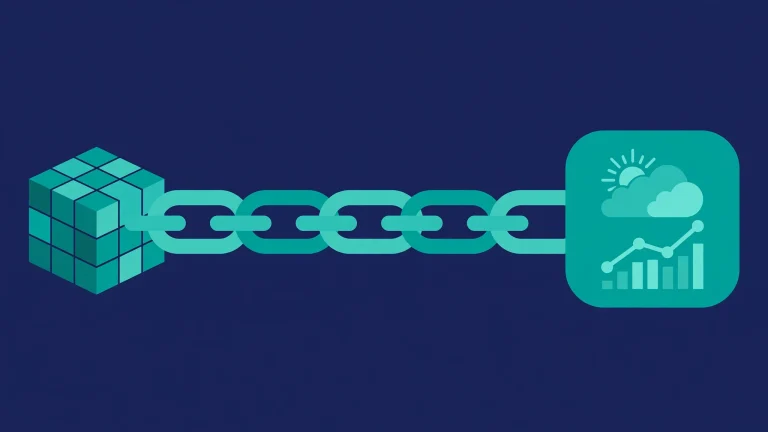
A blockchain is a shared record of transactions that is kept by many computers, rather than by a single company or bank. When someone sends TRX, or uses an application on Tron, that action is recorded as a transaction, grouped into a block, and added to the chain of earlier blocks. Once a transaction is recorded and confirmed, it is very hard to change, because changing it would require changing the records held by many different computers at once.
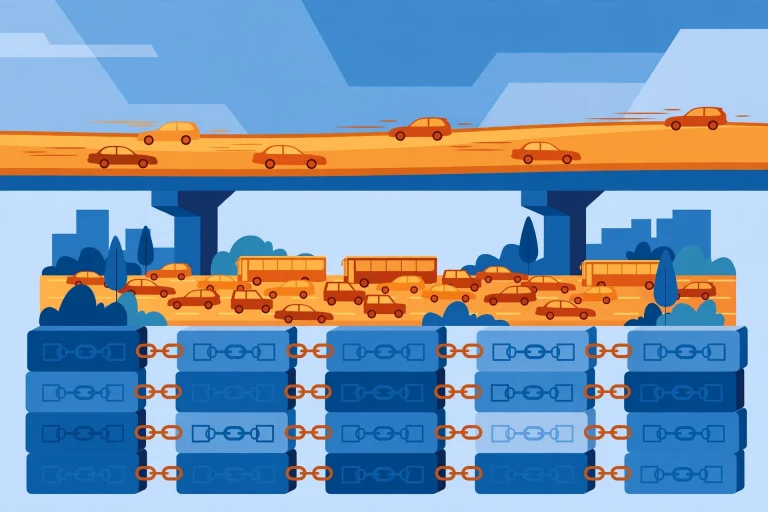
Tron is a Layer 1 blockchain, which means it is a base network, like Bitcoin or Ethereum, that other applications can be built on top of. Applications built on Tron, such as decentralised exchanges or games, rely on the Tron network to record their transactions and to run their smart contracts. The health of the Tron network therefore matters for everyone who uses those applications, and the health of its applications matters for the network, because applications are what give people a reason to use it.
For a beginner, the most useful comparison is with Ethereum. Ethereum is the largest platform for smart contracts, and it has the biggest developer community, but it has historically been slower and more expensive to use, especially when the network is busy. Tron was designed to be a faster and cheaper alternative for everyday transactions, and that is one of the reasons it attracted users who wanted to move money quickly without paying high fees. Our guide to what Ethereum is explains the network Tron is most often compared with, and our guide to what Solana is explains another blockchain that makes a similar speed-and-cost claim in a different way.
How Tron Reaches Agreement
Every blockchain needs a way for the computers that run it to agree on which transactions are valid and in what order they happened. That process is called consensus, and Tron uses a system called Delegated Proof of Stake, often shortened to DPoS.
In Delegated Proof of Stake, holders of TRX vote for representatives, called Super Representatives, who are responsible for producing blocks and confirming transactions. There is a fixed, relatively small number of these representatives, and they take turns producing blocks. Voters who support a representative share in the rewards that representative earns, which gives ordinary holders a reason to participate, even if they do not run a representative themselves.
That system has a clear trade-off. A small number of block producers can work quickly and efficiently, which is one reason Tron can process transactions fast and keep fees low. But it also means the network is more centralised than a network with a large number of independent validators, and that power is concentrated in the hands of a relatively small group. If a few large holders control most of the votes, they can have a large influence over who runs the network. That is a criticism that has been made of Tron, and of Delegated Proof of Stake systems in general, and it is worth understanding honestly rather than glossing over.
For comparison, Bitcoin uses proof of work, where miners compete to solve puzzles and the winner adds the next block, and Ethereum now uses proof of stake, where validators lock up tokens to participate. Each system makes different trade-offs between speed, cost, security and decentralisation. There is no single best answer. There are only choices, and each choice has consequences that a beginner should weigh.
How Transactions Work on Tron
Using Tron, at the level of an ordinary user, is straightforward in outline, even if the details take some learning. You need a wallet that supports Tron, you need some TRX, and you need the address of the person or application you want to interact with. You create a transaction in your wallet, you sign it with your private key, and you send it to the network, where it is recorded on the blockchain.
One feature of Tron that confuses beginners is its system of resources, called bandwidth and energy. In simple terms, bandwidth is used for ordinary transactions, such as sending TRX or a stablecoin from one wallet to another, and energy is used for smart contract transactions, such as using a decentralised exchange. Users can obtain bandwidth and energy by staking TRX, which means locking it up in the network, or they can pay a fee in TRX instead. That is why some Tron transactions appear to be free, or nearly free, when the user has staked TRX, and why others cost a small fee.
You do not need to master the details of bandwidth and energy before you use Tron, but it helps to know they exist, because they explain why the cost of a transaction can vary, and why staking TRX is not only about earning rewards. It is also about obtaining the resources to use the network. If you are comparing Tron with another blockchain, remember that fee structures are not directly comparable without understanding what each network charges for, and what it gives you in return for staking.
What Is TRX Used For?
TRX is the native token of the Tron network, and it has several uses. The most basic is paying fees. Every transaction on Tron requires a fee, or the use of bandwidth and energy obtained by staking, and TRX is the token that pays for those costs. Without TRX, you cannot use the network in a practical sense, because you cannot pay to have your transactions recorded.
The second use is staking and voting. Holders of TRX can stake their tokens and vote for Super Representatives, as described above. Staking earns rewards, in the form of additional TRX, but it also involves locking up your tokens, which means you cannot sell them immediately if the price falls, and it involves the risk that the representative you vote for does not perform well. Our guide to crypto staking explained covers the general risks of staking, and those risks apply to Tron just as they do to other networks.
The third use is participating in applications built on Tron. Many decentralised applications on Tron require TRX, or tokens built on Tron, to use them. That might mean providing liquidity on a decentralised exchange, lending on a lending platform, buying a digital collectible, or playing a game. In each case, TRX is the token that connects the user to the application, and to the network underneath it.
The fourth use is as a store of value or a trading asset, in the sense that TRX is traded on exchanges like other cryptocurrencies. Some people buy TRX because they think its price will rise, others because they want to use it on the network. Those are very different reasons, and they should not be confused. Buying a token because you want to use a network is not the same as buying it because you expect a profit, and the risks are different too.
Unlike Bitcoin, which has a fixed total supply, TRX does not have a hard cap in the same way, and its supply can change over time as new tokens are created as rewards and as tokens are removed from circulation through burning. That means the total number of TRX in existence is not fixed, and it is worth understanding how supply changes affect the value of a token you hold. A token whose supply grows quickly can lose value even if demand is steady, because each token represents a smaller share of the total.
What Can You Actually Do on Tron?
Tron hosts a wide range of applications, and what people actually do on the network is more informative than what its marketing says. The most widely discussed use is the transfer of stablecoins. Stablecoins are cryptocurrencies designed to hold a steady value, usually by being pegged to a dollar, and they are used to move money between exchanges, wallets and applications without the volatility of a token like Bitcoin or TRX itself. Tron has become a popular network for stablecoin transfers, because its fees are low and its transactions are fast, and that has made it an important piece of infrastructure for many crypto users, even those who do not care about Tron’s other applications. Our guide to stablecoins explained explains how stablecoins work, and why they carry their own risks, even though their price is meant to be stable.
Beyond stablecoin transfers, Tron hosts decentralised exchanges, where users can trade tokens without a central intermediary, lending and borrowing platforms, games, and content platforms that reflect its original entertainment focus. The range of applications is large, but the quality varies a lot. Some applications are well-built and widely used, others are small, experimental, or risky. A beginner should treat every application on Tron, or on any blockchain, as a separate product with its own risks, rather than assuming that because it runs on Tron it is safe.
Tron is also used for tokens built on top of it. The Tron network has its own standard for creating tokens, similar to Ethereum’s token standard, and many projects have issued tokens on Tron. Those tokens can represent many things: a share in a project, a right to use an application, a digital collectible, or something else entirely. The existence of a token on Tron does not tell you whether the project behind it is legitimate. Scams, copycat projects and low-quality tokens exist on every popular blockchain, and Tron is no exception. Our guide to how to spot crypto scams explains the red flags to watch for, including fake giveaways, impersonation accounts and promises of guaranteed returns.
Tron, Content and Entertainment
Tron’s original focus on content and entertainment has not disappeared, even if stablecoin transfers and decentralised finance have become more prominent. The idea behind it was that creators should be able to earn directly from their audience, and that a blockchain could record who owns what, and who should be paid, without a platform in the middle.
In practice, that vision has been hard to realise, for Tron and for every other blockchain that has tried it. Large content platforms are hard to displace, because they offer audiences, discovery, and tools that a blockchain alone does not provide. A decentralised alternative that offers better payment terms but a much smaller audience is not an obvious choice for a creator who needs to be seen. That does not mean the idea is dead. It means it is a long-term ambition, not a solved problem, and a beginner should be sceptical of claims that Tron has already replaced traditional content platforms, or that it will do so soon.
What Tron has done is to build a network that is cheap and fast enough for small payments and for applications that involve many small transactions, such as games and social applications. That is a real, practical advantage for certain kinds of use, even if it has not yet produced a decentralised replacement for the largest entertainment platforms. The question for the future is whether developers will keep building those kinds of applications on Tron, or whether they will move to other networks that offer similar speed and cost with a larger user base or a different set of features.
The Honest Risks and Criticisms
Tron has real risks, and a beginner should weigh them honestly. The first is centralisation. As discussed above, Delegated Proof of Stake concentrates power in a small number of Super Representatives, and voting power is concentrated among large holders. That raises questions about how decentralised Tron really is, and how much influence ordinary users have over the network’s direction. If you value decentralisation highly, Tron will look less attractive than a network with a larger, more distributed set of validators.
The second risk is governance and leadership. Tron is closely associated with its founder, Justin Sun, and with the organisations he controls or influences. That association has brought attention and investment, but it has also brought controversy, and it means the project is more dependent on one person than many other blockchains are. A project that depends heavily on a single leader carries a risk that other projects do not, because that leader’s decisions, reputation and actions can affect the whole network. A beginner should be aware of that concentration, and should not assume that Tron’s future is independent of the people who run it.
The third risk is competition. Tron competes with Ethereum, Solana, and many other blockchains for developers and users, and all of those networks are improving their speed and cost. Ethereum’s fees and speed have changed over time, Solana has built a large ecosystem of applications, and newer networks continue to appear. Tron needs to keep attracting developers and users, or it will gradually lose relevance, even if its technology works well. Our guide to what Solana is and our guide to what Cardano is explain two of its competitors, and reading them alongside this guide will help you see that Tron is not unique in its goals.
The fourth risk is the general risk that applies to all cryptocurrencies: volatility, scams, and regulatory uncertainty. TRX’s price can fall sharply, and it has done so in the past, as have most cryptocurrencies. The market is full of scams that use the names of popular projects, including Tron, to trick people into sending money to a fake address or a fake website. Regulation of crypto varies by country, and it can change, which can affect how a token is traded, taxed, or used. Our guide to crypto vs stocks explains how crypto differs from traditional investments, and why the risks are not the same.
A further risk is specific to how Tron is used for stablecoins. If a large part of Tron’s activity depends on stablecoin transfers, then Tron’s future depends in part on the health of those stablecoins, and on whether users continue to prefer Tron for moving them. If a stablecoin were to lose its peg, or if users moved to another network for transfers, Tron’s usage could fall, even if nothing about Tron itself had changed. That is a reminder that a blockchain’s value depends on what people use it for, not only on how it works.
What Beginners Should Know Before Buying TRX
If you are considering buying TRX, there are a few practical points to keep in mind. The first is storage. TRX can be held on an exchange, which is convenient but carries the risk that the exchange could fail or be hacked, or in a wallet you control, which is safer but requires you to manage your own security. Tron has its own wallets, and some general crypto wallets also support it, but you should check that a wallet actually supports Tron before you send TRX to it, because sending coins to a wallet that does not support them can result in a loss. Our guide to how to buy crypto safely explains the practical steps and safety checks, and it is worth reading before any purchase. Our guide to how to store your crypto seed phrase safely explains one of the most important parts of keeping your coins secure.
The second point is to understand what you are buying. TRX is not a share in a company, and buying it does not give you ownership of Tron or of the team behind it. It gives you a token on a network whose future depends on whether developers and users continue to build on it and find it useful. Do not buy TRX because you like the idea of fast transactions alone. Buy it, if you buy it at all, because you have formed a view about its future use, its competition, and its risks, and because you can afford to lose the money you put into it.
The third point is to be careful about where you get information. Tron has a passionate community, and also a lot of hype. Claims that TRX will reach a specific price, or that it will replace Ethereum, are not information. They are marketing. Stick to sources that explain the technology and the ecosystem, and be sceptical of anyone who promises returns or who tells you to buy quickly before it is too late. Our guide to how to read a crypto whitepaper explains how to approach a project’s own documents with a critical eye.
The fourth point is to start small and to learn by using the network, if you decide to use it at all. Sending a small amount of TRX between wallets you control, or using a small amount in an application, will teach you more about how Tron works than reading about it will, and it limits the amount you can lose if you make a mistake. Make sure you understand how fees work, how long a transaction takes to confirm, and how to check a transaction on a block explorer, which is a website that lets you look up transactions on the blockchain, before you send a larger amount.
Frequently Asked Questions
What is Tron in simple terms?
Tron is a public blockchain designed for fast, low-cost transactions and for building decentralised applications, especially in payments, content and entertainment. Its native token is called TRX.
What is TRX used for?
TRX is used to pay transaction fees on the Tron network, to stake and vote for Super Representatives who help run the network, and to use applications built on Tron, such as decentralised exchanges, games and content platforms. It is also traded on exchanges like other cryptocurrencies.
How is Tron different from Ethereum?
Both are Layer 1 blockchains that support smart contracts, but Ethereum is larger, older, and has a bigger developer community and ecosystem of applications. Tron was designed to be faster and cheaper for everyday transactions, and it uses Delegated Proof of Stake, which concentrates block production in a smaller number of representatives.
How is Tron different from Bitcoin?
Bitcoin is primarily a store of value and a payment network, and it does not support the same range of smart contracts and applications as Tron. Tron is a platform for building applications, and its focus is on speed, low cost and decentralised applications, rather than on being digital gold.
What is Delegated Proof of Stake?
Delegated Proof of Stake is a consensus system in which holders of TRX vote for a small number of representatives, called Super Representatives, who produce blocks and confirm transactions. It is fast and efficient, but it concentrates power in a smaller group than some other consensus systems.
What are bandwidth and energy on Tron?
Bandwidth and energy are resources used to process transactions on Tron. Bandwidth is used for ordinary transfers, and energy is used for smart contract transactions. Users can obtain them by staking TRX, or they can pay a fee in TRX instead.
Can I stake TRX?
Yes, TRX can be staked by voting for a Super Representative, or by using a staking service. Staking earns rewards in TRX, but it involves locking up your tokens, and it carries the risk that the price of TRX falls while your coins are locked.
Is Tron decentralised?
Tron is less decentralised than Bitcoin, and it has been criticised for concentrating power in a small number of Super Representatives and large holders. Its decentralisation is a matter of debate, and a beginner should not assume it is as decentralised as older, more distributed networks.
What are the main risks of Tron?
The main risks are centralisation, dependence on a small group of leaders and large holders, competition from larger blockchains, the general volatility and scam risks that apply to all cryptocurrencies, and the risk that its usage depends heavily on stablecoin transfers that could move to another network.
Where can I buy TRX?
TRX is traded on major cryptocurrency exchanges. Before buying, read a guide to buying crypto safely, check that the exchange is reputable, and understand how you will store your TRX, whether on the exchange or in a wallet you control.
Conclusion
Tron is a blockchain that has been around long enough to build a large user base and a wide ecosystem of applications, and it is best understood as a practical, low-cost network for everyday transactions and decentralised applications, rather than as a revolutionary replacement for the internet. Its strengths are speed and low fees, its Delegated Proof of Stake system, and its popularity for stablecoin transfers and decentralised finance. Its weaknesses are centralisation, a dependence on a small group of leaders and large holders, and competition from larger and newer networks that offer similar advantages.
That combination of strengths and weaknesses is typical of a blockchain that has grown up and found a real use, but has not yet proved it can keep that use in the face of competition. A beginner who understands how Tron works, what TRX is used for, and what the risks are is in a much better position than one who only knows its name and its price. Read our guides to what Ethereum is, what DeFi is, and how to buy crypto safely before any purchase, and remember that no blockchain, including Tron, is a safe investment. If you decide to buy TRX, do so with money you can afford to lose, store it safely, and keep learning about the network and its ecosystem, because the projects that last are the ones that developers keep building on and users keep finding useful, year after year.