What Is Bitcoin Cash? A Beginner’s Guide to BCH
Cryptocurrency is volatile and risky. Prices can fall sharply, projects can fail, and you can lose everything you put in. This article is for education only and is not financial advice. Do your own research, never invest money you cannot afford to lose, and consider speaking to a qualified financial adviser before making any decision.
Bitcoin is the first and best-known cryptocurrency, but it is not the only one that uses the Bitcoin name. Bitcoin Cash, usually written as BCH, is a separate cryptocurrency that shares part of Bitcoin’s history, but has followed a different path since 2017. To a beginner, the two can look confusingly similar. They have similar names, similar technology, and a shared origin. In practice, they are different networks, with different goals, different communities, and different trade-offs.
This guide explains Bitcoin Cash in plain language, for a complete beginner. You will learn where it came from, why it was created, how it works, how it differs from Bitcoin, what it is used for, what the risks are, and how to approach it safely if you decide to learn more. You do not need a technical background. You just need to understand a few basic ideas about how Bitcoin works, and how a disagreement about its future led to a split that created a new currency.
What Is Bitcoin Cash in Simple Terms?
Bitcoin Cash is a peer-to-peer electronic cash system. That phrase comes from the original description of Bitcoin itself, and it is the key to understanding what Bitcoin Cash aims to be. Its supporters want it to be used as everyday money: a way to send value from one person to another, quickly and cheaply, without going through a bank or a payment company.
In practical terms, BCH is a cryptocurrency with its own blockchain, its own network of users and miners, and its own price. You can buy it, hold it, send it to another person, receive it as payment, or trade it on an exchange, in much the same way as you can with Bitcoin. What makes it different is not the basic idea — it is the specific choices its developers and community made about how the network should work, especially about how much activity it should be able to handle at once.
The most important of those choices is about block size. A block is a group of transactions that are added to the blockchain together. Bitcoin has a relatively small block size limit, which limits how many transactions it can process at a time. Bitcoin Cash has a much larger block size limit, which allows it to process more transactions in each block. That is the technical heart of the difference between the two, and it explains much of their history.
To understand why that matters, think of a road. Bitcoin is like a narrow road that can only carry a certain amount of traffic. When traffic is light, it works well. When traffic is heavy, it becomes congested, and the cost of getting through goes up. Bitcoin Cash is like a wider road, built to carry more traffic at once. The wider road can handle more cars, but it also requires more space and more resources to maintain. That trade-off — capacity versus resource requirements — is at the centre of the debate that created Bitcoin Cash.
Where Did Bitcoin Cash Come From?
Bitcoin Cash was created in 2017, through an event called a hard fork. A hard fork is a split in a blockchain, where one group of users and developers decides to follow new rules, while another group continues with the old rules. After a hard fork, there are two separate networks, with two separate currencies, even though they share a history up to the point of the split.
The split that created Bitcoin Cash came from a long-running disagreement in the Bitcoin community about how Bitcoin should scale — that is, how it should handle more users and more transactions. One group believed Bitcoin should keep its block size small and solve the scalability problem through additional layers built on top of Bitcoin, such as the Lightning Network. That group became the Bitcoin we know today.
Another group believed Bitcoin should increase its block size, so that the main blockchain itself could handle more transactions directly, with low fees. They argued that this was closer to the original vision of Bitcoin as peer-to-peer electronic cash, and that it would keep Bitcoin usable for everyday payments. When the two sides could not agree, the second group created Bitcoin Cash, with a larger block size and a focus on on-chain payments.
That history matters, because it explains why Bitcoin Cash exists, and why its community cares so much about low fees and fast payments. It is not just a copy of Bitcoin with a different name. It is the result of a genuine disagreement about what Bitcoin should be for, and how it should develop. That disagreement has not gone away, and it continues to shape how both networks are discussed and developed.
It is also worth knowing that Bitcoin Cash itself later split, in 2018, into two competing versions, and that one of those versions later became known by a different name. That kind of split is common in crypto, and it can be confusing for beginners. For the purposes of this guide, “Bitcoin Cash” means BCH, the main version that most exchanges, wallets, and users refer to by that name. If you see another currency with a similar name, check carefully which one it is before you buy or send anything, because sending funds to the wrong network can result in a loss.
For a full introduction to the original currency, see our beginner’s guide to what Bitcoin is, how mining works, and what the risks are.
How Does Bitcoin Cash Work?
Bitcoin Cash works in a similar way to Bitcoin, because it shares much of Bitcoin’s original code and design. Understanding Bitcoin Cash therefore starts with understanding the basics of Bitcoin, and then learning what is different.
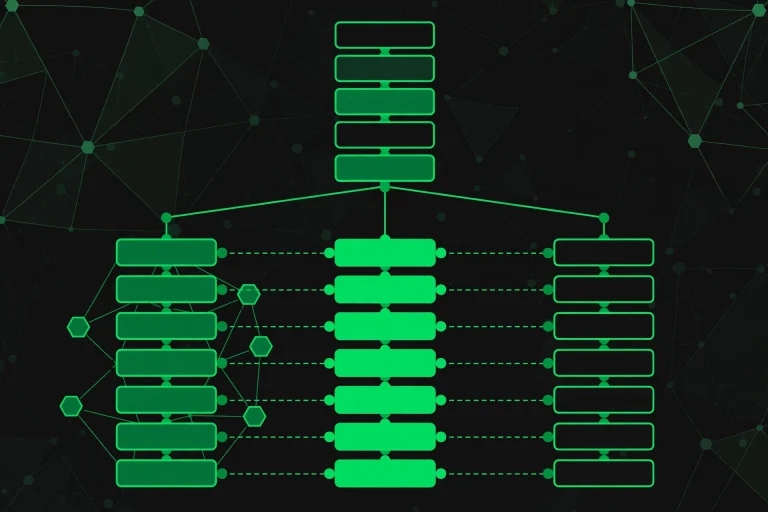
Like Bitcoin, Bitcoin Cash uses a blockchain — a public record of transactions, spread across many computers, that anyone can check. Transactions are grouped into blocks, and blocks are added to the chain by miners, who use computing power to solve a puzzle that proves they have done the work. In return, miners receive newly created BCH and the fees from the transactions they include. This process is called proof of work, and it is the same basic system Bitcoin uses.
The main difference is the block size. Bitcoin Cash allows much larger blocks than Bitcoin, which means each block can contain many more transactions. In theory, that allows the network to process more transactions per second, and to keep fees low even when activity is high. In practice, the actual number of transactions depends on how busy the network is, and on how large the blocks that miners actually produce are, not just on the maximum size allowed.
Another difference is in how the network adjusts the difficulty of mining. Mining difficulty is a measure of how hard it is to add a new block, and it is adjusted regularly to keep the time between blocks roughly stable. Bitcoin Cash has made changes to this adjustment process over time, to try to keep block times more consistent. You do not need to understand the details of that process to use BCH, but it is useful to know that it exists, and that it is one of the areas where the two networks have diverged.
Bitcoin Cash also supports some features that are designed to make it more useful for payments and for building apps. These include support for larger and more complex transactions, and for tokens that can be created on the Bitcoin Cash network. Those features are less important for a beginner than the basic idea: BCH is designed to be sent quickly and cheaply, as a form of digital cash.
Mining, Wallets, and Transactions
Mining BCH is similar to mining Bitcoin. Miners compete to add new blocks, and they are rewarded with BCH. You do not need to mine BCH to use it. Most beginners will buy it on an exchange, receive it as a payment, or trade for it, rather than mining it themselves. Mining requires specialised hardware and cheap electricity, and it is not a practical way for a beginner to obtain BCH.
To hold BCH, you need a wallet that supports it. Many wallets support both Bitcoin and Bitcoin Cash, but they treat them as separate currencies, with separate addresses. That is important: a Bitcoin address and a Bitcoin Cash address may look similar, and in the past they used the same format, which caused confusion and mistakes. Modern wallets use a different address format for Bitcoin Cash, to make it clearer which network an address belongs to. Even so, you should always check carefully before you send BCH, and send a small test amount first if you are sending to a new address.
A BCH transaction works like a Bitcoin transaction. You enter the recipient’s address and the amount, your wallet signs the transaction with your private key, and the transaction is broadcast to the network. Miners include it in a block, and once it is confirmed, the recipient can use the funds. Because Bitcoin Cash aims for low fees, the cost of a transaction is generally low, although it can vary depending on how busy the network is and how quickly you want the transaction to be confirmed.
For more on choosing a wallet, see our guide on how to choose a crypto wallet and stay safe.
Bitcoin Cash vs Bitcoin: What Is the Difference?
The differences between Bitcoin Cash and Bitcoin are often overstated by supporters of one side and understated by supporters of the other. The reality is that they share a lot, and they differ in a few important ways.
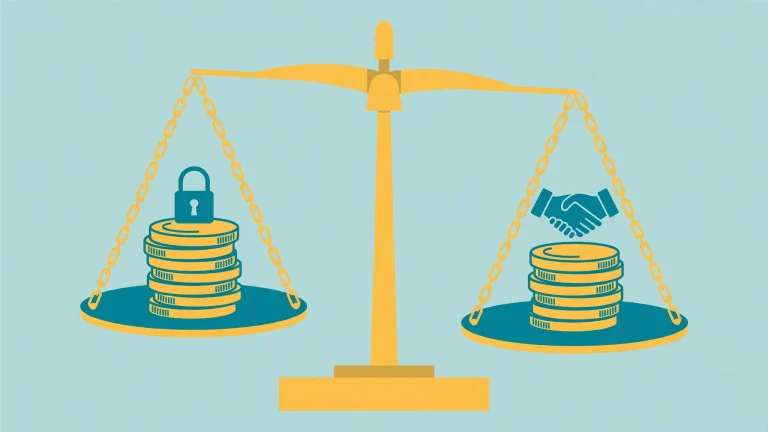
The first difference is the goal. Bitcoin is now widely seen, by many of its users and developers, as a store of value — a kind of digital gold, to be held for the long term. Its supporters value its security, its scarcity, and its decentralisation, and they are willing to accept higher fees and slower transactions as the price of those qualities. Bitcoin Cash, by contrast, is focused on being a medium of exchange — a kind of digital cash, to be used for everyday payments. Its supporters value low fees and fast transactions, and they are willing to accept different trade-offs to achieve them.
The second difference is the block size. Bitcoin has a small block size limit, which limits how many transactions it can process on its main chain. Bitcoin Cash has a much larger limit, which allows it to process more transactions directly. That is the technical expression of the different goals above. A small block keeps the blockchain smaller and easier to run, which supports decentralisation. A large block allows more transactions, which supports everyday use. Neither choice is obviously right or wrong. They are different priorities.
The third difference is the community and the development path. Bitcoin and Bitcoin Cash have separate developers, separate communities, and separate plans for the future. Bitcoin’s development has focused on additional layers, such as the Lightning Network, to handle everyday payments without changing the main chain. Bitcoin Cash’s development has focused on improving the main chain itself, so that it can handle more activity directly.
The fourth difference is adoption and recognition. Bitcoin is far more widely known, more widely held, and more widely accepted than Bitcoin Cash. It is listed on every major exchange, held by large institutions, and discussed in mainstream media. Bitcoin Cash is also listed on many exchanges, and it is accepted by some merchants, but its adoption is much smaller. That does not mean it is useless, but it does mean that a beginner is far more likely to encounter Bitcoin first, and that Bitcoin Cash is a less familiar and less liquid market.
The fifth difference is the price and the market. BCH trades at a very different price from Bitcoin, and its price has moved differently over time. That is not surprising, because they are different assets, with different levels of demand and different expectations. A beginner should not assume that because Bitcoin Cash shares Bitcoin’s history, its price will follow Bitcoin’s price, or that it will one day be worth the same as Bitcoin. Those are separate markets, and they can move in different directions.
What Is Bitcoin Cash Used For?
Bitcoin Cash is used in similar ways to other cryptocurrencies, but its community places a particular emphasis on payments. The most common uses are the ones you would expect.
The first is sending money to another person. BCH can be sent to anyone, anywhere in the world, without going through a bank. The transaction is generally fast and cheap, which makes it practical for small amounts that would be expensive to send through traditional payment systems. That said, crypto payments are still not as simple or as widely accepted as ordinary bank payments, and you should be careful about sending funds to the wrong address, because transactions are generally very hard to reverse.
The second is paying for goods and services. Some merchants accept BCH as payment, either directly or through a payment processor. That acceptance is limited compared with ordinary payment methods, and it varies by country and by industry. If you want to use BCH for payments, check whether the merchant you want to pay actually accepts it, and whether they accept it directly or convert it to ordinary currency immediately.
The third is trading and holding. Many people buy BCH on an exchange and hold it, hoping its price will rise, or trade it against other cryptocurrencies. That is a speculative activity, and it carries the same risks as trading any crypto asset. Prices can fall sharply, and you can lose money. Holding BCH is not the same as holding Bitcoin, and it should not be treated as if it were a safer or more established asset.
The fourth is remittances and cross-border payments. Because BCH can be sent across borders without a bank, some people use it to send money to family in another country. That can be cheaper and faster than a traditional remittance service, but it also involves extra steps, such as converting BCH to local currency at the other end, and it carries the risk that the price changes between sending and receiving.
The fifth is building apps and tokens. Developers can build apps and create tokens on the Bitcoin Cash network, although this is a smaller ecosystem than Ethereum or other smart-contract platforms. For a beginner, this is less relevant than the payment use case, but it is part of why the network continues to be developed.
It is important to be honest about adoption. Bitcoin Cash is used for payments, but it is not widely used as everyday money in most countries. Most people who hold BCH hold it as a speculative asset, not as cash they spend every day. That is true for most cryptocurrencies, and it is worth keeping in mind if you are drawn to the idea of BCH as digital cash. The idea is interesting, but the reality is that adoption is still limited.
How to Buy and Store Bitcoin Cash Safely
If you decide to learn more about BCH by buying a small amount, the process is similar to buying any other cryptocurrency, but there are a few points that are specific to Bitcoin Cash and worth knowing.
First, buy it from a reputable exchange. Choose an exchange that is well known, that lists BCH clearly, and that you have checked for reviews and reputation. Make sure you are buying BCH, not another currency with a similar name. Check the ticker symbol — BCH for Bitcoin Cash — and check the full name before you confirm the purchase. There are other currencies with similar names, and buying the wrong one is a common beginner mistake.
Second, be careful about addresses. Bitcoin Cash addresses can look similar to Bitcoin addresses, especially in older formats. Modern wallets use a distinct format for BCH, often starting with a prefix that makes it clear it is a Bitcoin Cash address. Always check that the address you are sending to is a BCH address, and that your wallet is set to the correct network. Send a small test amount first if you are sending to a new address.
Third, store your BCH in a wallet you control, if you plan to hold it for more than a short time. Keeping crypto on an exchange is convenient, but it means trusting the exchange. If the exchange is hacked, goes bankrupt, or freezes your account, you may not be able to access your funds. A non-custodial wallet, where you hold your own keys, gives you more control, but it also gives you more responsibility. You need to protect your recovery phrase and never share it with anyone.
Fourth, understand the difference between a hot wallet and a cold wallet. A hot wallet is connected to the internet and is convenient for small amounts and frequent use. A cold wallet is offline and is safer for larger amounts and long-term holding. Many experienced users keep a small amount in a hot wallet and the bulk in a cold wallet.
Fifth, keep records of what you buy and sell. In many countries, buying, selling, and trading crypto has tax implications, and you may need to report your activity. Keep a simple record of dates, amounts, and prices, and check the rules in your country, or speak to a qualified adviser if you are unsure.
Finally, keep the amount small while you are learning. Do not buy a large amount of BCH because you think it will rise, or because someone told you it is the “real Bitcoin”, or because you feel you missed out on Bitcoin. Those are emotional reasons, not informed decisions. Learn first, risk little, and only increase the amount once you understand what you are doing and why.
Common Misunderstandings About Bitcoin Cash
Because Bitcoin Cash shares Bitcoin’s name and history, there are several misunderstandings that beginners often pick up. Clearing them up early will save you confusion later.
The first misunderstanding is that Bitcoin Cash is the same as Bitcoin. It is not. They are separate networks, with separate blockchains, separate prices, and separate communities. They share a history up to 2017, but they have been separate since then, and they should be treated as different assets.
The second misunderstanding is that Bitcoin Cash is “the real Bitcoin”. That is a claim made by some supporters, but it is a matter of opinion, not fact. Bitcoin is the network that most people mean when they say “Bitcoin”, and it is the one with the largest adoption, the largest market, and the longest continuous history under that name. Bitcoin Cash is a separate project with its own goals. You can prefer one or the other, but you should not confuse a marketing claim with a fact.
The third misunderstanding is that a larger block size automatically makes a network better. It does not. Larger blocks allow more transactions, but they also make the blockchain larger and harder to run, which can affect decentralisation. Smaller blocks limit capacity, but they keep the blockchain smaller and easier to verify. Both choices involve trade-offs, and neither one is right for every purpose.
The fourth misunderstanding is that low fees mean a network is safe or that its token is a good investment. Low fees are a real benefit for payments, but they do not make a token safe, and they do not guarantee that its price will rise. Many factors affect a token’s price, including demand, sentiment, competition, and the wider market. A low fee is not a reason to invest.
The fifth misunderstanding is that Bitcoin Cash is widely accepted as everyday money. It is accepted by some merchants, but its use as everyday money is still limited. Most people who hold BCH hold it as a speculative asset, not as cash they spend daily. That is true for most cryptocurrencies, and it is worth keeping in mind.
The Risks of Bitcoin Cash
Bitcoin Cash carries the same basic risks as other cryptocurrencies, plus a few that are specific to its history and its position in the market.
Market risk is the first and most obvious. The price of BCH can fall sharply, for reasons that have nothing to do with its technology. It can lose a large part of its value in a short time if sentiment changes, if a large holder sells, or if the wider crypto market falls. That is true for every crypto asset, and it is why you should never invest money you need for essential expenses.
Competition risk is the second. Bitcoin Cash competes with Bitcoin, with other payment-focused cryptocurrencies, and with the additional layers built on Bitcoin, such as the Lightning Network. If those alternatives become more popular or more useful, demand for BCH could fall. The payment space is crowded, and there is no guarantee that any single cryptocurrency will become the standard for everyday payments.
Community and development risk is the third. Bitcoin Cash has had disagreements and splits in its own community, and its development is less active and less well funded than Bitcoin’s or Ethereum’s. A smaller community can mean slower development, fewer apps, and less support if something goes wrong. It does not mean the project will fail, but it is a factor to consider.
Security risk is the fourth. Like any proof-of-work network, Bitcoin Cash relies on miners to secure it. If the number of miners falls, or if a single group gains too much mining power, the network becomes more vulnerable to attack. Bitcoin Cash has a smaller mining network than Bitcoin, which means its security, in practical terms, is lower than Bitcoin’s. That does not mean it is unsafe to use for small amounts, but it is a difference worth knowing.
Scam risk is the fifth. Bitcoin Cash’s similarity to Bitcoin makes it a target for scammers, who may try to confuse beginners into buying the wrong asset, sending funds to the wrong address, or falling for fake giveaways. Be careful about any offer that promises free BCH, guaranteed returns, or a chance to double your money. Those are almost always scams.
Regulatory risk is the sixth. Crypto regulation is still developing in many countries, and the rules that apply to BCH, to exchanges that list it, and to merchants that accept it are not yet settled. A change in regulation could affect how BCH can be bought, sold, or used. That uncertainty is part of the risk of using crypto at all.
None of these risks means you should never learn about Bitcoin Cash. They mean you should learn about it with your eyes open, with small amounts, and with a clear understanding that you are exploring a new and still-developing technology, not using a finished and guaranteed-safe system.
Who Is Bitcoin Cash For?
Bitcoin Cash is most interesting for people who care about crypto as a payment system, rather than as a store of value. If you are curious about how a cryptocurrency could be used for everyday payments, and you want to understand the debate about block size and scalability, Bitcoin Cash is a useful case study. It shows one answer to the question of how to make a blockchain handle more transactions, and it shows the trade-offs that answer involves.
It is also useful for people who already use Bitcoin and want to understand its history. Learning about the 2017 fork helps you understand why Bitcoin looks the way it does today, and why different people in the community have different ideas about its future. Even if you never buy BCH, understanding the fork will make you a more informed user of Bitcoin.
It is less useful for people who are looking for a simple, safe, long-term investment. BCH is a volatile and relatively small market, compared with Bitcoin, and its future is less certain. If you are looking for safety and predictability, ordinary savings accounts and regulated investments are far more suitable. Bitcoin Cash is an interesting piece of technology and a fascinating piece of crypto history, but it is not a savings product.
For a beginner who is curious and wants to learn, Bitcoin Cash is worth understanding, because it teaches you about forks, block size, scalability, and the way communities disagree about the future of a network. Just remember to treat the exploration as learning, not as investing, and to keep the amounts involved small enough that a mistake would be a lesson, not a disaster.
Frequently Asked Questions
What is Bitcoin Cash in simple terms?
Bitcoin Cash is a cryptocurrency created in 2017 when Bitcoin split in a hard fork. It shares part of Bitcoin’s history, but it is a separate network with a larger block size, designed to handle more transactions with low fees, as a form of peer-to-peer electronic cash.
Is Bitcoin Cash the same as Bitcoin?
No. Bitcoin and Bitcoin Cash are separate networks with separate blockchains and separate prices. They share a history up to 2017, but they have been separate since then, with different goals, different communities, and different development paths.
What is the difference between BCH and BTC?
BTC is the ticker for Bitcoin, and BCH is the ticker for Bitcoin Cash. Bitcoin is widely seen as a store of value, with a small block size and a focus on security and decentralisation. Bitcoin Cash is focused on payments, with a larger block size and a focus on low fees and fast transactions.
Why was Bitcoin Cash created?
It was created because of a disagreement in the Bitcoin community about how Bitcoin should scale. One group wanted to keep the block size small and use additional layers for payments. Another group wanted to increase the block size so the main chain could handle more transactions directly. The second group created Bitcoin Cash.
Is Bitcoin Cash safe to use?
Bitcoin Cash is a widely listed and actively used cryptocurrency, but no crypto network is completely safe. Risks include price volatility, competition, a smaller mining network than Bitcoin, scams that exploit its similarity to Bitcoin, and regulatory uncertainty. Use reputable wallets and exchanges, and keep amounts small while learning.
Do I need a special wallet for Bitcoin Cash?
You need a wallet that supports BCH. Many wallets support both Bitcoin and Bitcoin Cash, but they treat them as separate currencies with separate addresses. Always check that you are sending BCH to a BCH address, and send a small test amount first if you are sending to a new address.
Can I lose money holding Bitcoin Cash?
Yes. The price of BCH can fall sharply, and you can lose money if you buy at a high price and sell at a lower one, or if you lose access to your wallet, send funds to the wrong address, or fall for a scam. Never invest money you cannot afford to lose.
Is Bitcoin Cash a good investment?
That is not a question this guide can answer, and you should be suspicious of anyone who claims to know the answer. BCH is a volatile asset in a competitive market, and its future price depends on many factors that are hard to predict. This article is for education only and is not financial advice.
How is Bitcoin Cash different from other payment coins?
Bitcoin Cash is distinguished by its history as a fork of Bitcoin and by its focus on larger blocks for on-chain payments. Other payment coins make different design choices, and some are built on completely different technology. The payment space is crowded, and no single coin has become the standard for everyday use.
Where can I learn more about Bitcoin and blockchain?
Start with our beginner’s guide to blockchain explained for beginners. That will give you the background you need to understand Bitcoin Cash and other cryptocurrencies.
Conclusion
Bitcoin Cash is a reminder that crypto is not just about technology. It is also about ideas, disagreements, and choices. In 2017, a group of people who believed Bitcoin should be used as everyday cash, with low fees and fast transactions, decided to create a new network with a larger block size. That network is Bitcoin Cash, and it continues to pursue that goal today.
That history makes Bitcoin Cash an interesting project to learn about, even if you never buy it. It teaches you about hard forks, block size, scalability, and the trade-offs that every blockchain has to make. It also teaches you that there is no single answer to the question of what a cryptocurrency should be for. Bitcoin and Bitcoin Cash give different answers, and both have supporters who believe their answer is the right one.
If you approach Bitcoin Cash as a learner, start with the basics, keep amounts small, use reputable wallets and exchanges, check addresses carefully, and never let excitement or pressure push you into a decision you have not thought through. The technology is interesting, the history is instructive, and the ideas behind it are likely to keep shaping how crypto develops. But the basic rule has not changed: learn first, risk little, and never invest money you cannot afford to lose.