Crypto Wallets for Beginners 2026
Risk Disclaimer — Please Read First: Cryptocurrency is volatile. Prices can rise and fall sharply, sometimes within hours, and you can lose everything you put in. Nothing in this article is financial advice. A wallet protects your keys, not the price — never put in money you cannot afford to lose.
Crypto Wallets for Beginners in 2026: How to Choose and Stay Safe
Ask a room of beginners what a crypto wallet does and most will say “it stores my coins”. That small misunderstanding causes a lot of expensive mistakes. A wallet does not store coins at all — it stores the keys that prove the coins on the blockchain are yours. Once that clicks, every wallet choice becomes much easier to judge.
This guide explains the main types in plain language, the one backup rule that matters more than everything else, and how to match a wallet to how you actually plan to use crypto. If you have not yet read what the asset itself is, start with our beginner’s guide to Bitcoin and come back.
What a Wallet Really Does
Every amount of crypto sits at an address on its blockchain. Two keys are attached to that address:
- The public key / address works like an account number. You share it to receive funds.
- The private key works like the master password and signature in one. Whoever has it can spend the funds, completely and irreversibly.
A wallet is simply the tool that keeps that private key and uses it to sign transfers for you. Lose the key and lose access. Leak the key and lose the funds. Everything else in this article is a variation on protecting that one secret.
Custodial vs Self-Custody: The First Real Choice
Custodial wallets are accounts where a company holds the keys for you — the balance you see inside an exchange app is the common example. The upside is convenience: forget your password and support can help you back in. The downside is trust: the company can freeze the account, get hacked, or fail, and your access depends on it staying healthy and honest.
Self-custody wallets put the keys on your own device. Nobody can freeze them and no company failure can take them — but nobody can rescue you either. If you lose both the device and the backup, the funds are gone for good.
Neither is “the correct one” for everyone. Small learning amounts often start custodial while a beginner learns. Amounts that would hurt to lose belong under your own keys, once you understand the backup rule below. Bitcoin.org’s wallet guide scores wallets by control, privacy and security and is a useful neutral reference.
Hot Wallets vs Cold Wallets
This is the second split, and it is about whether the key touches the internet.
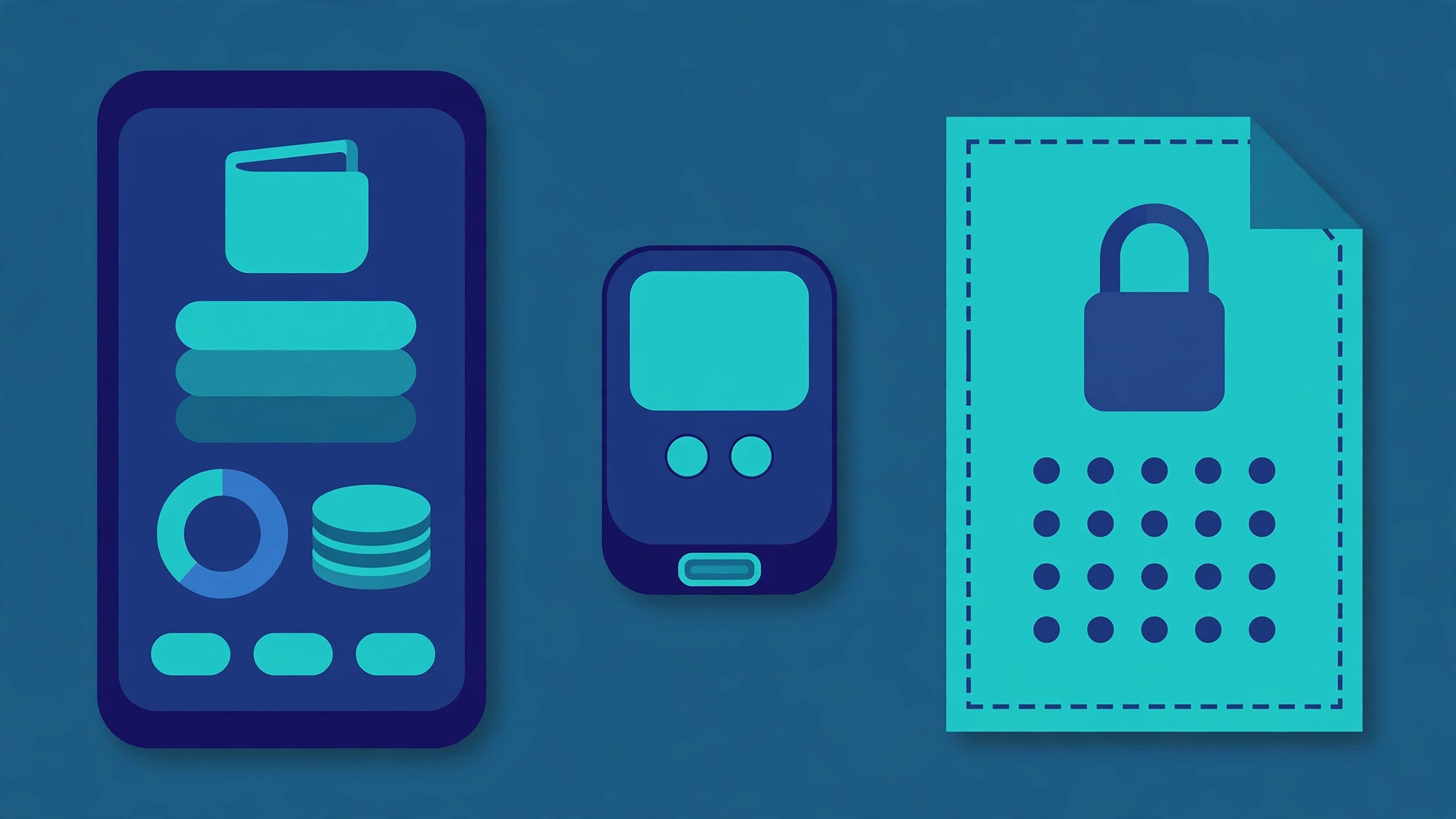
Hot wallets are apps on a phone or computer, or browser extensions. They are free, quick to set up and ideal for small amounts and everyday use. Because the device is online, they are exposed to malware and phishing — the realistic ceiling is “money you are actively using”, like cash in a pocket.
Cold wallets keep the key offline, usually on a small dedicated hardware device that signs transfers without exposing the key to your computer. They cost money and add a little friction to every transfer, which is exactly the point. For savings-sized amounts, cold storage is the standard answer.
Many experienced users run both: a hot wallet with spending money, a cold wallet with the rest. The beginner mistake is keeping everything in whichever one was installed first.
The Recovery Phrase: The One Rule That Matters Most
When you set up a self-custody wallet, it shows you a recovery phrase — usually 12 or 24 ordinary words, in order. That phrase can rebuild your wallet on any new device. It is, in effect, your keys written in readable form.
Treat it accordingly:
- Write it on paper by hand. Never type it into a website, never store it in a photo, screenshot, email, cloud note or password chat.
- Never share it with anyone. No real support team, exchange or wallet company will ever ask for it. Anyone who asks is stealing from you — this single rule defeats most wallet scams.
- Keep the paper somewhere private and dry, and consider a second copy in a separate safe place. A phrase kept only next to the phone it protects is one house fire away from useless.
A beginner who follows only this section is already safer than most people holding crypto.
How to Choose: Match the Wallet to the Job
Work through these questions in order:
How much, honestly? Pocket-money amounts learning the basics can live in a reputable hot wallet. The moment the amount would genuinely upset you to lose, it is time for self-custody and, for larger sums, hardware.
Which coins? Not every wallet supports every network. A wallet built for Bitcoin will not hold tokens from other chains, and sending a coin to an address on the wrong network can lose it. Check the wallet’s official site for the exact assets you own — including the dollar-pegged tokens covered in our stablecoins guide, which live on several different networks.
How often will you move it? Daily small transfers favour a hot wallet’s speed. Buying rarely and holding favours cold storage’s safety.
Can you handle the backup honestly? Self-custody is only safer if you will actually write the phrase down and guard it. If you know you will not, a well-known custodial account with strong two-factor authentication may be the more realistic risk — go in with eyes open either way.
Staying Safe After You Have Chosen
Setting up is half the job. These habits cover the rest:
- Download only from official sources — the maker’s real website or your phone’s official app store. Fake wallet apps are a long-running scam.
- Send a test transfer first. A tiny amount, confirm it arrives, then move the rest. Wrong-network and wrong-address losses are permanent; a test makes them cheap.
- Turn on every lock offered — device PIN or biometrics inside the app, and two-factor authentication on any connected exchange account.
- Keep software updated. Wallet and phone updates patch the holes attackers actually use.
- Slow down at links. Bookmark the real sites. Phishing pages that imitate wallet and exchange screens are the most common way keys are stolen — the chart-reading crowd gets hit too, because a fake “trading dashboard” is a classic lure, as we note in our crypto price chart guide.
Frequently Asked Questions
What is the best wallet for a complete beginner?
For a first small amount, a well-known mobile hot wallet from its official app-store listing is the usual starting point, because setup is simple and the backup process teaches the recovery phrase properly. Move to a hardware wallet when the amount becomes meaningful to you.
Can I use one wallet for all my coins?
Only if the wallet supports each coin’s network. Many wallets are multi-chain, but always confirm the exact asset and network on the official site before sending — support for a coin’s name does not always mean support for the network your coins are on.
What happens if the wallet company shuts down?
With a self-custody wallet, your funds are safe: restore from your recovery phrase in another compatible wallet. With a custodial account, your access depends on that company’s situation — one of the main reasons self-custody exists.
I lost my phone. Is my crypto gone?
Not if you kept your recovery phrase. Install the wallet on a new device, enter the phrase exactly, and your access returns. Without the phrase and without the phone, there is no recovery — no company can reset a private key.
Should I keep my recovery phrase in my password manager?
Security specialists disagree, but the common beginner advice is paper, offline, because a phrase stored anywhere internet-connected can be reached by the same malware and phishing that threaten the wallet itself. Whatever you choose, never store it in plain photos or notes apps.
Conclusion
A crypto wallet guards keys, not prices — and the beginner who understands that is already ahead. Start simple with a reputable hot wallet for small amounts, learn the recovery-phrase rule until it is automatic, and graduate to cold storage when the sums matter. Choose for the job you actually have, test every transfer, and share your phrase with no one, ever. You will find the rest of our beginner explainers in the Crypto section on Stylish Namees.