What Is Avalanche (AVAX)? A Beginner’s Guide
Risk disclaimer: Cryptocurrencies are volatile and risky. The price of AVAX and other crypto assets can fall sharply and quickly, and you can lose some or all of the money you put in. This article is educational only and is not financial advice. Never invest money you cannot afford to lose, and do your own research before making any decision involving crypto.
Avalanche is a blockchain platform designed to be fast, cheap and flexible. It launched in 2020 and quickly became one of the better-known alternatives to Ethereum, particularly for decentralised finance (DeFi) applications and custom blockchains. Its native token is called AVAX, and it is used to pay transaction fees, secure the network, and participate in governance.
If you have heard of Ethereum but found its fees confusing or its speed frustrating, Avalanche is one of the projects built to address those problems. This guide explains how it works, what makes it different, and what beginners should understand before going any further.
The Problem Avalanche Tries to Solve
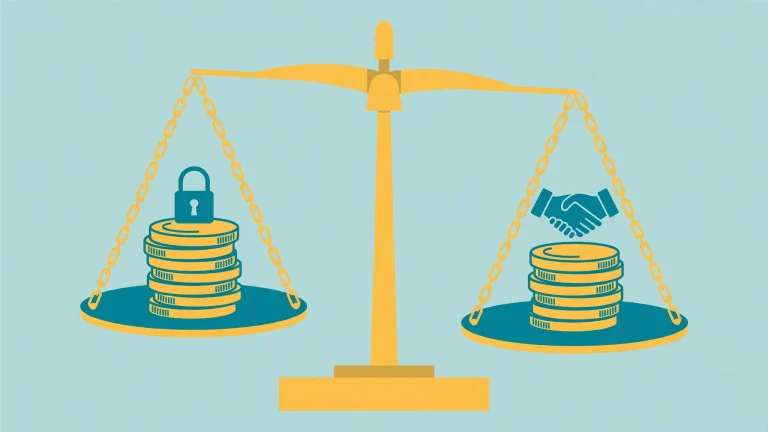
Most early blockchains faced a trade-off often called the blockchain trilemma: it is hard to be decentralised, secure and scalable all at once. Bitcoin is highly secure and decentralised but slow. Ethereum is flexible and widely used but has historically struggled with congestion and high fees during busy periods. Many newer blockchains sacrifice some decentralisation to gain speed.
Avalanche’s answer is a different architecture. Instead of a single chain handling everything, it uses three built-in blockchains, each with a specialised job, plus a system that lets developers launch their own custom chains called subnets. The idea is to spread the work around rather than forcing one chain to do everything.
Speed is the headline claim. Avalanche reports transaction finality — the point at which a transaction is confirmed and cannot be reversed — in around one to two seconds, compared with minutes on some older networks. Whether that matters to you depends on what you are doing: for a casual holder it is a convenience, while for a DeFi trader it can be the difference between a good trade and a missed one.
The Three Chains: X, P and C
Avalanche’s primary network is made up of three chains. The X-Chain (Exchange Chain) handles the creation and transfer of digital assets, including AVAX itself. The P-Chain (Platform Chain) manages validators — the participants who secure the network — and coordinates subnets. The C-Chain (Contract Chain) is where smart contracts run, and it is compatible with Ethereum’s tooling, which means developers can move Ethereum applications to Avalanche relatively easily.
For most users, the C-Chain is the one that matters, because it is where decentralised exchanges, lending platforms and NFT marketplaces on Avalanche live. If you use a wallet with Avalanche, you will usually interact with the C-Chain, and you will need AVAX to pay its transaction fees, which are generally much lower than Ethereum’s main network fees.
This three-chain design is unusual, and it can confuse beginners. Wallets sometimes show balances on different chains, and moving assets between chains requires a cross-chain transfer inside the wallet. It is a small learning curve, but it is worth understanding before you move any funds, because sending tokens to the wrong chain is a common beginner mistake.
How Avalanche Reaches Agreement
Avalanche uses a consensus mechanism — the method by which network participants agree on which transactions are valid — that differs from both Bitcoin’s proof of work and the proof of stake used by Ethereum today. Its approach is based on repeated random sampling: validators repeatedly ask a small random subset of other validators what they think, and over several rounds the network converges on agreement.
The practical result is fast finality and relatively low energy use compared with proof of work, since there is no mining race. Validators stake AVAX to participate, and they earn rewards for honestly validating transactions. Users who do not want to run a validator can delegate their AVAX to one, earning a share of the rewards — though this involves risks and lock-up periods, covered in more detail in our guide to crypto staking vs lending.
Consensus design is a deep topic, and the details matter less to a beginner than the outcome: transactions confirm quickly, fees stay low under normal conditions, and the network can handle a large number of transactions per second compared with older blockchains.
Subnets: Custom Blockchains for Specific Jobs
One of Avalanche’s most distinctive features is subnets. A subnet is essentially a custom blockchain built on Avalanche’s infrastructure, with its own rules, validators and even its own fee token. A gaming company, for example, could launch a subnet tuned for fast, cheap in-game transactions, while a financial institution could launch a private subnet with restricted access for compliance reasons.
Subnets matter because they address a real problem with shared blockchains: congestion. When one popular application floods a network, every other user pays higher fees and waits longer. On Avalanche, a busy application can move to its own subnet, leaving the main network unaffected. It is a flexible design, and it has attracted gaming and enterprise projects that want control over their own environment.
For a beginner, subnets are mostly background knowledge. You do not need to use them directly. But they explain why Avalanche is often described as a “platform of blockchains” rather than a single blockchain, and why its ecosystem includes projects that look quite different from one another.
AVAX: What the Token Does
AVAX has several roles. It pays transaction fees on the network, it is staked by validators to secure the network, and it is used in governance votes on network upgrades. New AVAX is created as staking rewards, but fees paid on the network are burned — permanently removed from circulation — which creates a counterweight to that new supply.
The token’s price, like all crypto assets, is volatile. It has risen and fallen sharply with the broader market, and its value depends on factors ranging from overall crypto sentiment to the growth of applications built on Avalanche. Nobody can reliably predict its future price, and anyone who claims otherwise should be treated with scepticism. If you are considering buying any crypto asset, our guide to how to buy crypto safely walks through the practical safety steps first.
It is also worth noting that AVAX, like other tokens, exists in a regulatory grey area in many countries. Rules differ by jurisdiction and are changing quickly, so check the position in your own country before buying, holding or using any crypto asset.
Avalanche vs Ethereum: A Fair Comparison
Avalanche is often compared with Ethereum, and the comparison is fair — the C-Chain deliberately mirrors Ethereum’s smart contract environment. Avalanche’s advantages are speed and cost: transactions confirm faster and usually cost far less than Ethereum’s main network, especially during busy periods. Its ecosystem is also smaller, with fewer applications, less liquidity and fewer developers than Ethereum, which matters because a blockchain is only as useful as the things built on it.
Ethereum, meanwhile, has improved significantly with its own upgrades and with layer-2 networks that reduce fees, narrowing the gap. The honest picture is that Avalanche is a credible, well-engineered alternative with genuine technical strengths, but it is not an “Ethereum killer” — no project has earned that title, and the crypto landscape changes fast enough that today’s leader can be tomorrow’s footnote.
For a beginner, the practical takeaway is simpler: if you want to try DeFi or NFTs with low fees, Avalanche is a reasonable place to learn, provided you start small and understand the risks. If you want the deepest ecosystem and the most applications, Ethereum and its layer-2 networks remain the default choice.
Frequently Asked Questions
Is Avalanche the same as AVAX?
No. Avalanche is the blockchain platform; AVAX is its native token, used for fees, staking and governance.
How fast is Avalanche really?
Transaction finality is typically around one to two seconds under normal conditions, which is fast compared with Bitcoin and Ethereum’s main network. Actual experience depends on network load and the application you are using.
Do I need AVAX to use Avalanche apps?
Yes, you need a small amount of AVAX to pay transaction fees on the C-Chain, where most applications run. Fees are usually low, but you always need some AVAX in your wallet to transact.
Is Avalanche decentralised?
It uses a proof-of-stake style validator system with a large number of validators, which is more decentralised than some competitors but less battle-tested than Bitcoin or Ethereum. Decentralisation exists on a spectrum, and reasonable people disagree about where Avalanche sits on it.
Can Avalanche fail?
Yes, like any crypto project. Technical problems, competition, regulatory action or a loss of developer interest could all reduce its value or usage. That is why the risk disclaimer at the top of this article matters: never invest more than you can afford to lose completely.
Conclusion
Avalanche is a fast, flexible blockchain platform with a distinctive three-chain architecture and a genuinely interesting subnets model. Its low fees and quick confirmations make it a practical place to learn about DeFi and smart contracts, and its Ethereum compatibility makes it easy for developers to build on.
But none of that changes the fundamental reality of crypto: prices are volatile, projects can fail, and the technology is still young. Understand what Avalanche does, start small, keep your assets secure, and never let enthusiasm override the basic rule — only risk money you can afford to lose. If you do that, exploring a project like Avalanche can be a genuinely educational way into the wider world of blockchains.