What Is NEAR Protocol? A Beginner’s Guide to How It Works
What Is NEAR Protocol? A Beginner’s Guide to How It Works
Risk disclaimer: Cryptocurrencies are volatile and can lose most or all of their value. Nothing in this article is financial advice. Never invest money you cannot afford to lose, and do your own research before buying any cryptocurrency.
NEAR Protocol is a blockchain built around one big idea: that a blockchain should be able to scale without becoming slow, expensive, or hard to use. Its founders looked at Ethereum’s congestion and high fees, and at the difficulty ordinary people face when they first try to use crypto, and decided to build a network that addressed both problems at once. The result is a platform that uses a technique called sharding to process many transactions in parallel, and that puts an unusual amount of effort into making the user experience feel like a normal app, not a cryptography puzzle.
NEAR is less famous than Ethereum or Solana, and it has a smaller ecosystem, but it is a serious project with real technology and real users, and it is worth understanding on its own terms. This guide explains NEAR from scratch. You will learn the problem it tries to solve, how sharding and Nightshade work, what the NEAR token does, how staking works, what kinds of apps run on NEAR, and how it compares with Ethereum and Solana. No technical background is needed, and no prior knowledge of NEAR is assumed.
The Problem NEAR Tries to Solve
NEAR was founded in 2018 by Alex Skidanov and Illia Polosukhin, two engineers with backgrounds in machine learning and distributed systems. Their starting point was a frustration that many people in crypto shared: blockchains were hard to scale and hard to use. Ethereum, the dominant platform for decentralised applications, could only process a limited number of transactions per second, and when demand rose, fees rose with it, sometimes to levels that made ordinary use impractical. At the same time, using a blockchain app required managing cryptographic keys, long addresses, and confusing interfaces, which put off everyone except the most determined users.
NEAR’s answer had two parts. The first was technical: use sharding to split the network’s work across many parallel chains, so that capacity grows as the network grows, rather than hitting a ceiling. The second was human: design the user experience so that a person can create an account with a readable name, recover it if they lose their password, and use apps without thinking about gas fees or private keys. Those two goals, scalability and usability, are the thread that runs through everything NEAR has built.
The project launched its mainnet in 2020, and it has developed steadily since, adding features, attracting developers, and building an ecosystem of applications. It has not achieved the scale of Ethereum or Solana, and it faces the same chicken-and-egg problem as every newer platform: developers go where the users are, and users go where the apps are, which makes it hard to break in. But NEAR’s technology is genuinely different, and understanding it is worthwhile even if you never use the network.
Sharding and Nightshade: How NEAR Scales
To understand NEAR, you need to understand sharding, because it is the core of the design. A traditional blockchain, like Bitcoin or early Ethereum, processes transactions one at a time, in a single chain. Every node in the network processes every transaction, which is secure but slow: the network can only go as fast as its slowest participant, and adding more nodes does not make it faster.
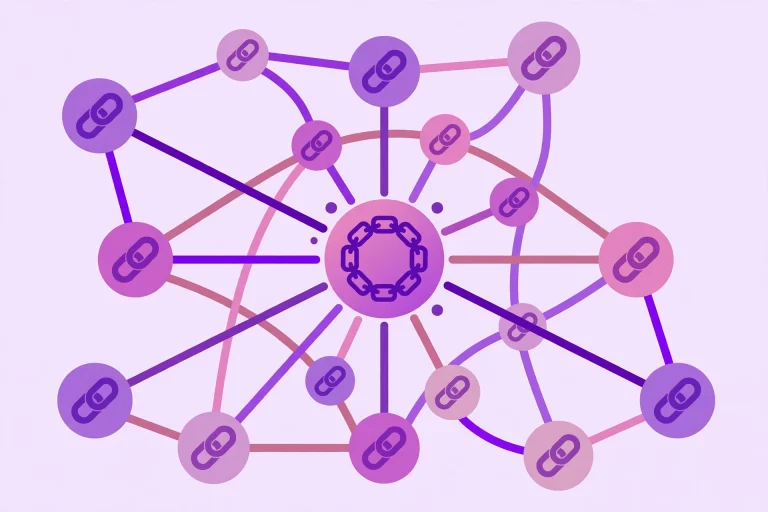
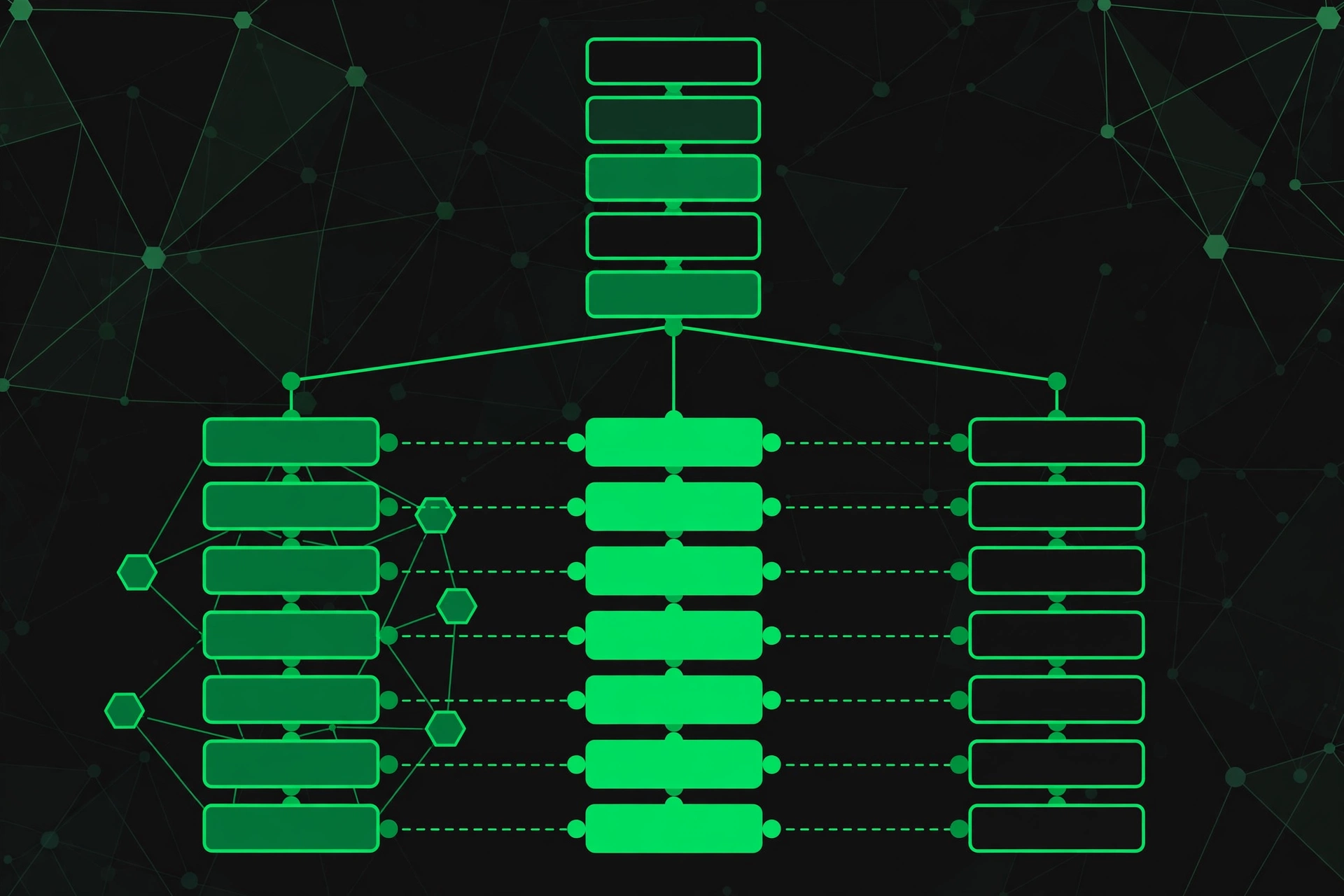
Sharding solves this by splitting the network into pieces, called shards, each of which processes a subset of transactions in parallel. Think of it as a supermarket opening more checkout lanes: instead of one queue that grows longer as more shoppers arrive, you open new lanes, and the total throughput increases. The challenge is making sure the lanes work together, that a transaction in one shard can interact with a transaction in another, and that the system stays secure even though no single participant sees everything.
NEAR’s version of sharding is called Nightshade, and it works by splitting the blockchain into shards that are processed in parallel by different groups of validators. The key idea is that each shard produces its own piece of the next block, called a chunk, and those chunks are combined into a single block. Validators are assigned to shards, and they rotate, so that no group controls a shard permanently. As demand grows, NEAR can add more shards, which increases capacity. The design is dynamic: the number of shards adjusts based on usage, rather than being fixed in advance.
This is different from how Ethereum scales. Ethereum’s main approach to scaling has been layer-two networks, separate chains that process transactions off the main chain and settle them back on it, rather than sharding the main chain itself. Ethereum has plans for sharding too, but its implementation has been slower and more complex. Solana, by contrast, scales by making a single chain very fast, processing transactions in parallel on powerful hardware, rather than by splitting into shards. NEAR’s approach sits between the two: a single network, split into shards, with the sharding built into the base layer rather than added on top.
The honest caveat is that sharding is complex, and complexity has costs. Cross-shard transactions, where a transaction in one shard needs to interact with another shard, are harder to process than transactions within a single shard, and they can be slower. NEAR has worked on this, but it remains a real engineering challenge, and it is one of the reasons that sharding has taken years to build. A beginner should understand that NEAR’s scalability is a genuine achievement, but also that it is not magic: there are trade-offs, and the system is still evolving.
Accounts and Usability: Crypto That Feels Normal
One of NEAR’s most distinctive features has nothing to do with sharding. It is the way accounts work. On most blockchains, an account is a long string of random characters, like a cryptographic address, which is hard to read, hard to remember, and easy to get wrong. Losing your private key means losing your account forever, and there is no password reset. That is a major barrier for ordinary users, and it is one of the reasons crypto has struggled to reach a mainstream audience.
NEAR took a different approach. Accounts on NEAR have human-readable names, like yourname.near, similar to a username or an email address. You can create an account, recover it with a seed phrase or through other methods, and manage it through a wallet that feels more like a normal app. NEAR also supports features like meta-transactions, where an application can pay the gas fees on behalf of the user, so that a new user can try an app without first buying crypto to pay for fees. And it has a system for account recovery that is more forgiving than the all-or-nothing private key model, though it still requires care, because a lost seed phrase can still mean lost funds.
These features matter because they address the real reason most people do not use crypto: it is too hard. A blockchain can be fast and cheap, but if using it feels like a technical exam, most people will not bother. NEAR’s bet is that usability is as important as scalability, and that the platform that wins mainstream users will be the one that feels most like the apps people already use. Whether that bet pays off is still an open question, but it is a thoughtful one, and it sets NEAR apart from platforms that focus only on technical performance.
If you are new to wallets generally, our guide to crypto wallets (https://stylishnamees.com/crypto-wallets-beginners-2026-choose-stay-safe) explains how wallets work and how to choose one, and storing your seed phrase safely is the single most important security habit for any crypto user, including on NEAR.
What Is the NEAR Token For?
NEAR is the native token of the NEAR Protocol, and it has several jobs. The first is paying for transactions: every action on the network, from sending tokens to using an app, costs a small fee in NEAR, called gas. The second is staking: NEAR holders can stake their tokens to help secure the network and earn rewards, which we will explain below. The third is storage: because the network stores data on behalf of users and applications, NEAR is used to pay for that storage, which creates a cost for holding data on the chain. The fourth is governance: NEAR holders can participate in decisions about the network, although NEAR’s governance is less developed than some other chains, and major decisions have historically been made by the NEAR Foundation and core developers rather than by token-holder votes.
NEAR’s supply is not fixed. New tokens are created to pay staking rewards, at a rate that is designed to be predictable and modest, and a portion of transaction fees is burned, which removes tokens from circulation. That means the total supply grows slowly over time, but the growth is offset, in part, by the burning of fees. The design is a compromise: it rewards stakers without creating the high inflation of some other networks, but it also means that holding NEAR without staking it tends to lose value relative to the total supply, slowly, over time. That is a detail worth knowing, because it affects the decision of whether to hold NEAR passively or to stake it.
NEAR is also used in the network’s developer ecosystem. Developers who build applications on NEAR can earn a share of the transaction fees their apps generate, which is an unusual feature: on most blockchains, the fees go to validators, and developers earn nothing from the network itself. NEAR’s model is designed to encourage developers to build on the platform, by giving them a direct financial incentive to create apps that people use. It is a thoughtful idea, though its practical impact has been limited by the size of the ecosystem.
Staking NEAR: How It Works
Staking NEAR means locking your tokens to help secure the network, in exchange for rewards. NEAR uses a proof-of-stake consensus mechanism, which means that validators are chosen to produce blocks based on how much NEAR they have staked, and they earn rewards for doing their job honestly. If a validator misbehaves, they can lose some of their stake, a penalty known as slashing, although slashing on NEAR is rare and limited in scope.
Most ordinary holders do not run their own validator. Instead, they delegate their NEAR to a validator, by staking through a wallet or an exchange, and earn a share of that validator’s rewards. The process is straightforward: you choose a validator, lock up your tokens, and start earning rewards, which are typically paid out regularly. The rewards are quoted as an annual percentage, but that percentage is not guaranteed, and it does not account for changes in the price of NEAR itself. A staking reward of eight percent means little if the token’s price falls by thirty percent over the same period.
There are practical details to watch. Staked NEAR is locked for a period before it can be withdrawn, which means you cannot sell quickly if the price moves. Choosing a validator matters, because a badly run validator earns less and risks penalties. And staking through a centralised exchange is simpler but introduces the risks of that exchange, which is a real consideration after several high-profile exchange failures. Understand the trade-offs between staking and lending, and keep staked and unstaked holdings safe, ideally in cold storage.
Apps on NEAR: What Can You Actually Do There?
A blockchain is only as useful as the applications built on it, and NEAR’s ecosystem is smaller than Ethereum’s or Solana’s, but it has real projects across several categories. There are decentralised finance applications, where users can trade, lend, and borrow, including decentralised exchanges and lending protocols that operate on NEAR.
There are also NFT marketplaces and gaming applications, which have been a focus for NEAR, because its low fees and fast transactions suit the frequent, small transactions that games and collectibles involve. There are social applications and tools for creators, and there are infrastructure projects, including bridges that connect NEAR to Ethereum and other chains, so that assets can move between them.
One of NEAR’s more interesting developments is its work on chain abstraction and account abstraction, which are ideas about making blockchains invisible to the user. The goal is that a person should be able to use an app without knowing or caring which blockchain it runs on, just as a person uses a website without knowing which server it runs on. NEAR has invested heavily in this vision, including through a system that lets users transact on other chains using a NEAR account. It is an ambitious idea, and it is still early, but it fits with NEAR’s long-standing focus on usability.
The honest picture is that NEAR’s ecosystem is real but modest. It does not have the depth of Ethereum’s DeFi ecosystem or the volume of Solana’s trading activity, and a beginner should not expect to find the same range of apps. What it does have is a set of working applications, low fees, and a community that is focused on building rather than on speculation. Whether that is enough to grow is an open question, and it depends on whether developers and users choose NEAR over larger platforms.
NEAR vs Ethereum and Solana
NEAR is often compared with Ethereum and Solana, because all three are platforms for building blockchain applications, and the comparison is useful for understanding what makes NEAR different.
Ethereum is the largest and most established platform, with the biggest ecosystem of developers, users, and applications. Its strength is its network effect: everyone builds on Ethereum because everyone else is there. Its weakness, historically, has been congestion and high fees, although layer-two networks have helped, and its move to proof of stake reduced its energy use dramatically. NEAR’s advantage over Ethereum is its speed, its low fees, and its usability, but its disadvantage is its much smaller ecosystem.
Solana is the closest competitor in terms of speed and cost. Solana is a single, very fast chain that processes transactions in parallel on powerful hardware, and it has attracted a large ecosystem of trading, NFT, and gaming applications. Its strength is its raw performance and its active community. Its weakness has been reliability: Solana has suffered several network outages, which raised questions about its stability. NEAR’s advantage over Solana is its sharding design, which is meant to scale more gracefully, and its focus on usability. Its disadvantage is that Solana has a larger ecosystem and more momentum.
Our guide to what Ethereum is (https://stylishnamees.com/what-is-ethereum-beginners-guide) and our guide to what Solana is (https://stylishnamees.com/what-is-solana-beginners-guide) explain those platforms in full, and reading them alongside this one will give you a clearer sense of the trade-offs. None of these platforms has won. Each has real strengths and real weaknesses, and the contest is still open.
The Honest Risks and Criticisms
NEAR has real risks, and a beginner should weigh them honestly. The first is ecosystem size. NEAR’s ecosystem is much smaller than Ethereum’s or Solana’s, which means fewer apps, fewer users, and less liquidity. That matters, because a blockchain’s value depends on the people who use it, and a small ecosystem is a fragile one. If developers leave, or if users do not come, the network can stagnate, no matter how good the technology is.
The second risk is complexity. Sharding is a hard problem, and NEAR’s implementation, while impressive, is complex and still evolving. Cross-shard transactions are slower and harder than transactions within a shard, and the dynamic sharding design means the system is always changing. Complexity makes a platform harder to develop on, harder to explain, and harder to trust, and it has arguably slowed NEAR’s growth compared with simpler platforms.
The third risk is competition. Ethereum, Solana, and a host of other platforms are all competing for the same developers and users, and NEAR has not yet broken through to the top tier. Its technology is strong, but technology alone does not win markets, and a beginner should weigh that honestly. The crypto landscape is full of technically excellent projects that never found an audience.
The fourth risk is governance and centralisation. NEAR’s development has been guided by the NEAR Foundation and a relatively small group of core developers, which is normal for a young project, but it means that the network is less decentralised in practice than its design suggests. That is not necessarily a problem, but it is something to be aware of, and it is a contrast with Bitcoin, where no single entity guides development.
Finally, the usual crypto risks apply. NEAR’s price is volatile, the regulatory picture for tokens like NEAR is uncertain, and the project’s future depends on people continuing to build on it. Learn how to spot crypto scams before you engage with any project, including legitimate ones, because the scams cluster around the real projects.
What Beginners Should Know Before Buying NEAR
If you are considering buying NEAR, there are a few practical points to keep in mind. The first is storage. NEAR can be held on an exchange, which is convenient but carries the risk that the exchange could fail or be hacked, or in a wallet you control, which is safer but requires you to manage your own security. Our guide to crypto wallets (https://stylishnamees.com/crypto-wallets-beginners-2026-choose-stay-safe) explains the options, and our guide to how to buy crypto safely (https://stylishnamees.com/how-to-buy-crypto-safely-beginners-checklist) explains the practical steps and safety checks before any purchase.
The second point is that NEAR’s account system, while user-friendly, still requires you to protect your seed phrase. A human-readable account name does not remove the need for secure backup, and if you lose your recovery phrase, you may lose access to your funds, so learn how to store your seed phrase safely.
The third point is that staking NEAR is a reasonable option for a long-term holder, but it is not free money. Staked tokens are locked, rewards vary, and the price can fall by more than the rewards you earn. Treat staking as a way to participate in the network, not as a guaranteed return.
The fourth point is to be careful about where you get information. NEAR has a genuine community, but like every crypto project, it also attracts hype and misleading claims. Stick to sources that explain the technology and the ecosystem, and be sceptical of anyone who promises returns or guarantees a price target.
Frequently Asked Questions
What is NEAR Protocol in simple terms?
NEAR Protocol is a blockchain platform for building decentralised applications, designed to be fast, cheap, and easy to use. It uses sharding, a technique that splits the network’s work across parallel chains, to scale as demand grows, and it has human-readable account names and user-friendly wallets.
How is NEAR different from Ethereum?
Ethereum is a single large blockchain where applications run as smart contracts, with scaling handled mainly through layer-two networks. NEAR is a sharded blockchain, where the base layer itself is split into parallel shards, and it places more emphasis on usability, with readable account names and features that let apps pay fees for users.
How is NEAR different from Solana?
Both are fast, low-cost platforms, but they scale differently. Solana makes a single chain very fast using powerful hardware, while NEAR splits its network into shards that process transactions in parallel. Solana has a larger ecosystem, while NEAR focuses more on usability and account design.
What is Nightshade?
Nightshade is NEAR’s sharding design. It splits the blockchain into shards, each of which produces its own piece, called a chunk, of the next block. Those chunks are combined into a single block, and validators rotate between shards. The number of shards can adjust based on demand.
Can I stake NEAR?
Yes. NEAR holders can stake their tokens with a validator to help secure the network and earn rewards. You can delegate through a wallet or an exchange, without running your own validator, but staked tokens are locked for a period before they can be withdrawn.
Does NEAR have a fixed supply?
No. New NEAR is created to pay staking rewards, and a portion of transaction fees is burned, which removes tokens from circulation. The total supply grows slowly over time, offset in part by the burning of fees.
What are NEAR account names?
NEAR accounts have human-readable names, like yourname.near, instead of long random addresses. This makes accounts easier to remember and use, and it is one of NEAR’s distinctive features, along with its recovery options and the ability for apps to pay fees on behalf of users.
Is NEAR a good investment?
No one can answer that for you, and anyone who claims to know is selling something. NEAR has real technology, a genuine focus on usability, and serious risks, including a small ecosystem, strong competition, and the complexity of sharding. Treat any investment decision as your own research, not as a tip.
Conclusion
NEAR Protocol is a thoughtful attempt to solve two of crypto’s hardest problems at once: how to scale a blockchain without making it slow and expensive, and how to make it usable by ordinary people. Its sharding design, Nightshade, is a genuine technical achievement, and its focus on human-readable accounts, recovery, and fee abstraction sets it apart from platforms that treat usability as an afterthought. Those are real strengths, and they explain why NEAR has a loyal community of developers and users who believe in its vision.
They do not erase the challenges. NEAR’s ecosystem is smaller than Ethereum’s or Solana’s, its technology is complex and still evolving, and it competes in a crowded field where network effects matter enormously. The price of NEAR depends on trading markets, not on the elegance of its design, and it can fall sharply for reasons that have nothing to do with the technology. A beginner who understands both sides, the scalability and the small ecosystem, the usability and the complexity, is in a much better position than someone who has only heard one side. Read our guide to how to buy crypto safely (https://stylishnamees.com/how-to-buy-crypto-safely-beginners-checklist) before any purchase, protect your seed phrase, and never invest more than you can afford to lose. If you want to understand the platform NEAR is most often compared with, start with what Ethereum is (https://stylishnamees.com/what-is-ethereum-beginners-guide), and if you want to understand the other fast, low-cost alternative, read what Solana is (https://stylishnamees.com/what-is-solana-beginners-guide).