What Is Polkadot (DOT)? A Beginner’s Guide to How It Works
Risk disclaimer: Cryptocurrencies are volatile and can lose most or all of their value. Nothing in this article is financial advice. Never invest money you cannot afford to lose, and do your own research before buying any cryptocurrency.
Polkadot is one of the most ambitious projects in cryptocurrency. While most blockchains are single networks that do their own thing, Polkadot was designed to connect many blockchains together, so that they can share security and exchange information. Its supporters describe it as a network of blockchains, a kind of internet where independent chains can work together instead of existing in isolation. Its critics say it is complex, slow to deliver, and still proving itself. Both views have something to them, and a beginner should understand both before forming an opinion.
This guide explains Polkadot from scratch. You will learn the problem it was built to solve, how its relay chain and parachains work, what the DOT token does, how staking and governance work, and how Polkadot compares with Ethereum and Cosmos. No technical background is needed, and no prior knowledge of Polkadot is assumed.
The Problem Polkadot Tries to Solve
Blockchains have a problem that is easy to describe and hard to solve: they do not talk to each other. Bitcoin does its own thing. Ethereum does its own thing. Smaller chains do theirs. Moving value or information between them usually requires a bridge, a separate piece of infrastructure that has its own risks, or a centralised exchange, which introduces exactly the kind of middleman that blockchains were supposed to remove.
The problem has three parts. The first is interoperability: chains cannot easily exchange data or assets. The second is scalability: a single chain can only process so many transactions, and when demand rises, fees rise with it. The third is security: a new, small blockchain is easier to attack than a large, established one, so new projects must either build their own security from scratch or accept being less secure.
Polkadot’s answer is to build a system where many specialised blockchains share one security system and one communication standard, so that a new chain can launch with the security of the whole network behind it and can talk to every other chain in the system. It is an ambitious answer, and it is the reason Polkadot attracts both excitement and scepticism.
The Relay Chain: The Heart of Polkadot
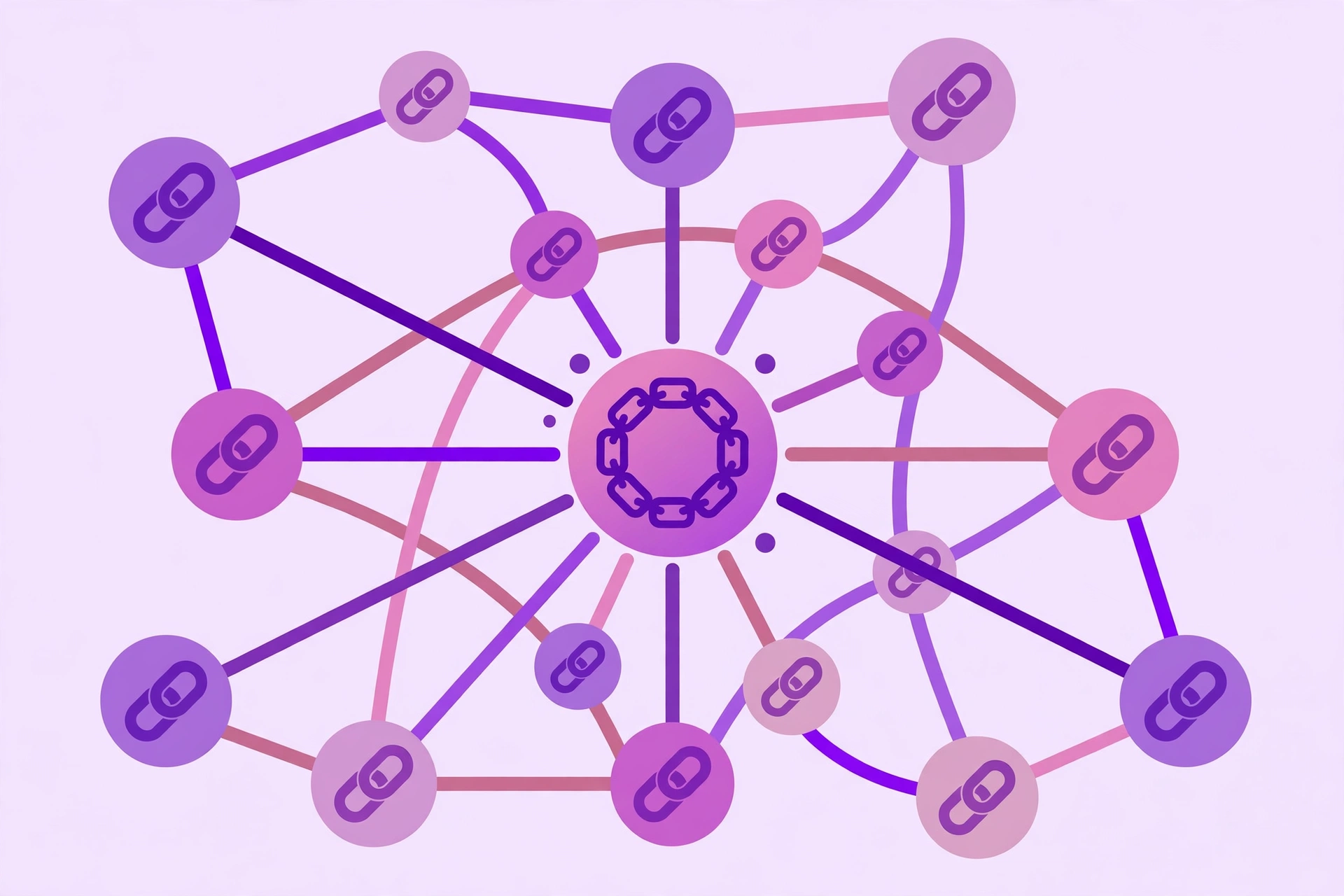
At the centre of Polkadot sits the relay chain. It is the main blockchain of the network, and its job is coordination and security. The relay chain does not run applications itself. It does not host smart contracts in the way Ethereum does. Instead, it validates the work of the chains connected to it, finalises their blocks, and provides the shared security that all of them rely on.
Think of the relay chain as a central station. The trains are the parachains, each going to a different destination, and the station provides the tracks, the signals, and the security that lets them all run safely. Without the station, each train would need its own railway. With it, they can all share the infrastructure.
The relay chain uses a consensus mechanism called nominated proof of stake. Validators run nodes that check and finalise blocks, and nominators, ordinary DOT holders, back validators they trust by staking their tokens with them. If a validator behaves badly, both the validator and its nominators can lose some of their staked tokens. This shared risk is what keeps the system honest, and it is why staking is central to Polkadot rather than a side feature.
Parachains: Specialised Blockchains That Share Security
Parachains are the individual blockchains that connect to the relay chain. Each parachain is a specialised blockchain in its own right, with its own design, its own tokens, and its own purpose. One parachain might be a decentralised finance platform. Another might be a gaming chain. Another might focus on identity, or storage, or privacy. The point is that each one can be optimised for its own job, while borrowing the relay chain’s security.
Parachains connect to the relay chain through slots, which are leased for a fixed period, traditionally up to two years, by locking up DOT tokens. Projects compete for these slots in auctions, which means that the chains that win slots are the ones that can gather the most support. This auction system is one of Polkadot’s most distinctive features, and also one of its most debated, because it creates a barrier to entry: a project needs substantial backing to secure a slot.
Communication between parachains happens through a system called cross-consensus messaging, usually shortened to XCM. XCM lets one parachain send a message, an asset, or an instruction to another parachain, with the relay chain guaranteeing that the message is delivered and final. This is the practical meaning of interoperability in Polkadot: a token on one chain can be used on another chain, and an application on one chain can call an application on another.
What Is the DOT Token For?
DOT is Polkadot’s native token, and it has four main jobs. The first is governance: DOT holders vote on changes to the network, including upgrades, spending, and rule changes. The second is staking: DOT holders stake tokens to secure the network and earn rewards, either by running a validator or by nominating one. The third is bonding: DOT is locked up to secure parachain slots, which is how new chains join the network. The fourth is payment: DOT pays transaction fees on the relay chain.
DOT’s supply is not fixed. New tokens are created to pay staking rewards, and the rate of creation is designed to encourage staking. This means DOT is inflationary by design, and the value of a DOT held without staking tends to fall relative to the total supply over time. That is not a flaw in the design. It is a deliberate choice to reward people who participate in securing the network, and to penalise those who do not. A beginner who holds DOT should understand this, because it means that simply holding the token, without staking, is a different decision from holding a token with a fixed supply.
If you are new to cryptocurrency generally, our guide to how to buy crypto safely explains the practical steps and the safety checks that matter before any purchase, and our guide to crypto wallets explains where tokens like DOT are stored.
Staking DOT: How It Works and What to Watch
Staking DOT means locking your tokens to help secure the network, in exchange for rewards. You can run your own validator, which requires technical skill and a significant stake, or you can nominate validators, which is the path most ordinary holders take. When you nominate, your tokens are locked with the validators you choose, and you earn a share of their rewards. If a validator misbehaves, a portion of your stake can be lost, a penalty known as slashing.
Staking rewards vary, and they depend on how much of the total supply is staked. The system is designed to target a particular staking rate, and rewards adjust to push the network towards it. Returns are usually quoted as an annual percentage, but that percentage is not guaranteed, and it does not account for changes in the price of DOT itself. A staking reward of ten percent means little if the token’s price falls by thirty percent over the same period.
There are also practical details to watch. Staked DOT is locked for a period before it can be withdrawn, which means you cannot sell quickly if the price moves. Choosing a validator matters, because a badly run validator earns less and risks slashing. And staking through a centralised exchange is simpler but introduces the risks of that exchange, which is a real consideration after several high-profile exchange failures. Our guide to crypto staking versus lending explains the trade-offs in more detail.
Governance: Who Decides What Happens Next
Polkadot has an on-chain governance system, which means that changes to the network are proposed, voted on, and enacted through the blockchain itself, rather than through informal discussion alone. DOT holders can vote on proposals, and the weight of a vote depends on how many tokens are staked behind it and for how long they are locked. The system is designed so that people who commit their tokens for longer have a louder voice, which rewards long-term thinking.
This system has handled real decisions, including network upgrades and the allocation of funds from the treasury, which is a pool of DOT set aside for projects that benefit the network. It is an interesting experiment in decentralised decision-making, and it is also slow and complex, which is a fair criticism. Governance that anyone can participate in is also governance that few people understand well enough to participate in meaningfully, and voter turnout in blockchain governance is generally low.
Polkadot vs Ethereum and Cosmos
Polkadot is often compared with Ethereum and Cosmos, because all three are platforms for building blockchain applications, and all three think about the problem of many chains. The differences are worth understanding.
Ethereum is a single large blockchain where applications are built as smart contracts on the same chain. Its strength is its enormous ecosystem of developers, users, and applications. Its weakness, historically, has been congestion and high fees, although upgrades and layer-two networks are addressing that. Polkadot’s approach is the opposite: instead of one chain for everything, many specialised chains that share security.
Cosmos is closer to Polkadot in philosophy, because it also imagines many independent chains. The difference is that Cosmos chains are sovereign: each one secures itself, and they connect through a communication protocol called IBC. Polkadot chains share security through the relay chain. The trade-off is that Polkadot’s shared security is stronger for small chains, while Cosmos’s independence gives each chain more freedom. Our guide to what Cosmos (ATOM) is explains the Cosmos side of this comparison in full.
Neither approach has won. Both are live, both have real users and real projects, and both face real challenges. A beginner should be sceptical of anyone who claims the contest is settled.
The Honest Risks and Criticisms
Polkadot’s biggest risk is complexity. The system is genuinely complicated, with parachains, auctions, XCM, governance, staking, and slashing all interacting. Complexity makes a project harder to use, harder to explain, and harder to develop on, and it has arguably slowed Polkadot’s growth compared with simpler platforms. Some developers find it easier to build on Ethereum or on a simpler chain, and that matters, because a platform without developers has no future.
A second criticism is that parachain auctions create a high barrier to entry, which favours well-funded projects over small, experimental ones. Polkadot has responded by changing how parachains join the network, moving towards a model where slots can be bought more flexibly, but the perception of exclusivity has lingered.
A third risk is competition. Ethereum’s layer-two networks, Cosmos, and newer chains all compete for the same developers and users, and Polkadot’s share of attention has not grown as fast as some of its supporters hoped. The technology is impressive, but technology alone does not win markets, and a beginner should weigh that honestly.
Finally, the usual crypto risks apply. DOT’s price is volatile, the regulatory picture for tokens like DOT is uncertain, and the project’s future depends on people continuing to build on it. Our guide to how to spot crypto scams is worth reading before you engage with any project, including legitimate ones, because the scams cluster around the real projects.
Frequently Asked Questions
Is DOT the same as Polkadot?
Polkadot is the network, and DOT is its native token. People often use the names interchangeably, but the distinction matters: the network is the system of chains, and the token is the asset used for governance, staking, bonding, and fees.
What is a parachain in simple terms?
A parachain is a specialised blockchain that connects to Polkadot’s relay chain, borrowing its security and communicating with the other parachains. Each parachain has its own purpose, tokens, and design.
Can I stake DOT without running a validator?
Yes. Most holders nominate validators, which means staking your DOT with validators you trust and earning a share of their rewards. Staking through an exchange is also possible, but it carries the risks of that exchange.
How is Polkadot different from Cosmos?
Both imagine many connected chains. Polkadot’s chains share security through the relay chain, while Cosmos chains secure themselves and connect through the IBC protocol. Polkadot offers stronger shared security, and Cosmos offers more independence per chain.
Does DOT have a fixed supply?
No. New DOT is created to pay staking rewards, so the supply grows over time. The system is designed to reward staking, which means holding DOT without staking it tends to lose value relative to the total supply.
Is Polkadot a good investment?
No one can answer that for you, and anyone who claims to know is selling something. Polkadot has real technology and real challenges, and its future depends on developers and users choosing it over strong competitors. Treat any investment decision as your own research, not as a tip.
Conclusion
Polkadot is an ambitious attempt to solve real problems: blockchains that cannot talk to each other, new chains that cannot afford security, and networks that cannot scale. Its design, a relay chain providing shared security to many specialised parachains, is elegant and genuinely different from Ethereum’s approach and from Cosmos’s. It also carries real costs: complexity, a high barrier to entry, and competition from platforms that are simpler to build on. Whether Polkadot becomes a central piece of the crypto landscape or a clever system that never quite caught on is still an open question, and it will be answered by developers and users, not by white papers. For a beginner, the sensible approach is to understand the idea, appreciate the ambition, weigh the risks honestly, and never invest more than you can afford to lose. If you want to understand the other major approach to connected blockchains, read our guide to Cosmos (ATOM), and if you want to understand the wider world of decentralised finance that Polkadot’s parachains serve, start with what DeFi is.