Blockchain Explained for Beginners: How It Actually Works
Blockchain Explained for Beginners: How It Actually Works
Risk disclaimer: Cryptocurrencies are volatile and can lose most or all of their value. Nothing in this article is financial advice. Never invest money you cannot afford to lose, and do your own research before buying any cryptocurrency.
You have heard the word “blockchain” hundreds of times. It appears in headlines about Bitcoin, in job adverts, in government announcements, and in investment pitches. It is described as revolutionary, as the future of finance, as a solution to everything from voting to supply chains. And yet, if you ask most people what a blockchain actually is, they struggle to answer. That is not surprising. The technology is genuinely unfamiliar, and the hype around it makes it harder, not easier, to understand.
This guide explains blockchain in plain language: what it is, how it works, why it was invented, what it is good for, and what it is not good for. No jargon without explanation, no assumptions about what you already know, and no hype. By the end, you will understand enough to read any article about crypto, or about blockchain, and know what is real and what is marketing.
What Is a Blockchain, in Simple Terms?
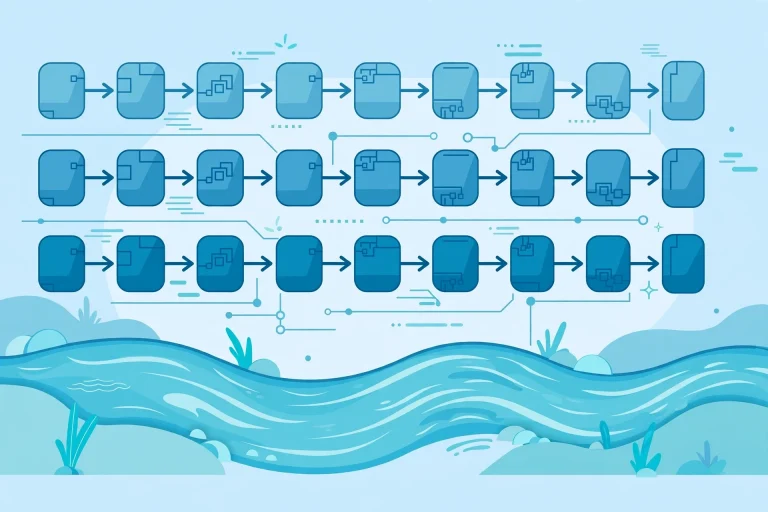
A blockchain is a shared record book — a ledger — that many computers keep at the same time, and that nobody can secretly change. Imagine a notebook that thousands of people each have a copy of. Every time something happens — a payment, a transfer, a vote — the event is written into the notebook, and every copy is updated. Once an entry is written, it cannot be erased or altered without everyone noticing, because changing one copy would make it different from all the others.
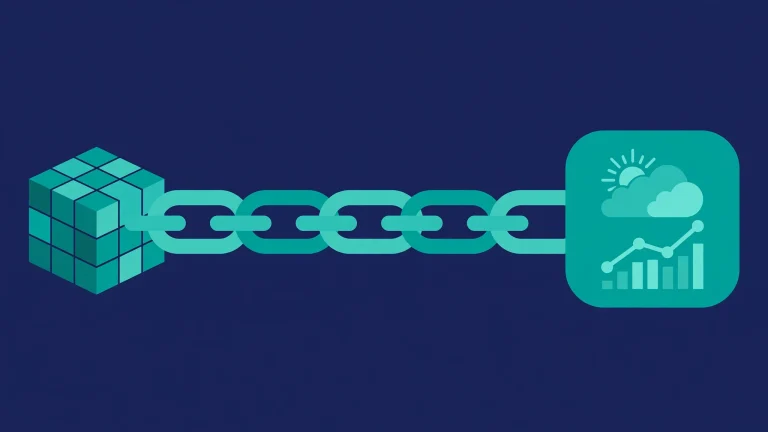
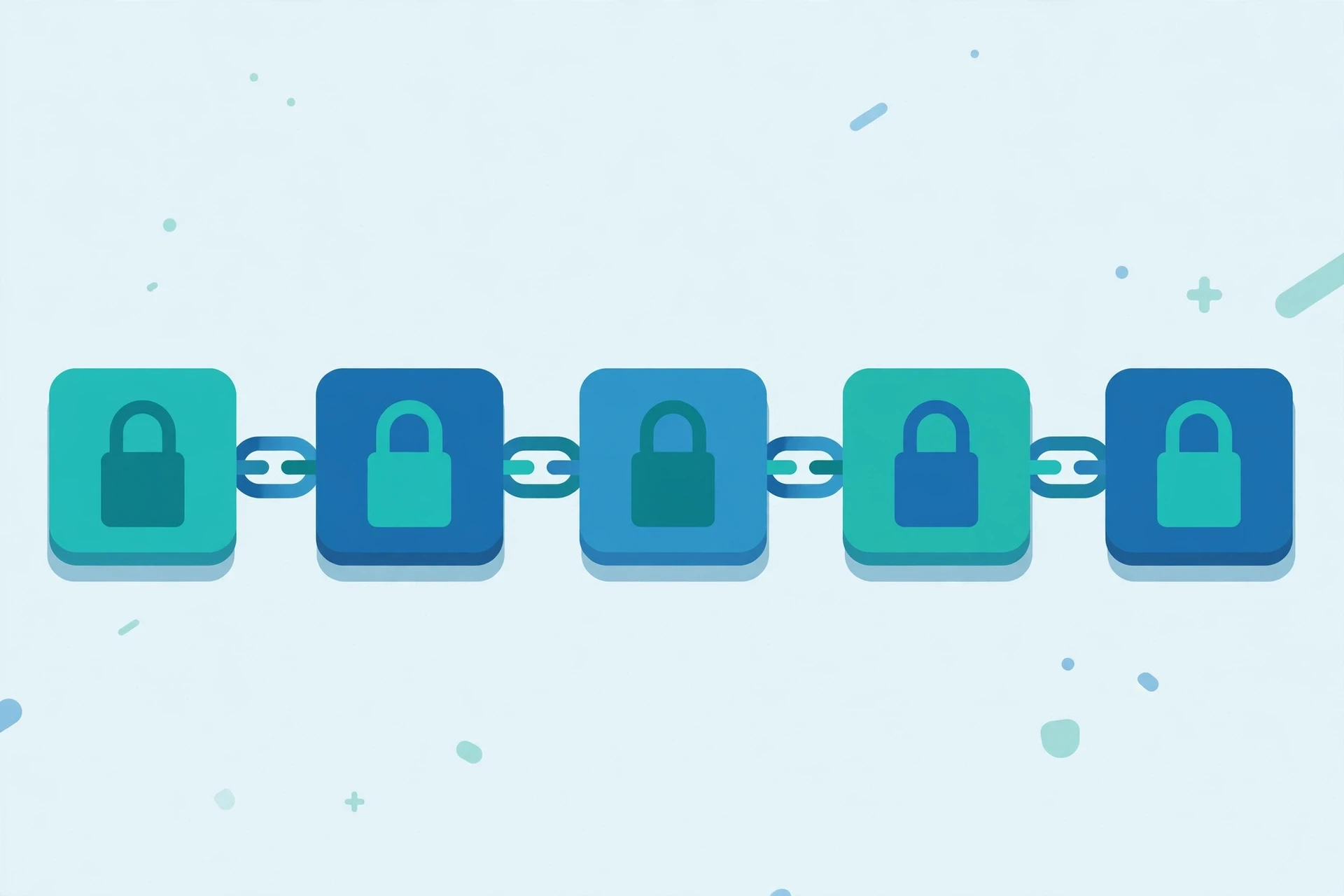
That is the core idea. A blockchain is a database that is shared, transparent, and very hard to tamper with. The “blocks” are groups of transactions bundled together. The “chain” is the way each block is linked to the one before it, so the whole history forms a single, unbroken sequence. If you change anything in an old block, the link breaks, and everyone can see that something has been tampered with.
The most famous use of blockchain is cryptocurrency. Bitcoin was the first blockchain, and it uses the technology to record who owns which coins, without needing a bank to keep the records. But blockchain is not the same thing as Bitcoin. Bitcoin is one application of blockchain. The technology itself can be used for many other things — and, as we will see, it is not always the right tool for the job.
Why Was Blockchain Invented?
To understand why blockchain exists, you need to understand the problem it solves: trust. In most of the systems we use every day, trust is provided by a central authority. A bank keeps the record of who owns what money. A government keeps the record of who owns what land. A company keeps the record of who bought what. We trust these institutions to keep accurate records, to not change them secretly, and to settle disputes fairly.
That system works, but it has weaknesses. A central record-keeper can make mistakes. It can be hacked. It can be corrupt. It can exclude people it does not like. And it charges fees for its services. The question that led to blockchain was this: can we build a system where the record is kept by many people at once, so no single party controls it, and so the record can be trusted even when the participants do not trust each other?
The answer, published in 2008 by a person or group using the name Satoshi Nakamoto, was Bitcoin — and the technology underneath it, the blockchain. The idea was radical: instead of a bank keeping the ledger, thousands of computers around the world would each keep a copy, and they would agree on what goes into it using a set of rules that no single party could change.
How a Blockchain Actually Works
A blockchain works through a combination of three ideas: blocks, hashes, and consensus. Each one is simple on its own. Together, they create a system that is very hard to cheat.
Blocks: Groups of Transactions
Transactions are grouped into blocks. A block is like a page in the record book. It contains a list of recent transactions — who sent what to whom — plus a timestamp and a reference to the previous block. On Bitcoin, a new block is added roughly every ten minutes. On other blockchains, the time is shorter. The size of a block, and how many transactions it can hold, varies by blockchain.
Hashes: Digital Fingerprints
Every block has a hash, which is a kind of digital fingerprint. A hash is produced by running the block’s contents through a mathematical function, and it produces a fixed-length string of characters. Change even one character in the block — a single digit in a transaction — and the hash changes completely. This is what makes a blockchain tamper-evident. If someone tried to alter an old transaction, the block’s hash would change, and it would no longer match the hash recorded in the next block. Everyone running the network would see the mismatch immediately.
Each block also contains the hash of the previous block. That is what creates the chain. Block 100 contains the hash of block 99, block 99 contains the hash of block 98, and so on, all the way back to the very first block. To change a transaction in block 50, you would need to change the hash of block 50, which would break block 51, which would break block 52, and so on — you would need to rewrite every block after it, on every copy of the ledger, before anyone noticed. That is practically impossible on a large network.
Consensus: Agreeing on the Truth
The hardest problem in a blockchain is agreement. Thousands of computers each hold a copy of the ledger, and they need to agree on which transactions are valid and in what order they happened. This is called consensus, and different blockchains solve it in different ways.
The two main methods are proof of work and proof of stake. In proof of work, used by Bitcoin, computers compete to solve a difficult mathematical puzzle, and the winner gets to add the next block and earn a reward. The puzzle is hard to solve but easy to verify, and it costs real energy — which is what makes it expensive to cheat. In proof of stake, used by Ethereum and many newer blockchains, participants lock up tokens as a deposit, and the network chooses validators in proportion to their stake. Cheating risks losing the deposit, which is what keeps validators honest. Our guide to proof of work vs proof of stake explains both systems in detail.
Consensus is also what makes a blockchain slow compared to a normal database. A bank’s database can process thousands of transactions per second because one computer is in charge. A blockchain must get many computers to agree, which takes time. That is the trade-off at the heart of the technology: you give up speed in exchange for decentralisation and tamper-resistance.
Public, Private, and Permissioned Blockchains
Not all blockchains are the same. The most important distinction is between public and private blockchains.
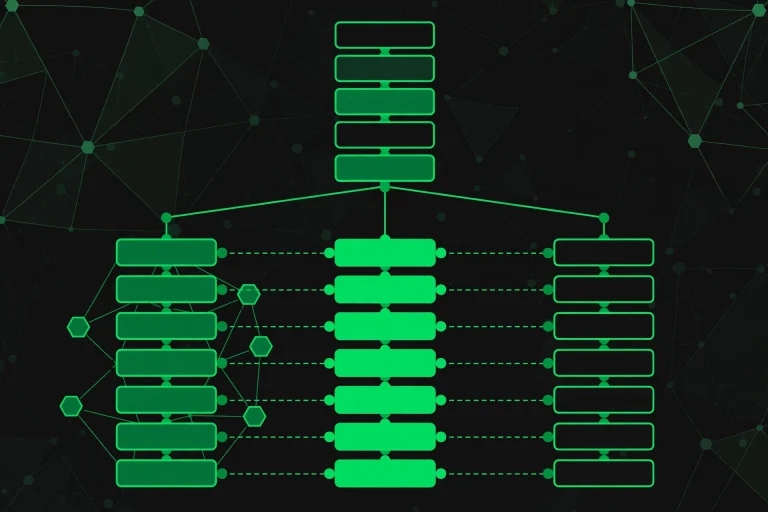
A public blockchain, like Bitcoin or Ethereum, is open to anyone. Anyone can read it, anyone can send transactions on it, and anyone can participate in running it. No permission is needed, and no central authority controls who joins. This openness is what makes public blockchains decentralised — and it is also what makes them slow and expensive to run.
A private blockchain is controlled by a single organisation. Only authorised participants can read it or write to it, and the organisation decides the rules. Private blockchains are faster and cheaper, but they are not really decentralised — they are just a database with extra steps. Many critics argue that a private blockchain offers little advantage over an ordinary database, and they have a point. If one organisation controls the network, it can change the records, and the whole point of blockchain — removing the need to trust a single party — disappears.
A permissioned blockchain sits in between: a group of known organisations share control, and only approved participants can join. These are sometimes used by banks or supply chain companies. They are more decentralised than a private blockchain, but less so than a public one.
For a beginner, the public blockchains are the ones that matter. They are where cryptocurrencies live, where the most innovation happens, and where the technology’s promises are actually tested.
What Blockchains Are Good For
Blockchains are genuinely good at a few specific things. The first is digital money. Before Bitcoin, it was impossible to send digital money directly from one person to another without a bank or payment company in the middle, because a digital file can be copied — so how do you stop someone spending the same coin twice? Blockchain solved that problem by keeping a shared, tamper-proof record of who owns what. That is why cryptocurrency was the first successful use of the technology, and it remains the most important one.
Blockchains are also good for any situation where multiple parties who do not trust each other need to share a record. International payments, where banks in different countries must settle with each other, are an example. Supply chains, where a product passes through many hands and each party wants to verify where it came from, are another. Digital identity, where a person wants to prove who they are without relying on a single company, is a third. In each case, the value of blockchain is that it removes the need for a trusted middleman.
Smart contracts are another important use. A smart contract is a program that runs on a blockchain and executes automatically when its conditions are met. For example, a smart contract can hold funds and release them only when both parties to a deal have done what they promised. No human intermediary is needed, and no one can change the rules after the contract is deployed. Smart contracts are what make decentralised finance, or DeFi, possible. Our guide to DeFi explains how they work in practice.
What Blockchains Are Not Good For
Blockchains are often promoted as a solution to every problem, but they are a poor fit for many uses. Understanding the limits is as important as understanding the strengths.
First, blockchains are slow and expensive compared to ordinary databases. A blockchain that processes ten transactions per second cannot compete with a payment system that processes thousands. Layer 2 scaling solutions try to fix this, but the fundamental trade-off — decentralisation costs speed — remains.
Second, blockchains are bad at storing large amounts of data. Every computer on the network must store a copy of the whole ledger, so putting large files on a blockchain is wasteful and expensive. Blockchains are good for recording ownership and transactions, not for storing photos, videos, or documents.
Third, blockchains cannot fix bad data. A blockchain guarantees that a record has not been changed after it was written, but it cannot guarantee that the record was true when it was written. If someone enters false information, the blockchain will preserve that false information perfectly. This is sometimes called the “garbage in, garbage out” problem, and it limits the use of blockchain for things like supply chain tracking, where the data must be entered by humans.
Fourth, blockchains do not remove the need for trust entirely — they move it. You still need to trust the software, the developers, and the people who run the network. A bug in a smart contract can drain funds, as has happened many times. A small group of validators can collude. And if you lose your private keys, nobody can help you recover your funds. Our guide on how to store your seed phrase safely explains why that last point matters so much.
Blockchain and Cryptocurrency: The Relationship
Blockchain and cryptocurrency are related but not identical. Blockchain is the technology. Cryptocurrency is one application of it. You can have a blockchain without a cryptocurrency — some private blockchains do not have tokens — but every major public blockchain has a native token, because the token is what pays the people who run the network and what secures it against attack.
The token serves several purposes. It pays transaction fees, which compensate validators for their work. It is used for staking, which secures proof-of-stake networks. And it gives participants a financial reason to keep the network honest — if you own tokens, you want the network to succeed, because your tokens are worth more when it does.
This is also why blockchain and speculation are so closely linked. The token is both a utility — it pays for using the network — and an investment, which means its price can rise and fall with demand, hype, and fear. That volatility is a feature of the market, not of the technology, but for a beginner the two are easy to confuse. A blockchain can be excellent technology and its token can still be a bad investment, and vice versa.
Common Misconceptions About Blockchain
The most common misconception is that blockchain is unhackable. It is not. A blockchain is very hard to tamper with, because changing history requires controlling a majority of the network, but individual wallets, exchanges, and smart contracts are hacked regularly. The blockchain itself may be secure while the apps built on top of it are not. Our guide on how to spot crypto scams covers the risks that actually affect users.
Another misconception is that blockchain is anonymous. It is not. Most public blockchains are transparent — every transaction is visible to anyone. What they offer is pseudonymity: your identity is hidden behind a wallet address, but if that address is ever linked to you, your entire transaction history becomes visible. Privacy-focused cryptocurrencies exist, but Bitcoin and Ethereum are not private by default.
A third misconception is that blockchain eliminates all middlemen. It eliminates some middlemen, such as banks in a payment, but it creates new ones, such as exchanges, wallet providers, and the companies that build the apps you use. The question is not whether middlemen exist, but whether they have less power than before.
The Future of Blockchain
Blockchain is still a young technology, and its future is uncertain. The most likely outcome is not that blockchain replaces everything, but that it becomes part of the infrastructure for specific uses — digital money, cross-border payments, digital ownership, and financial services — while ordinary databases continue to handle most everyday computing.
Newer blockchains, such as Solana and Sui, are trying to solve the speed problem with different designs. Layer 2 solutions are trying to solve it on top of Ethereum. Governments are exploring central bank digital currencies, which use some blockchain ideas but are controlled by the state. And regulators around the world are still deciding how blockchain and crypto should be treated under the law, which creates uncertainty for users and builders alike.
For a beginner, the sensible approach is to understand the technology before investing in it. Learn how wallets work, learn how to buy crypto safely, and learn what the risks are. Our guide to choosing a crypto wallet and our checklist on how to buy crypto safely are good places to start. And our guide to Web3 explains how blockchain fits into the broader vision of a decentralised internet.
Frequently Asked Questions
What is a blockchain in simple terms?
A blockchain is a shared record book kept by many computers at the same time. Transactions are grouped into blocks, each block is linked to the one before it, and the whole record is very hard to change without everyone noticing. It lets people agree on who owns what without needing a bank or other central authority.
Is blockchain the same as Bitcoin?
No. Bitcoin is a cryptocurrency — digital money — and blockchain is the technology underneath it. Bitcoin was the first blockchain, but the technology can be used for other things, such as smart contracts, supply chain records, and digital identity.
How does a blockchain prevent cheating?
Through a combination of hashes and consensus. Each block contains a digital fingerprint (hash) of its contents and of the previous block, so changing an old transaction breaks the chain. And the network must agree on new blocks through proof of work or proof of stake, which makes it expensive for any single party to take control.
Why is blockchain slow?
Because many computers must agree on every transaction, rather than one computer being in charge. That agreement takes time, and it is the price of decentralisation. A normal database is faster because it trusts a single authority. A blockchain is slower because it does not.
Is blockchain secure?
The blockchain itself is very hard to tamper with on a large network, but the apps built on top of it — wallets, exchanges, smart contracts — can have bugs and can be hacked. Security depends on the whole system, not just the blockchain. Always use reputable wallets and exchanges, and never share your private keys or seed phrase.
Can anyone see my transactions on a blockchain?
On most public blockchains, yes. Every transaction is recorded on a public ledger and visible to anyone. Your identity is hidden behind a wallet address, but if that address is linked to you, your transaction history becomes visible. Blockchains are transparent, not anonymous.
Do I need to understand blockchain to use cryptocurrency?
Not in full detail, but a basic understanding helps you avoid costly mistakes. You should know what a wallet is, what a seed phrase is, why transactions cannot be reversed, and why you should never share your private keys. The deeper technical details matter less for everyday use.
What is the difference between a public and a private blockchain?
A public blockchain is open to anyone and controlled by no one. A private blockchain is controlled by a single organisation and only authorised participants can use it. Public blockchains are decentralised but slow. Private blockchains are fast but not really decentralised, and they offer little advantage over an ordinary database.
Conclusion
A blockchain is a shared, tamper-resistant record kept by many computers at once. It was invented to solve the problem of trust — how to agree on who owns what without relying on a central authority — and it does that through a clever combination of blocks, hashes, and consensus. It is genuinely useful for digital money, for shared records between parties who do not trust each other, and for smart contracts that execute automatically.
It is not a solution to every problem. It is slower and more expensive than a normal database, it cannot verify that the data entered into it is true, and it does not make the apps built on it secure. The hype around blockchain has often promised more than the technology can deliver, and the most honest way to think about it is as a specialised tool: powerful for a few specific jobs, unnecessary for most others.
If you take one thing from this guide, let it be this: understand the tool before you invest in it. Learn how wallets work, learn what the risks are, and be sceptical of anyone who tells you blockchain will change everything. The technology is real, the use cases are narrower than the hype suggests, and the future is still being written.