Responsible Gambling Guide for Beginners: Limits, Signs and Staying in Control
Gambling is designed to be exciting. The lights, the sounds, the near misses, the rush of a win — all of it is built to hold your attention and keep you playing. For most people, most of the time, that excitement stays within bounds: a budgeted amount, a set time, and a clear understanding that the money spent is the price of entertainment. But gambling can also slide out of control, quietly and gradually, and the slide is easier to miss than most people expect.
This guide is about responsible gambling for beginners. It explains how to set limits before you play, how to recognise the early warning signs that gambling is becoming a problem, and what to do if it does. It is not a lecture, and it is not written to scare anyone. It is a practical guide, written in plain language, for anyone who gambles or is thinking about it, so that the fun stays fun and the risks stay visible.
What Responsible Gambling Means
Responsible gambling means treating gambling as entertainment, not as a way to make money. It means deciding in advance how much time and money you are willing to spend, and sticking to those decisions even when the game gets exciting. It means understanding that the house always has an edge, that losses are the normal outcome over time, and that no win, however large, changes the mathematics of the next bet.
It also means being honest with yourself. Most people who develop a gambling problem do not set out to do so. They start the same way everyone else does, with a small bet and a bit of fun, and the problem grows in small steps: a slightly bigger bet, a session that runs a little longer than planned, a loss chased with one more deposit. Responsible gambling is about noticing those steps early, while they are still small and easy to correct.
None of this is about willpower alone. Gambling products are designed by people who understand psychology, and they use variable rewards, near misses, and easy access to keep players engaged. Staying in control is not a matter of being strong enough to resist. It is a matter of having systems in place — limits, breaks, and honest check-ins — that protect you even when your willpower is tired.
Legal Status in Thailand — Read This First
Before going any further, it is important to be clear about the law. Under the Gambling Act B.E. 2478 (1935), most forms of gambling are prohibited in Thailand. The only legal exceptions are the government lottery and licensed horse racing. Online casinos are NOT licensed in Thailand, and playing on them carries legal risk.
This article is educational only. It explains responsible gambling so you can understand the risks and protect yourself, not as an invitation to gamble. Gambling should only ever be done by adults aged 18 and over, and only where it is legal to do so. There are no guaranteed winnings in gambling, or in any casino game. Never chase losses, never play with money you cannot afford to lose, and if gambling ever stops feeling like entertainment, stop and get help. Support is available at BeGambleAware and Gamblers Anonymous.
Setting Limits Before You Play
The single most effective thing you can do is set your limits before you start, when you are calm and thinking clearly. There are three limits that matter, and you should set all three.
The first is a money limit. Decide how much you are willing to spend in a session, a week, or a month, and treat that money as already spent. It should be money you can afford to lose, after rent, bills, food, and savings are covered. It should never be borrowed money, and it should never be money you need for something else. Once you have spent your limit, stop. Do not dip into another account, do not borrow, and do not tell yourself that one more deposit will fix it. It will not.
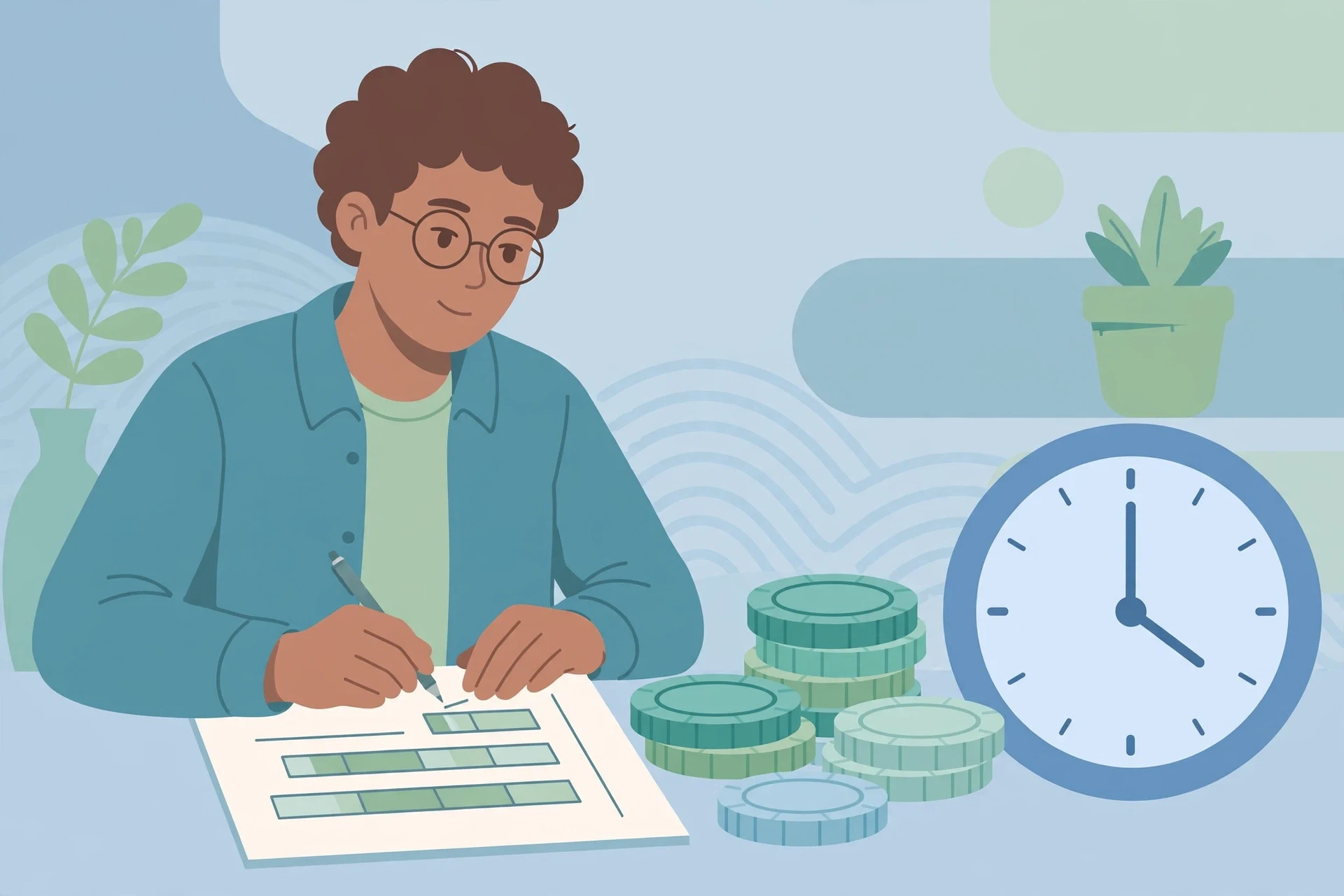
The second is a time limit. Decide how long you will play, and set an alarm. Gambling is absorbing, and time passes faster than it feels like when you are playing. A time limit protects you from the slow drift of a session that was meant to last half an hour and has somehow lasted three. When the alarm goes off, stop, even if you are winning. Especially if you are winning, because winning is when it is hardest to leave.
The third is a loss limit, which is different from a money limit. A money limit is what you bring to the session. A loss limit is the point at which you stop even if you still have money left, because you have lost enough for one day. Some players also set a win limit: a point at which they stop and keep their winnings, rather than playing them back. Both limits work the same way. They are decisions made in advance, when you are thinking clearly, and they protect you from decisions made in the heat of the moment.
If you gamble online, use the tools the platform provides. Most licensed operators, in jurisdictions where gambling is legal, offer deposit limits, loss limits, session time limits, and reality checks that pop up to tell you how long you have been playing. Use them. They are not there to spoil your fun. They are there because they work. Our bankroll management guide explains how to build a gambling budget in practical detail, and it is a useful companion to this guide.
Understanding the House Edge and the Odds
A big part of staying in control is understanding what you are up against. Every casino game has a house edge, which is the mathematical advantage the casino holds over the player. It means that over a long period, the casino will keep a percentage of all money wagered. Individual players win and lose in the short term, but the average outcome is a loss, and the longer you play, the more certain that average becomes. Our guide to how the casino house edge works explains this in plain language.
This matters for responsible gambling because it corrects the most dangerous belief a gambler can hold: the belief that a win is owed, or that a system can beat the game. No betting system can overcome the house edge. No lucky number, no hot machine, no pattern of past results changes the odds of the next bet. If you believe you have found a way to win consistently, you have found a way to lose money slowly and confidently, which is worse than losing it quickly, because it takes longer to notice.
Understanding the odds also helps you keep wins in perspective. A big win feels like proof that you are good at gambling. It is not. It is a random event, and it tells you nothing about what will happen next. Players who treat a win as evidence of skill are more likely to increase their bets, play for longer, and give the money back. The sensible response to a win is to enjoy it, and to consider stopping while you are ahead.
The Warning Signs: When Fun Becomes a Problem
Problem gambling rarely announces itself. It creeps in, and the warning signs are easy to explain away. That is why it helps to know what they look like, so you can recognise them in yourself or in someone you care about.
The first sign is spending more than you planned, regularly. Not once, because everyone has a session that runs over budget, but as a pattern. If you set a limit and break it most of the time, the limit is not working, and the reason is worth understanding. It may be that the limit was unrealistic, or it may be that you are finding it hard to stop, which is a more serious sign.
The second sign is chasing losses. If you lose money and your first thought is to deposit more to win it back, that is chasing, and it is the single most reliable predictor of gambling problems. Chasing feels rational in the moment — the money is gone, and winning it back seems like the only way to fix it — but it is the fastest way to turn a small loss into a large one. The money is gone. Accepting that is painful, but it is cheaper than chasing it.
The third sign is thinking about gambling when you are not playing. If you find yourself planning your next session during work, checking odds on your phone, or feeling restless and irritable when you cannot play, gambling is taking up more space in your life than entertainment should. The fourth sign is hiding it: lying to a partner, a friend, or a family member about how much you spend, how often you play, or how much you have lost. Secrecy is a sign that you already know something is wrong, even if you are not ready to say it out loud.
Other signs include borrowing money to gamble, gambling with money meant for bills or other essentials, neglecting work, study, or relationships because of gambling, and feeling guilty, anxious, or depressed about your gambling. If any of these sound familiar, that is not a reason for shame. It is a reason to get help, and help is available, free, and confidential, from the organisations listed in the legal section above.
Myths That Make Gambling Riskier
Several common myths make gambling more dangerous, because they encourage players to take risks they would not otherwise take. The first is the gambler’s fallacy: the belief that past results affect future ones. If red has come up five times in a row on a roulette wheel, black is not due. The wheel has no memory. The same applies to slot machines: a machine that has not paid out for hours is no more likely to pay out on the next spin. Our guide to casino myths debunked covers this and other common misunderstandings in detail.
The second myth is that a near miss means you were close. When two jackpot symbols land on a slot machine and the third just misses, it feels like you almost won. You did not. The result is decided the moment you press spin, and a near miss is a loss, like any other. Treating near misses as signs of progress encourages players to keep playing, which is exactly what the design intends.
The third myth is that gambling is a way to make money, or to solve a financial problem. It is not. The house edge means that the average gambler loses money over time, and gambling to pay off a debt or cover a bill is one of the most reliable ways to make a financial problem worse. If money is tight, gambling is the wrong answer, and the right answer is to seek help with the finances themselves.
Practical Tools That Help You Stay in Control
Good intentions are not enough. The players who stay in control are the ones who use practical tools, and there are several worth knowing about.
Deposit limits cap how much money you can add to an account in a day, a week, or a month. Set one, and set it low. Loss limits cap how much you can lose in a given period, and they stop you from chasing. Session limits cap how long you can play, and reality checks pop up at intervals to tell you how long you have been playing and how much you have spent. Use all of them if they are available. They are not restrictions on your freedom. They are decisions you made when you were thinking clearly, enforced for you when you are not.
Self-exclusion is a stronger tool. It blocks your access to a gambling site or venue for a set period, from a few months to several years. If you have tried limits and they are not working, self-exclusion is the next step, and it is a sensible one, not a sign of failure. In many jurisdictions, self-exclusion schemes cover multiple operators at once, so you cannot simply move to another site. Ask the support organisations listed above for help finding a scheme that covers you.
Separate your gambling money from your everyday money. Use a separate account or a prepaid card, and never link your main bank account or credit card to a gambling site. This creates a natural barrier: when the gambling money is gone, you have to make a deliberate decision to move more money across, and that pause is often enough to stop a chase. Never gamble on credit, and never use a credit card to fund gambling. Borrowing money to gamble turns a loss into a debt, and a debt is much harder to recover from than a loss.
Keep a record of what you spend. Write down every deposit, every session length, and every outcome. It sounds tedious, and it is, but it is also revealing. Most players underestimate how much they spend, sometimes by a large amount, because the losses blur together and the wins stand out. A written record makes the truth visible, and the truth is the best protection you have.
What to Do If You Are Worried About Yourself
If you are reading this section because you are worried about your own gambling, that worry is worth listening to. You do not need to have lost a fortune, or to meet some definition of addiction, before help is appropriate. If gambling is causing you stress, if you are spending more than you can afford, or if you are hiding it from people you love, those are enough reasons to talk to someone.
The first step is to talk to someone you trust: a friend, a family member, or a partner. You do not need to have all the answers. You just need to say that you are worried, and that you want help. The second step is to contact a support organisation. BeGambleAware and Gamblers Anonymous both offer free, confidential help, and they have helped many people in exactly your situation. There is no judgement, and there is no requirement to have hit rock bottom first.
The third step is to put barriers in place. Set deposit limits, use self-exclusion, remove gambling apps from your phone, and tell someone you trust what you are doing, so they can support you. The fourth step is to find other things to do with the time and energy that gambling was filling. Boredom, stress, and loneliness are common triggers for gambling, and filling that space with something else — exercise, a hobby, time with friends — makes it easier to stay away.
Recovery is not a straight line. There may be setbacks, and a setback is not a failure. It is a sign that a particular barrier was not strong enough, and that a stronger one is needed. Keep going, keep talking to people, and keep asking for help. It works, and it is worth it.
What to Do If You Are Worried About Someone Else
If you are worried about a friend or family member, the same principles apply, with one difference: you cannot force someone to change. What you can do is talk to them, honestly and without judgement, about what you have noticed and why you are concerned. Choose a calm moment, not the middle of an argument, and focus on what you have seen — the money, the time, the secrecy — rather than on accusations. Listen to what they say, and let them know you are there to help, not to lecture.
You can also offer practical help: finding a support organisation, going with them to a first meeting, or helping them set up deposit limits and self-exclusion. And you can protect yourself. Do not lend money to someone with a gambling problem, because it will almost certainly be gambled, and it will damage the relationship. Do not cover up their losses or lie on their behalf. Those things feel kind in the moment, but they make the problem easier to continue, which is the opposite of help.
If someone you care about is in serious financial difficulty because of gambling, encourage them to seek help with the finances as well as the gambling. Debt advice is available free of charge in many countries, and a plan for dealing with debt is often the thing that makes recovery feel possible.
Frequently Asked Questions
What is responsible gambling?
Responsible gambling means treating gambling as entertainment, not as a way to make money. It means setting limits on time and money before you play, understanding the house edge, and stopping when you reach your limits. It also means recognising the warning signs of a problem early and getting help when you need it.
How much money should I budget for gambling?
Only gamble with money you can afford to lose, after rent, bills, food, and savings are covered. There is no right amount that applies to everyone, but a useful rule is to treat your gambling budget as the price of entertainment, like a cinema ticket. If losing that amount would cause you stress, it is too much.
What are the signs of a gambling problem?
Common signs include spending more than you planned, chasing losses, thinking about gambling when you are not playing, hiding your gambling from family or friends, borrowing money to gamble, and feeling guilty, anxious, or depressed about your gambling. If several of these sound familiar, it is worth talking to someone.
How can I stop chasing losses?
The most effective way is to decide your loss limit before you play, and to stop when you reach it, no matter what. It helps to accept that lost money is gone, and that trying to win it back usually makes the loss bigger. Taking a break, leaving the venue or closing the app, and talking to someone can all help in the moment.
What is self-exclusion?
Self-exclusion is a tool that blocks your access to a gambling site or venue for a set period, from a few months to several years. It is a strong and sensible step if limits are not working for you. Many schemes cover multiple operators, so you cannot simply move to another site.
Is gambling a way to make money?
No. Every casino game has a house edge, which means the average player loses money over time. Individual players win in the short term, but no one wins consistently, and gambling to solve a financial problem almost always makes it worse.
Where can I get help for a gambling problem?
Free, confidential help is available from BeGambleAware and Gamblers Anonymous. Both organisations support people who gamble and people affected by someone else’s gambling, and there is no judgement and no requirement to have reached a crisis point first.
Can I gamble responsibly and still enjoy it?
Yes. Most people who gamble do so responsibly, and enjoy it as entertainment. Setting limits, understanding the odds, taking breaks, and treating your gambling budget as the price of a night out are all compatible with having fun. Responsible gambling is not about stopping enjoyment. It is about keeping it enjoyable.
Conclusion
Responsible gambling is not complicated, but it does require honesty and preparation. Set your limits before you play, in money and in time, and stick to them. Understand that the house always has an edge, that no system can beat it, and that a win is a random event, not a sign of skill. Learn the warning signs, in yourself and in others, and take them seriously when they appear. Use the practical tools that are available — deposit limits, session limits, self-exclusion — and do not be afraid to ask for help.
Gambling should be entertainment, and nothing more. The moment it stops being fun, the moment it starts costing money you cannot afford, or time you cannot spare, or peace of mind you cannot get back, it is time to stop. Help is available, it is free, and it is confidential. Use it, and keep the game where it belongs: as a pastime, not a problem.